
lovethailand home >North Travel Attractions >Sukhothai Travel Attractions >Si Sat Chana Lai >Ban Tuek > Hae Nam Khuen Hong Song Nam Chao Muen Dong Festiva..
TL;DR: Hae Nam Khuen Hong Song Nam Chao Muen Dong Festival, Sukhothai attractions : Art, Culture and Heritage, Art, Craft Centres, Tradition.
Hae Nam Khuen Hong Song Nam Chao Muen Dong Festival
Open Days: Held annually after the Songkran period; traditionally around April 17-20, with dates sometimes adjusted by the Ban Tuek Subdistrict Administrative Organization
Opening Hours: Activities take place during both daytime and evening hours; visitors should check the annual schedule before traveling
The Hae Nam Khuen Hong Song Nam Chao Muen Dong Festival is one of the most meaningful northern Thai traditions in Ban Tuek Subdistrict, Si Satchanalai District, Sukhothai Province. Held at the Chao Muen Dong Monument, this annual ceremony reflects gratitude to ancestors, reverence for a local hero, community faith, and the deep relationship between people, elephants, land, and local history. It is a living cultural tradition that has been passed down for generations and remains a central expression of identity for the people of Ban Tuek, the former area associated with old Mueang Dong.
TL;DR: The Hae Nam Khuen Hong Song Nam Chao Muen Dong Festival is an annual community tradition held at the Chao Muen Dong Monument in Ban Tuek, Si Satchanalai, Sukhothai. The festival is traditionally held after Songkran, often around April 17-20, although some years follow updated local schedules. Main activities include carrying sacred water to the ceremonial hong, bathing the Chao Muen Dong monument, placing tung banners at sacred shrines, processions from 14 villages, elephant processions, elephant blessing rituals, elephant feeding, local dress in mo hom indigo clothing, boxing, likay performance, and community celebration.
The heart of this tradition lies in the words “khuen hong” and “song nam.” In the local cultural context, “hong” refers to a ceremonial house or ritual space where offerings and acts of respect are made. “Song nam” means ritual bathing or pouring water in reverence. Therefore, the procession of water up to the hong is not simply the movement of water from one place to another. It is a symbolic act of carrying respect, memory, gratitude, and community devotion to the sacred space of Chao Muen Dong.
Ban Tuek today preserves the memory of old Mueang Dong, a local historical area associated with Chao Muen Dong. The land was remembered as fertile, rich in forest resources, agricultural abundance, and elephant life. Chao Muen Dong is honored as a brave military figure linked with the northern historical world and the memory of the old community. For local people, he is not only a name from the past. He is a revered ancestor-like figure whose presence continues through ritual, monument, oral history, and annual community practice.
The festival is important because it keeps local history alive. Each year, when villagers gather to carry water, place tung banners, join processions, honor the monument, and take part in community activities, they renew the story of Chao Muen Dong. Children and younger generations learn about him not only through written information but through sound, movement, elephants, offerings, dress, and the atmosphere of the annual ceremony. This is how living heritage works: history becomes part of experience.
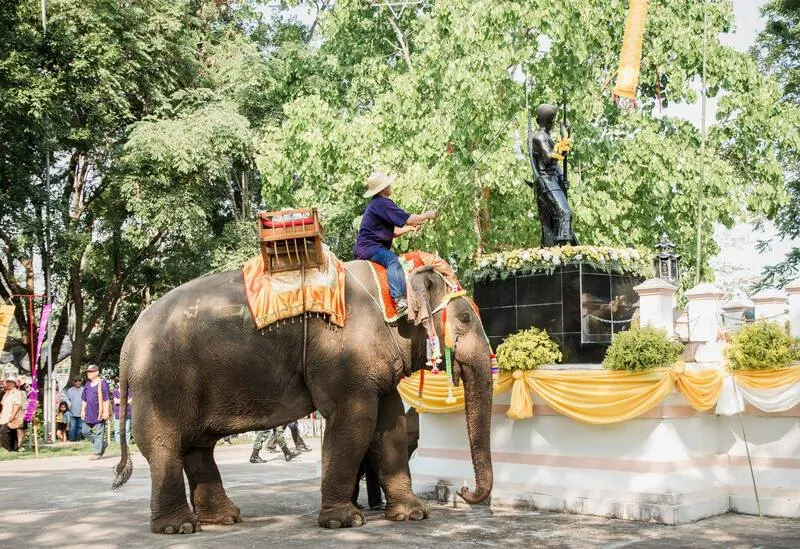
One of the most distinctive features of the festival is the relationship between people and elephants. In the Ban Tuek cultural landscape, elephants are associated with strength, forest life, labor, travel, fertility, and sacred power. Their presence in the procession is not merely decorative. Elephants symbolize the shared history of humans and nature in this area. The elephant blessing ritual and elephant feeding ceremony show gratitude to these animals and recognize them as partners in the cultural memory of the community.
The festival usually includes the placing of tung banners at important sacred sites such as the city pillar shrine, Chao Khao Mung Shrine, Ku Phra Khru Khiri Banphot, and Chao Muen Dong Shrine. Tung banners are an important part of northern Thai culture. They represent merit, offering, auspiciousness, and spiritual dedication. In this festival, the act of placing tung connects different sacred points in Ban Tuek into one ritual landscape. The whole community becomes part of the ceremony, not only the monument area.
The procession of women’s groups from 14 villages is another powerful part of the festival. Each village participates with offerings, local dress, ceremonial items, and community pride. This procession shows that the festival belongs to the whole subdistrict. The role of women and village groups is especially important because they help preserve ritual preparation, food culture, procession organization, and the social relationships that keep the tradition alive. The festival is not carried by a single authority alone. It is carried by many hands in the community.
Participants often wear mo hom, the traditional indigo clothing associated with northern Thai everyday life. The deep indigo color gives the festival a strong local identity. Mo hom represents simplicity, work, humility, and rural dignity. When worn during the procession, it creates a visual connection between people, elephants, fields, shrines, and the landscape of Ban Tuek. The clothing helps visitors immediately recognize that this is a community-rooted tradition, not a staged performance detached from local life.
The elephant blessing and feeding ceremonies are among the most meaningful moments. Blessing the elephants is an act of apology, gratitude, and auspicious invocation. Feeding the elephants shows care and respect. The elephants are treated not as show animals alone but as significant beings within the cultural memory of the community. Visitors should respect the elephants by keeping a safe distance, avoiding sudden movements, not using flash too close to them, and following instructions from mahouts and local officials.
The elephant procession creates one of the strongest images of the event. Elephants walk with villagers, offerings, banners, music, and ceremonial groups toward the Chao Muen Dong Monument. The procession expresses honor, strength, and abundance. It also makes visible the belief that people, animals, ancestors, and land remain connected. For spectators, the procession is both impressive and meaningful because it turns local history into a living public ceremony.
Alongside sacred rituals, the festival also includes community entertainment such as boxing, likay performances, folk shows, and evening celebrations. These activities are part of Thai festival culture, where sacred ceremony and communal enjoyment coexist. After acts of reverence and ritual bathing, the community gathers for performance, food, conversation, and celebration. This balance between faith and festivity makes the event warm, accessible, and deeply human.
The purpose of the festival is to preserve and promote local culture while strengthening unity among residents. Organizing the event requires cooperation from Ban Tuek Subdistrict Administrative Organization, village leaders, women’s groups, youth groups, elephant owners, mahouts, monks, elders, volunteers, vendors, and local residents. Each group contributes to the ceremony, procession, safety, food preparation, hospitality, and performance. The festival therefore functions as a yearly renewal of community cooperation.
Historically, Chao Muen Dong connects the memory of Lan Na, Mueang Dong, and Si Satchanalai. Ban Tuek was formerly linked with the name Mueang Dong before administrative changes later placed the area within Si Satchanalai District. Even though official names and boundaries changed over time, the cultural meaning of Mueang Dong survives through the Chao Muen Dong Monument, local stories, shrines, and the annual bathing ceremony. The festival preserves a historical identity that might otherwise fade from everyday memory.
For cultural tourism, this festival offers a different perspective on Sukhothai. Many travelers know the province through ancient ruins and historical parks. Ban Tuek reveals another dimension: living tradition. Here, visitors can see real community faith, elephants, local dress, ancestor worship, ritual water, tung banners, and village processions. This makes the festival valuable for travelers who want to experience Sukhothai as a living cultural landscape rather than only an archaeological destination.
For international visitors, the festival is an excellent way to understand how Thai communities relate to ancestors, animals, sacred places, and local history. The water procession, ritual bathing, elephant blessing, tung banners, and mo hom clothing all act as cultural language. They show that respect is expressed not only through words but also through movement, offerings, clothing, food, music, and collective participation.
Getting There is most convenient by private car or rental car. From Si Satchanalai District, visitors can travel toward Ban Tuek Subdistrict and the Chao Muen Dong Monument. Travelers coming from Si Satchanalai Historical Park can combine the trip with Ban Tuek and Ban Na Ton Chan community. Visitors without private transport should arrange a hired vehicle from Sukhothai town or Si Satchanalai in advance because the event is community-based and transport options may be limited during the festival period.
Visitors should prepare for an outdoor cultural event. Comfortable shoes, modest clothing, drinking water, a hat, and sun protection are recommended. Photography should be done respectfully without blocking the procession or entering restricted ritual areas. Visitors should not stand too close to elephants, touch ritual objects without permission, or disturb the shrines and offerings. This is a living faith ceremony of the local community, and respectful behavior helps protect the integrity of the tradition.
The festival can be combined with nearby attractions such as Ban Na Ton Chan community, Hat Siao community, Suntree Thai Weaving Center, Si Satchanalai Historical Park, Wat Chang Lom, Wat Chedi Chet Thaeo, and the Thuriang Kilns at Ban Ko Noi. This route allows visitors to experience Sukhothai through history, textiles, local food, ancient kilns, village life, and living ritual culture in one journey.
Local food and community products are also part of the experience. During the festival period, visitors may find local dishes, snacks, and products prepared by villagers. Supporting local vendors and homestays helps circulate income within the community and supports the continuation of local traditions. Cultural tourism becomes more meaningful when it benefits the people who preserve the culture.
The Hae Nam Khuen Hong Song Nam Chao Muen Dong Festival carries several layers of meaning. It is a ritual of ancestor reverence, a post-Songkran act of purification and respect, a ceremony linking people and elephants, a subdistrict-wide gathering, and a public expression of the old Mueang Dong identity. Every element, from the tung banners and ritual water to the elephant procession and mo hom clothing, helps keep Ban Tuek’s heritage visible and alive.
In conclusion, the Hae Nam Khuen Hong Song Nam Chao Muen Dong Festival is one of Sukhothai’s most meaningful northern Thai traditions. It expresses faith, gratitude, unity, and the bond between people and elephants. Held at the Chao Muen Dong Monument in Ban Tuek, the festival honors a local hero while preserving the cultural identity of old Mueang Dong for younger generations. For visitors, it offers a rare and powerful encounter with living community heritage in Si Satchanalai.
| Name | Hae Nam Khuen Hong Song Nam Chao Muen Dong Festival |
| Location | Chao Muen Dong Monument, Ban Tuek Subdistrict, Si Satchanalai District, Sukhothai Province |
| Local Authority Address | Ban Tuek Subdistrict Administrative Organization, 31/1 Moo 14, Ban Tuek Subdistrict, Si Satchanalai District, Sukhothai 64130, Thailand |
| Festival Period | Traditionally held around April 17-20 every year; some years may be adjusted to April 15-19 according to local announcements |
| Highlights | Water procession to the ceremonial hong, ritual bathing of Chao Muen Dong, tung banner offerings, processions from 14 villages, elephant procession, elephant blessing, elephant feeding, mo hom clothing, boxing, likay, and community performances |
| History | An old tradition of the former Mueang Dong community in Ban Tuek, preserved for more than 500 years to honor Chao Muen Dong, a revered local heroic figure |
| Name Origin | The name refers to carrying water up to the ceremonial hong and performing the ritual bathing of Chao Muen Dong at his monument in Ban Tuek |
| Distinctive Features | A community tradition combining ancestor reverence, ritual bathing, northern Thai tung banners, elephant blessing, elephant procession, and Ban Tuek community unity |
| Main Activities | Placing tung banners at the city pillar shrine, Chao Khao Mung Shrine, Ku Phra Khru Khiri Banphot, and Chao Muen Dong Shrine; processions from 14 villages; elephant blessing; elephant feeding; elephant procession; boxing; likay; and mo hom local dress |
| Travel Information | Best reached by private car or rental car from Si Satchanalai District toward Ban Tuek Subdistrict; visitors should check road arrangements and the official event schedule before traveling during the procession days |
| Current Status | An annual community festival of Ban Tuek Subdistrict and an important cultural event of Si Satchanalai, Sukhothai Province |
| Caretaker / Related Authorities | Ban Tuek Subdistrict Administrative Organization, Ban Tuek community, women’s groups from 14 villages, local cultural agencies, and tourism-related agencies in Sukhothai Province |
| Main Contact Number | Ban Tuek Subdistrict Administrative Organization, Tel. 055-677200 |
| Official Website / Official Page | Ban Tuek Subdistrict Administrative Organization Sukhothai / Ban Tuek Community Tourism, Si Satchanalai, Sukhothai |
| Nearby Tourist Attractions | 1. Chao Muen Dong Monument, about 0 km 2. Ban Na Ton Chan Community, about 6 km 3. Huai Ton Hai Viewpoint, Ban Na Ton Chan, about 8 km 4. Wat Hat Siao / Thai Phuan Hat Siao Community, about 12 km 5. Suntree Thai Weaving Center, about 13 km 6. Si Satchanalai Historical Park, about 20 km 7. Thuriang Kilns at Ban Ko Noi, about 22 km |
| Nearby Restaurants | 1. Na Ton Chan Coffee, about 6 km 2. Local Food Shops in Ban Na Ton Chan, about 6 km 3. Khao Perp Yai Khrueang, about 12 km 4. CSL Restaurant, about 13 km 5. Ban Klang Na Restaurant Si Satchanalai, about 18 km, Tel. 081-441-6185 |
| Nearby Accommodations | 1. Ban Na Ton Chan Homestay, about 6 km, Tel. 088-495-7738 2. Chanalai Resort and Hotel, about 15 km, Tel. 055-672-555 3. Navy Sisatchanalai, about 15 km 4. Downhill Resort, about 16 km 5. Sisatchanalai Heritage Resort, about 20 km 6. Akara House Sukhothai, about 17 km |
Frequently Asked Questions (FAQ)
Q: Where is the Hae Nam Khuen Hong Song Nam Chao Muen Dong Festival held?
A: It is held at the Chao Muen Dong Monument in Ban Tuek Subdistrict, Si Satchanalai District, Sukhothai Province, an important site connected with the former Mueang Dong community.
Q: When is the festival held?
A: The festival is traditionally held around April 17-20 every year, although some years may be adjusted to April 15-19 according to local announcements.
Q: Who was Chao Muen Dong?
A: Chao Muen Dong is a revered local heroic figure in the memory of Ban Tuek community, connected with old Mueang Dong and honored as an important ancestor-like protector of the area.
Q: What are the main activities of the festival?
A: Main activities include carrying water to the ceremonial hong, bathing Chao Muen Dong, placing tung banners at sacred shrines, processions from 14 villages, elephant procession, elephant blessing, elephant feeding, boxing, likay, and community performances.
Q: Why are elephants important in this tradition?
A: Elephants are closely connected with the history and way of life of Ban Tuek and old Mueang Dong. They symbolize strength, abundance, and the relationship between people, animals, and nature.
Q: How should visitors prepare for the festival?
A: Visitors should check the annual schedule, dress respectfully, wear comfortable shoes, bring drinking water, and follow local instructions, especially near elephants and ritual areas.
Q: What nearby places can be visited together with the festival?
A: Nearby places include Ban Na Ton Chan Community, Wat Hat Siao, Suntree Thai Weaving Center, Si Satchanalai Historical Park, and the Thuriang Kilns at Ban Ko Noi.
 Category: ●Art, Culture and Heritage
 Group: ●Art, Craft Centres, Tradition
Last Update : 3 MonthAgo
 Last Update : 3 MonthAgo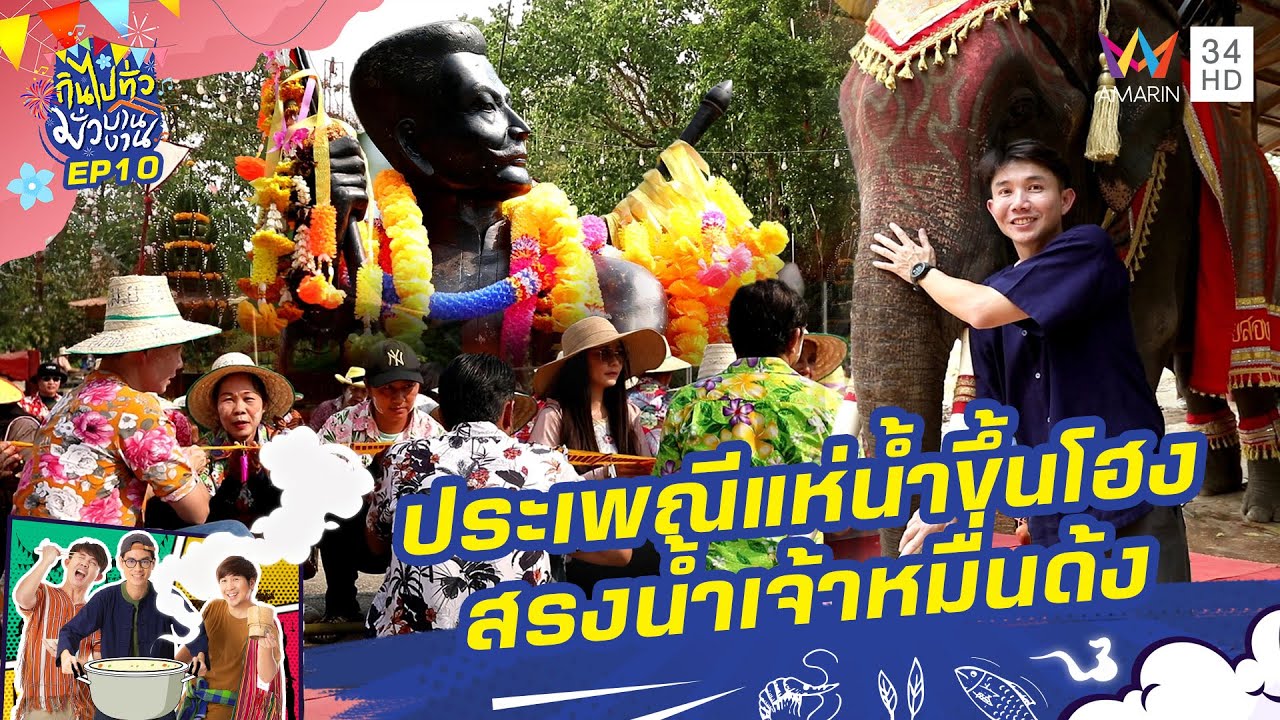

 Historical Sites and Monuments(4)
 Landmarks and Memorials(5)
Art, Craft Centres, Tradition(11)
Landmarks and Memorials(5)
Art, Craft Centres, Tradition(11)
 Museums(5)
 Places of Worship
 Temple(40)
 Other Sacred Sites(10)
 Suburban Living
 Village, Community(3)
 Nature and Wildlife
 National Parks and Marine Reserves(3)
 Mountain (Doi)(2)
 Dam, Reservoir, Lake(4)
 Waterfalls(8)
 Caves(4)
 River, Canal(2)
 Entertainment and Agricultural
 Farms, Parks and Ecotourism(3)


