
lovethailand home >North Travel Attractions >Phetchabun Travel Attractions >Khao Kho >Khek Noi > Hmong New Year Festival
TL;DR: Hmong New Year Festival, open Held after the harvest season, usually from late December to early January, hours According to each community’s annual schedule.
Hmong New Year Festival
Open Days: Held after the harvest season, usually from late December to early January
Opening Hours: According to each community’s annual schedule
Hmong New Year Festival is one of the most vibrant cultural traditions in Phetchabun and one of the most interesting ethnic festivals for visitors who want to experience northern Thai cultural diversity in a living community setting. In Phetchabun, especially in Khek Noi, Khao Kho District, the festival attracts strong attention from local people, returning family members, and tourists who come to see the colorful clothing, community games, and festive atmosphere of the Hmong New Year.
For the Hmong community, New Year is much more than a date change. It marks the end of the harvest cycle and the beginning of a new year of life, work, and hope. Because of this, the festival is closely linked to agriculture, family reunion, gratitude, and cultural renewal. After months of hard work in the fields, the community comes together to celebrate, rest, and reconnect.
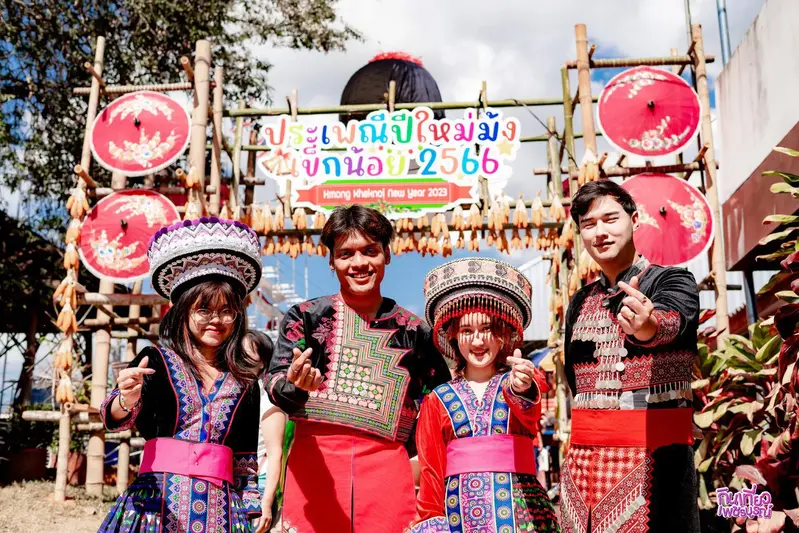
One of the most recognizable features of the festival is the traditional Hmong dress. Men, women, and especially young people wear beautifully decorated clothing in vivid colors, often with embroidered patterns and silver ornaments. For visitors, this is one of the most visually striking parts of the event. For the community itself, it is also a strong expression of identity, dignity, and pride in Hmong heritage.
The cultural meaning of the festival goes beyond celebration. Hmong New Year is also a time for family reunion. Many sons and daughters who study or work away from home return to their villages during this period. This gives the festival an emotional value that goes beyond public entertainment. It becomes a time for reunion, meeting old friends, strengthening family ties, and renewing community bonds.
Among the best-known activities is the traditional ball-tossing game, often referred to in Thai as yon luk chuang. This activity has become one of the signature images of Hmong New Year. Young men and women stand in lines and toss cloth balls to one another in a social and playful setting. In earlier times, this was also associated with courtship and meeting potential partners. Although modern life has changed some of its deeper social meaning, the activity remains one of the liveliest and most attractive parts of the festival.
Other festival elements may include cultural performances, folk games, music, dancing, community gatherings, and household-based rituals connected to Hmong belief and family life. This is what makes Hmong New Year in Phetchabun especially rewarding for cultural travelers. It is not only staged for outsiders. It remains a real community festival with living traditions at its center.
In terms of timing, Hmong New Year is traditionally linked to the lunar calendar and the agricultural cycle. Cultural documentation from Phetchabun explains that the traditional new year is associated with the waxing moon of the first lunar month, but in practice some communities adjust the timing to the second lunar month or to the late December to early January holiday period. This helps families gather more easily and ensures the harvest season has been completed. As a result, exact dates can vary slightly from one community to another.
In Phetchabun, Khek Noi is one of the best-known places to experience the festival because it is one of the largest Hmong communities in Thailand and is easy to reach along Highway 12. This accessibility has helped make Hmong New Year in Khek Noi both an important local celebration and a notable cultural tourism event for Khao Kho and the province as a whole.
What makes the festival especially memorable is its authenticity. Visitors do not simply watch a formal performance. They encounter a living community in celebration, with genuine interaction, real family participation, and cultural expressions that still belong to everyday Hmong identity. This gives the event a warmth and honesty that many travelers find memorable.
For respectful travel, visitors should dress appropriately, be mindful when taking photographs, and remember that the festival is not only a tourist event but also an important cultural and communal occasion. Approaching the festival with interest and respect leads to a much richer experience for both visitors and the host community.
Getting There is easiest by private car if you plan to visit the festival in Khek Noi, Khao Kho District. Khek Noi is located along Highway 12 and is convenient to combine with travel in the Khao Kho area. Because annual dates may vary, visitors should check the latest schedule before traveling.
In summary, Hmong New Year in Phetchabun is one of the province’s most colorful and culturally meaningful traditions. It brings together harvest celebration, family reunion, traditional dress, ball-tossing, and strong ethnic identity in one festival. For travelers who want to experience the living cultural side of Phetchabun, this is one of the most rewarding times to visit.
| Tradition Name | Hmong New Year Festival |
| Main Area in Phetchabun | Khek Noi, Khao Kho District, Phetchabun |
| Festival Period | After the harvest season, usually from late December to early January |
| Traditional Timing | Traditionally linked to the waxing moon of the first lunar month, with some communities adjusting the date based on harvest conditions and family return periods |
| Latest Verified Schedule | In 2025, the Khek Noi Hmong New Year event was held from 20–28 December 2025 |
| Highlights | Traditional Hmong clothing, ball-tossing, folk activities, and the festive atmosphere of family reunion |
| Cultural Importance | A major Hmong New Year celebration connected to harvest completion, family reunion, and cultural identity |
| Key Activities | Ball-tossing, traditional dress, folk performances, community games, and village-based celebrations |
| Cultural Value | Reflects family reunion, ethnic identity, youth interaction, and the continuity of Hmong cultural heritage |
| Travel Information | The most popular festival area in Phetchabun is Khek Noi, Khao Kho District, located along Highway 12 and best reached by private car |
| Current Status | Still actively celebrated and widely attended as one of the most important Hmong cultural events in Phetchabun |
Frequently Asked Questions (FAQ)
Q: When is Hmong New Year in Phetchabun usually held?
A: It is usually held after the harvest season, most often from late December to early January, although dates can vary by community.
Q: Where is the most popular place to see the festival in Phetchabun?
A: One of the best-known places is Khek Noi in Khao Kho District, Phetchabun.
Q: What are the main highlights of the festival?
A: The main highlights are colorful Hmong dress, ball-tossing, folk activities, and the lively reunion atmosphere within the community.
Q: Why is the festival important to the Hmong community?
A: It marks the New Year after harvest, strengthens family ties, and helps preserve Hmong cultural identity.
Q: What is the role of ball-tossing in the festival?
A: Ball-tossing is a famous Hmong New Year activity associated with social interaction and, traditionally, courtship among young people.
Q: How should visitors prepare for the festival?
A: Visitors should check the annual schedule in advance, dress respectfully, and be mindful of local customs and community space.
 Category: ●Art, Culture and Heritage
 Group: ●Art, Craft Centres, Tradition
Last Update : 6 MonthAgo
 Last Update : 6 MonthAgo
Recommend

 Historical Sites and Monuments(4)
 Landmarks and Memorials(3)
Art, Craft Centres, Tradition(4)
Landmarks and Memorials(3)
Art, Craft Centres, Tradition(4)
 Art Gallery(1)
 Educational Places
 Library(1)
 Educational Gardens, Farm(3)
 Places of Worship
 Temple(31)
 Other Sacred Sites(8)
 Suburban Living
 Village, Community(4)
 Nature and Wildlife
 National Parks and Marine Reserves(5)
 Mountain (Doi)(11)
 Dam, Reservoir, Lake(14)
 Waterfalls(21)
 Hot Springs(1)
 Caves(11)
 Flower Field(1)
 River, Canal(12)
 Other natural attractions(13)
 Entertainment and Agricultural
 Zoos and Aquariums(1)
 Farms, Parks and Ecotourism(4)
 Outdoor and Adventure Activities(2)
 Travel Articles, Recipes
 Travel Review, Food Review(1)


