
lovethailand home >North Travel Attractions >Phetchabun Travel Attractions >Muang Phetchabun >Nai Muang > Wat Phra Kaew
TL;DR: Wat Phra Kaew is located at Phet Charoen Road, Nai Mueang Subdistrict, Mueang Phetchabun District, Phetchabun Province, Thailand, open Daily, hours 08:00–17:00.
Wat Phra Kaew
Open Days: Daily
Opening Hours: 08:00–17:00
Wat Phra Kaew Phetchabun is located on Phet Charoen Road in Nai Mueang Subdistrict, Mueang Phetchabun District, Phetchabun Province. It is one of the most historically significant temples in the city, known for its ancient religious remains, archaeological discoveries, and deep connection to the old urban settlement of Phetchabun. For travelers who want to understand Phetchabun beyond mountain scenery and natural attractions, this temple offers an important glimpse into the province’s Buddhist heritage and historical landscape.
The temple is especially meaningful because it was originally part of a group of 3 old temples located in a line. Wat Phra Singh stood to the north, Wat Phra Kaew was in the middle, and Wat Phra Suea was to the south. This arrangement shows that the area was once an important religious zone in the old town of Phetchabun. It also suggests that Buddhist temples played a central role in the life of the community for many centuries.
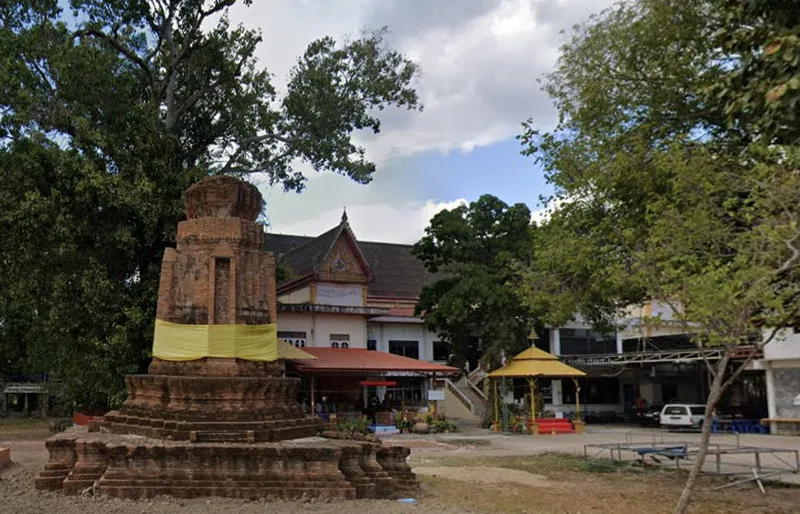
One of the most important architectural features at Wat Phra Kaew is the Phra Prang Kleeb Ma Fueang, or starfruit-ribbed prang. This ancient structure is visually distinctive because its form resembles the ridged shape of a starfruit. The prang reflects a style of religious architecture associated with historical Buddhist art and helps make the temple a valuable site for those interested in archaeology, architecture, and Thai cultural history.
In the related old temple area, Wat Phra Singh is known for its ancient chedi, while Wat Phra Kaew is known for the prang. The presence of both a chedi and a prang in the same historical zone demonstrates the diversity of Buddhist architecture in Phetchabun. These monuments help tell the story of the city’s religious development and show how local communities expressed their faith through different architectural forms.
Wat Phra Kaew is also important because ancient Buddha images were discovered within the temple area. The Fine Arts Department has estimated that some of these Buddha images are more than 700 years old. This discovery confirms the long history of Buddhist devotion in the area and gives the temple strong archaeological value. For visitors, this makes Wat Phra Kaew more than a local temple; it is a historical site that connects the present city with its ancient past.
In addition to Buddha images, several important objects have been found in the temple area, including ancient jars, pottery, bronze Buddha images, silver Buddha images, gold sheets, and Sukhothai-style terracotta votive tablets. These discoveries indicate that the temple and its surrounding area were once part of an active religious and cultural community. They also reflect artistic links with major historical traditions in Thailand, especially Sukhothai-style Buddhist art.
The temple is also home to Luang Pho To, known as Phra Phuttha Maha Rattanophat, the principal Buddha image respected by the local community. Every year on April 15, a robe-wrapping ceremony is held for the principal Buddha image. This annual ceremony reflects the living relationship between the temple and the people of Phetchabun, preserving religious customs while strengthening local identity.
For visitors, Wat Phra Kaew offers a calm and meaningful atmosphere. It is not only a place for worship but also a place for learning. Travelers can walk through the temple grounds, observe the ancient prang, pay respect to the principal Buddha image, and consider how the temple formed part of a larger historical religious landscape together with Wat Phra Singh and Wat Phra Suea.
Getting There is convenient because the temple is located in the city area of Phetchabun. Travelers can drive to Phet Charoen Road in Nai Mueang Subdistrict, Mueang Phetchabun District. Because the temple is in town, it can easily be included in a city itinerary together with the Phetchabun City Pillar Shrine, Wat Trai Phum, Phetchabun Intrachai Archaeology Hall, local restaurants, and nearby hotels.
Visitors should dress politely and behave respectfully while exploring the temple. Since the site contains ancient remains and objects of religious value, it is important not to climb on historical structures or touch old remains unnecessarily. A respectful visit helps preserve the temple as both a sacred site and a historical learning place for future generations.
In summary, Wat Phra Kaew Phetchabun is a valuable destination for travelers interested in temples, archaeology, Buddhist art, and local history. Its highlights include the starfruit-ribbed prang, the ancient chedi of the related Wat Phra Singh area, Buddha images estimated to be more than 700 years old, Sukhothai-style votive tablets, and the annual robe-wrapping ceremony for Luang Pho To. It is one of the best places in Phetchabun city to experience the province’s historical and spiritual depth.
| Name | Wat Phra Kaew Phetchabun |
| Location | Phet Charoen Road, Nai Mueang Subdistrict, Mueang Phetchabun District, Phetchabun Province, Thailand |
| Highlights | Phra Prang Kleeb Ma Fueang, ancient chedi, Buddha images over 700 years old, and important archaeological finds |
| History | An old temple in the historic city area of Phetchabun, originally part of a line of 3 temples: Wat Phra Singh, Wat Phra Kaew, and Wat Phra Suea |
| Distinctive Features | A city temple with important archaeological remains, Buddhist art, and a distinctive starfruit-ribbed prang |
| Main Areas / Zones | Phra Prang Kleeb Ma Fueang, ancient remains, Luang Pho To or Phra Phuttha Maha Rattanophat, and the historic temple zone connected with Wat Phra Singh and Wat Phra Suea |
| Abbot | Phra Khru Si Phatchara Bowon |
| Main Contact Number | 065-895-6256 |
| Travel Information | Located in Phetchabun city and easily accessible by private car, taxi, or local transport within the city |
| Current Status | Open to visitors and worshippers |
| Open Days | Daily |
| Opening Hours | 08:00–17:00 |
| Annual Ceremony | Robe-wrapping ceremony for Luang Pho To, or Phra Phuttha Maha Rattanophat, held every year on April 15 |
| Nearby Tourist Attractions | 1. Phetchabun City Pillar Shrine – 1 km 2. Wat Trai Phum – 1 km 3. Phetchabun Intrachai Archaeology Hall – 2 km 4. Phetchabura Public Park – 3 km 5. Huai Pa Daeng Reservoir – 13 km |
| Nearby Restaurants | 1. Khanom Jeen Khun Ta – 1 km 2. Caveman Coffee – 1 km 3. Cup Craft Specialty Phetchabun – 1 km 4. SKYLAB Sa Klang Mueang – 1 km 5. Heng House Phetchabun – 3 km Tel. 080-688-1519 |
| Nearby Accommodations | 1. HOP INN Phetchabun – 1 km Tel. 02-080-2222 2. A Day In Phetchabun Hotel – 2 km Tel. 092-635-6555 3. Feungfah Litz – 2 km Tel. 056-786-434 4. The One Phetchabun – 2 km 5. Klang Muang River Home – 2 km |
Frequently Asked Questions (FAQ)
Q: Where is Wat Phra Kaew Phetchabun located?
A: It is located on Phet Charoen Road in Nai Mueang Subdistrict, Mueang Phetchabun District, Phetchabun Province.
Q: What is Wat Phra Kaew Phetchabun famous for?
A: It is known for the Phra Prang Kleeb Ma Fueang, ancient Buddhist remains, Buddha images over 700 years old, and important archaeological discoveries.
Q: What were the 3 old temples in this area?
A: The 3 old temples were Wat Phra Singh to the north, Wat Phra Kaew in the middle, and Wat Phra Suea to the south.
Q: Is there an annual ceremony at the temple?
A: Yes, the robe-wrapping ceremony for Luang Pho To, or Phra Phuttha Maha Rattanophat, is held every year on April 15.
Q: Is Wat Phra Kaew suitable for foreign travelers?
A: Yes, it is suitable for travelers interested in temples, Buddhist art, archaeology, and local history in Phetchabun.
Q: How can visitors get there?
A: The temple is located in Phetchabun city and is easily accessible by private car, taxi, or local transport.
 Category: ●Places of Worship
 Group: ●Temple
Last Update : 4 MonthAgo
 Last Update : 4 MonthAgo
 Click to Access the Navigation Map GPS
Wat Phra Kaew Map
Recommend

 Art, Culture and Heritage
 Historical Sites and Monuments(4)
 Landmarks and Memorials(3)
 Art, Craft Centres, Tradition(4)
 Art Gallery(1)
 Educational Places
 Library(1)
 Educational Gardens, Farm(3)
Temple(31)
Educational Gardens, Farm(3)
Temple(31)
 Other Sacred Sites(8)
 Suburban Living
 Village, Community(4)
 Nature and Wildlife
 National Parks and Marine Reserves(4)
 Mountain (Doi)(11)
 Dam, Reservoir, Lake(14)
 Waterfalls(21)
 Hot Springs(1)
 Caves(11)
 Flower Field(1)
 River, Canal(12)
 Other natural attractions(13)
 Entertainment and Agricultural
 Zoos and Aquariums(1)
 Farms, Parks and Ecotourism(4)
 Outdoor and Adventure Activities(2)
 Travel Articles, Recipes
 Travel Review, Food Review(1)


