
lovethailand home >Central Travel Attractions >Nonthaburi Travel Attractions >Bang Yai >Bang Muang > Wat Amphawan
TL;DR: Wat Amphawan is located at Moo 13, Ban Khlong Khwang, Bang Muang Subdistrict, Bang Yai District, Nonthaburi, open Daily, hours 08.00 – 16.30.
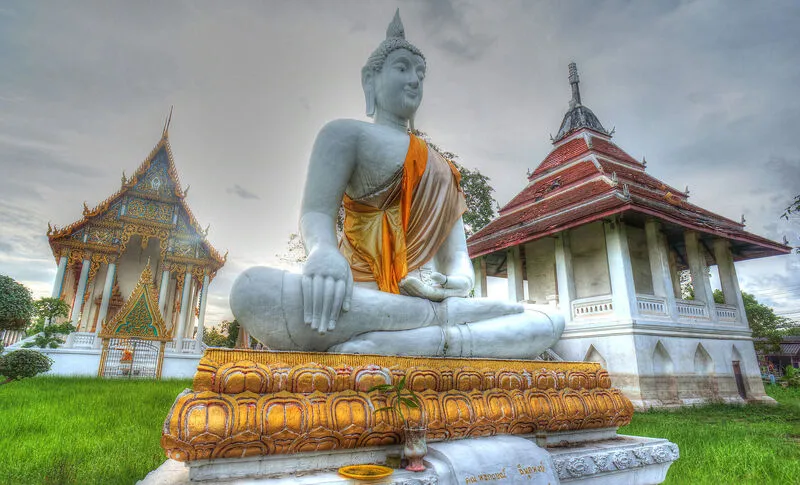
Wat Amphawan
Open Days: Daily
Opening Hours: 08.00 – 16.30
Wat Amphawan in Bang Muang, Bang Yai District, Nonthaburi, is an old temple from the late Ayutthaya period and is best known for its exquisite wooden scripture hall in the middle of a pond. Formerly called Wat Bang Muang, the temple combines local river history, refined Thai architecture, and a peaceful canal-side atmosphere. It is one of the most rewarding temple stops in Nonthaburi for travelers interested in heritage, traditional design, and quiet cultural travel.
Among Nonthaburi’s old temples, Wat Amphawan stands out for a very specific reason: its waterfront identity has never disappeared. This is not simply an old temple with a few surviving traditional features. It is a temple whose history, architecture, and setting still reflect the water-based life of the old Bang Muang community. That gives the temple a strong sense of place and makes it especially appealing to visitors who want more than a quick stop for merit-making.
The temple is located in Moo 13, Ban Khlong Khwang, Bang Muang Subdistrict, Bang Yai District, Nonthaburi. Historical information commonly associated with the temple states that it was founded in B.E. 2175 during the reign of King Prasat Thong in the Ayutthaya period. It was originally called Wat Bang Muang and stood along Khlong Mae Nam Om, the former course of the Chao Phraya River. This location is important because it explains why the temple developed as a riverside religious center and why water remains such an essential part of its identity.
The temple’s older name, Wat Bang Muang, is closely tied to the local landscape. The area was historically known for mango orchards, and the later name “Amphawan” carries the same meaning, referring to a mango grove or mango garden. This makes the name especially fitting. It preserves a memory of the local agricultural environment while also giving the temple a name with deeper religious and literary resonance.
The most celebrated feature of Wat Amphawan is its wooden scripture hall in the middle of a pond. This hall is widely admired for the completeness of its traditional Thai architectural form. It is raised above the water and built as a two-room wooden structure, with a lower section that emphasizes supporting form and an upper section designed for functional religious use. The building does not rely on size to impress. Its beauty comes from proportion, craftsmanship, and the remarkable survival of traditional detail.
The lower section includes panel forms, while the upper section features turned wooden balustrades. The door framing uses the classic rounded-headed pillar style, and the projecting decorative forms, carved wooden details, layered roof, and clay roof tiles all contribute to its strong architectural character. The roof rises in two stacked tiers with an additional wing layer, and the gable is decorated with carved motifs. For travelers interested in Thai design, this is the kind of structure that rewards careful observation from every angle.
The entrance door panels of the scripture hall are especially beautiful. They are lacquered and gilded, decorated with a phum khao bin motif, while the carved wood above and around the entrance includes floral forms and symbolic images. Above the doorway appear birds, and above them the sun and moon. These details show how the building combines utility, symbolism, and ornament in a way that is distinctly Thai. Inside the rear chamber, the hall has long been used to store ceremonial trays and carved wooden bases for Buddha images, reinforcing its connection to actual religious practice rather than display alone.
Although the scripture hall is the temple’s most famous feature, it is not the only one worth seeing. The ordination hall houses Phra Phuttha Mongkhon Sukhothai, the temple’s principal Buddha image. Within the abbot’s residence area, there is also a standing Buddha image in the Tet Sadung Mara style, notable for its unusual appearance that resembles a hat-like crown, with origins linked to the Ayutthaya period. These features add depth to the visit and show that Wat Amphawan should be appreciated as a whole temple complex rather than a single photogenic structure.
Another place worth visiting within the grounds is the footprint pavilion, which enshrines a metal replica of the Buddha’s footprint on a plaster base. The riverside pavilion is also particularly attractive, offering a slower and more reflective view of the temple environment. Sitting by the water here helps visitors understand the temple not simply as a monument, but as a riverside spiritual landscape shaped by centuries of local life.
Wat Amphawan remains valuable because it preserves the character of an old waterside temple at a time when many historic settings have been heavily altered by urban expansion. Here, visitors can still feel the relationship between religious architecture and waterways. That makes the temple especially meaningful for travelers who want to understand Nonthaburi through its older river culture rather than only through modern road-based development.
Architecturally, the scripture hall is one of the temple’s strongest claims to significance. It is often highlighted as one of the most complete traditional Thai scripture halls in the area. That gives Wat Amphawan importance far beyond local devotional life. It is also a site of value for students of Thai architecture, heritage conservation, and historical craftsmanship. Even visitors with no specialist background usually recognize that the building possesses an unusual grace and coherence.
The atmosphere of the temple is calm and deeply suitable for slow travel. Unlike large commercial temple destinations, Wat Amphawan still feels rooted in community life. Visitors can walk quietly through the grounds, spend time studying the scripture hall, pay respect to the principal Buddha image, and relax by the water. The temple works especially well for travelers who enjoy heritage sites that still feel spiritually alive rather than staged for tourism alone.
Wat Amphawan also fits naturally into a wider itinerary around Bang Muang, Bang Yai, and western Nonthaburi. Nearby, visitors can continue to Wat Chaloem Phra Kiat Worawihan, Wat Sangkhathan, Wat Suan Kaew, Wat Takien Floating Market, and riverside dining spots in the province. This makes the temple suitable both as a main destination and as part of a half-day or full-day cultural route.
Getting There can be part of the experience. One of the most memorable ways to arrive is by long-tail boat from the pier in front of the Bang Yai District Office, a trip of about five minutes. By car, the temple is accessible from the outer ring road in the Bang Bua Thong–Taling Chan direction before turning into Bang Muang. Travelers using public transport can also connect from the MRT Purple Line in the Bang Yai area and continue locally by road. The boat option, however, remains the route that best reflects the temple’s original riverside identity.
The best time to visit is from morning to mid-afternoon, when the light helps reveal the details of the wooden scripture hall and the atmosphere remains comfortable for walking. Visitors interested in photography or architectural study should allow extra time, because the temple’s beauty lies in detail rather than in a single quick view. Respectful dress and quiet behavior remain essential, especially around the scripture hall, ordination hall, and footprint pavilion.
Wat Amphawan is therefore one of Bang Yai’s most distinctive cultural temples. Its late-Ayutthaya history, mango-grove identity, riverside setting, and extraordinary scripture hall all combine to create a place of unusual depth and beauty. For travelers looking for a Nonthaburi temple with genuine heritage value and a strong sense of atmosphere, Wat Amphawan is an excellent choice.
| Name | Wat Amphawan, Wat Bang Muang |
| Location | Moo 13, Ban Khlong Khwang, Bang Muang Subdistrict, Bang Yai District, Nonthaburi |
| Address | No. 1, Moo 13, Wat Amphawan Road, Bang Muang, Bang Yai, Nonthaburi 11140 |
| Coordinates | 13.84278, 100.42250 |
| Highlights | Wooden scripture hall in the middle of a pond, ordination hall with Phra Phuttha Mongkhon Sukhothai, footprint pavilion, riverside pavilion, old waterside temple atmosphere |
| History | Founded in B.E. 2175 during the reign of King Prasat Thong in the late Ayutthaya period; originally called Wat Bang Muang |
| Name Origin | Originally named Wat Bang Muang after the local mango-growing community; “Amphawan” also means a mango grove or mango garden |
| Distinctive Features | Raised wooden scripture hall with layered roof, lacquered and gilded entrance doors, carved decorative wood, and strongly preserved traditional Thai architectural form |
| Travel Information | Long-tail boat from the pier in front of Bang Yai District Office takes about 5 minutes; accessible by car via Bang Muang roads from the outer ring road; local road connections are also possible from the Bang Yai MRT zone |
| Current Status | Open for visits and active religious use |
| Open Days | Daily |
| Opening Hours | 08.00 – 16.30 |
| Facilities | Parking, worship areas, riverside pavilion, open temple grounds |
| Main Areas / Zones | Scripture Hall in the Pond, Ordination Hall, Buddha Footprint Pavilion, Abbot’s Residence Area, Riverside Pavilion |
| Abbot / Caretaker | Phra Khru Vinayathorn Phanumat Phanupano |
| Main Contact Number | 089-669-0052 |
| Official Website / Official Page | Facebook: Wat Amphawan Bang Yai Nonthaburi |
| Nearby Tourist Attractions | 1) Wat Chaloem Phra Kiat Worawihan – about 6 km 2) Wat Sangkhathan – about 7 km 3) Wat Suan Kaew – about 9 km 4) Wat Takien Floating Market – about 10 km 5) Central Westville – about 8 km |
| Nearby Restaurants | 1) Baan Rabiang Nam – about 8 km 2) Maria Pizzeria & Restaurant Ratchaphruek – about 9 km 3) Krua Apsorn Ratchaphruek – about 9 km 4) Suanthip – about 12 km 5) Hong Seng Pochana – about 14 km |
| Nearby Accommodations | 1) Maleewana Hotel & Resort – about 7 km 2) Riverine Place Hotel & Residence – about 10 km 3) ThaiHome Resort – about 10 km 4) Westgate Residence Hotel – about 13 km 5) Grand Richmond Stylish Convention Hotel – about 15 km |
Frequently Asked Questions (FAQ)
Q: Where is Wat Amphawan located?
A: Wat Amphawan is located at No. 1, Moo 13, Wat Amphawan Road, Bang Muang, Bang Yai, Nonthaburi.
Q: When was Wat Amphawan built?
A: The temple was founded in B.E. 2175 during the reign of King Prasat Thong in the Ayutthaya period.
Q: What is the main highlight of Wat Amphawan?
A: The main highlight is the wooden scripture hall in the middle of a pond, considered one of the most complete examples of traditional Thai architecture in the area.
Q: What are the opening hours of Wat Amphawan?
A: The temple is open daily from 08.00 to 16.30.
Q: Can I reach Wat Amphawan by boat?
A: Yes. A long-tail boat from the pier in front of Bang Yai District Office takes about 5 minutes.
Q: What else can I see inside the temple besides the scripture hall?
A: You can also see the ordination hall with Phra Phuttha Mongkhon Sukhothai, the Buddha Footprint Pavilion, and the beautiful riverside pavilion.
Q: What kind of trip is Wat Amphawan best for?
A: It is ideal for heritage temple visits, Thai architectural study, photography, and a peaceful cultural half-day trip in Nonthaburi.
 Category: ●Places of Worship
 Group: ●Temple
Last Update : 7 MonthAgo
 Last Update : 7 MonthAgo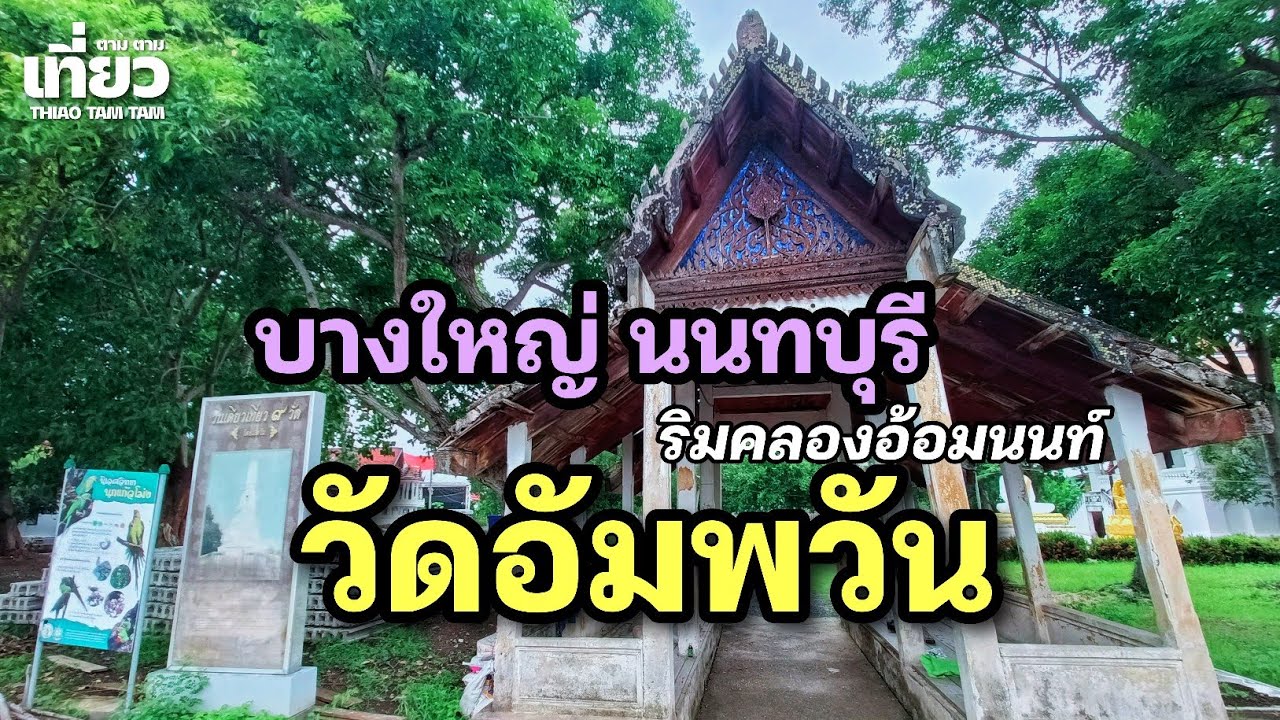
 Click to Access the Navigation Map GPS
Wat Amphawan Map
Recommend

 Art, Culture and Heritage
 Royal Palace(1)
 Art, Craft Centres, Tradition(2)
 Museums(3)
 Historic Homes and Cities(1)
 Art Gallery(1)
 Educational Places
 Museum for Study(2)
Temple(52)
Museum for Study(2)
Temple(52)
 Mosque(11)
 Other Sacred Sites(2)
 Suburban Living
 Village, Community(2)
 Floating Market(3)
 Nature and Wildlife
 National Parks and Marine Reserves(1)
 Flower Field(1)
 River, Canal(2)
 Islands(1)
 Entertainment and Agricultural
 Animal camps and shows(1)
 Farms, Parks and Ecotourism(8)
 Waterpark(1)
 Shopping
 Shopping and Night Market(1)
 Travel Articles, Recipes
 Travel Review, Food Review(1)


