
lovethailand home >Central Travel Attractions >Kanchanaburi Travel Attractions >Muang Kanchanaburi >Ban Tai > Wat Devasangharam (Wat Nuea)
TL;DR: Wat Devasangharam (Wat Nuea) is located at No. 1 Chao Khun Nen Road, Ban Nuea Subdistrict, Mueang Kanchanaburi District, Kanchanaburi 71000, Thailand, open Daily, hours Generally open for worship all day (for a comfortable visit, 08:00–17:00 is.
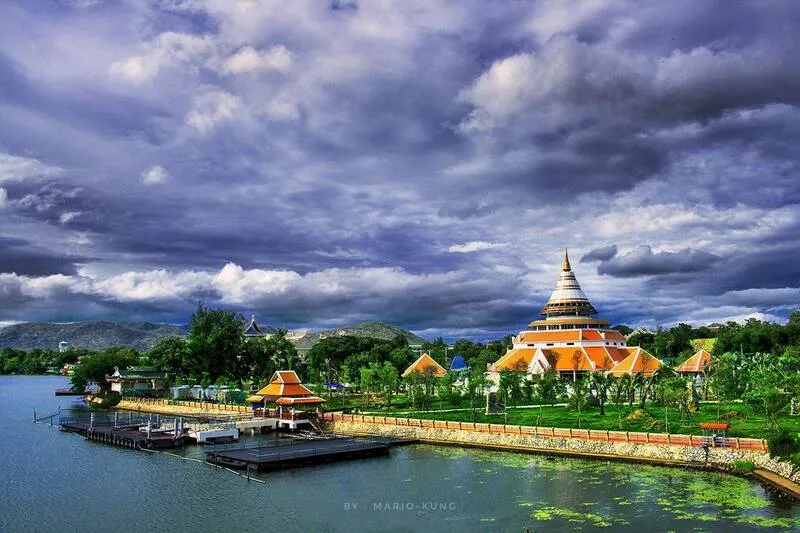
Wat Devasangharam (Wat Nuea)
Open Days: Daily
Opening Hours: Generally open for worship all day (for a comfortable visit, 08:00–17:00 is recommended)
Wat Devasangharam (Wat Nuea) is a major temple in the heart of Kanchanaburi town and holds the status of a royal temple (phra aram luang). It is easy to reach and suits merit-makers, history lovers, and travelers who want a meaningful temple stop rather than a quick visit. Highlights include the temple’s origin story that connects to Kanchanaburi’s post-Ayutthaya history, its association with important royal religious ceremonies in the past, and educational spaces such as the memorial hall dedicated to Somdet Phra Yannasangworn, which helps turn a simple “temple visit” into a deeper understanding of the town and its people.
Wat Devasangharam (Wat Nuea) is located in Ban Nuea Subdistrict, Mueang Kanchanaburi District. Many local residents revere it as a spiritual anchor of the town, because it is an old temple that has grown alongside the changes of “Kanchanaburi” itself. If you enjoy travel that combines calm atmosphere with layered historical storytelling, Wat Nuea is a strong choice to pin at the start of your itinerary. It sits in the town zone, is convenient to access, and works well as a first stop before continuing to key landmarks such as the River Kwai Bridge, Don Rak Allied War Cemetery, or the Thailand–Burma Railway learning sites—without wasting time switching areas repeatedly.
The charm of Wat Nuea lies in being “a town temple that naturally slows your pace.” Although it is surrounded by a residential and urban neighborhood, once you step inside the temple grounds, the atmosphere softens into a gentle calm. This matters for travelers who want a peaceful pause in the middle of a full day. Often, the most valuable part of city travel is not the densest schedule, but a short quiet moment to reset your rhythm and return to the present. Wat Devasangharam does that well for both locals and visitors.
In terms of history, Wat Devasangharam is commonly said to have been founded by a monk known as Than Somban Siang, although there is no definitive evidence of the exact period of construction. It is often assumed to be more than 100 years old and is regarded as one of the area’s older temples. What gives the temple’s history additional depth is the way local narratives connect it to the turmoil after the fall of Ayutthaya in 2310 BE (1767 CE), when the country suffered heavy destruction and many people and valuables were taken across the border to Burma. The oral tradition says that Than Somban Siang, a Thai from old Kanchanaburi, was taken away together with his mother. At that time, he was said to be ordained as a novice monk before later becoming fully ordained in Burma. He wished to return to his homeland, and his mother told him where valuables had been buried in their former town. This story goes beyond an individual legend, reflecting the dislocation and upheaval experienced by people during wartime.
When Than Somban Siang returned to Thailand with about 5–6 companions, the story says he disguised himself as a Mon pilgrim in order to travel safely. Upon arriving in Kanchanaburi, he found the town had changed greatly, because the authorities had relocated Kanchanaburi to a new site at Pak Phraek. The old town quieted, while the new town steadily gained residents. This becomes the key to understanding why the temple’s location matters: Than Somban Siang reasoned that founding a temple in the old town—which was becoming deserted—might not be lasting or beneficial. He therefore chose a location closer to the new Kanchanaburi town, beginning as a monastic residence first and gradually developing the site until it became a fully established temple with an ordination hall.
Seen this way, Wat Devasangharam is not only a place for merit-making; it also acts as a “social record” of Kanchanaburi’s relocation and resettlement. Many Thai temples did not begin as large-scale projects from the outset. They grew over time through faith, community gathering, and the need for a spiritual center in a changing town. When you walk through the temple with the idea that “a temple is part of the town’s structure,” you tend to notice deeper details: how the grounds are organized, how spaces support religious practice, how they accommodate crowds on important days, and how the atmosphere serves both locals and travelers at once.
Another factor that underscores Wat Nuea’s official importance is its status as a royal temple (phra aram luang), and published information noting that several Thai monarchs have visited to perform royal religious merit-making. For visitors, this indicates that the temple is more than a local place of worship; it has also hosted ceremonies and moments of national significance. One frequently mentioned event is the royal visit to present the kathina robe (often referred to in Thai as phra kathin ton) in 2506 BE (1963 CE), which brought profound joy to the people of Kanchanaburi and has been referenced again in commemorative contexts over time.
For travelers who like learning-focused visits, Wat Devasangharam also offers a space that helps explain the temple’s contemporary significance—the memorial hall dedicated to Somdet Phra Yannasangworn, located within the temple. Many visitors intentionally stop here to study history and Dhamma-based ideas, and to view displays that make the visit more than “coming to worship” but also “coming to learn.” This is especially suitable for family travel: adults often feel a sense of serenity, while children or teens gain a more tangible learning experience than a simple walk-through.
A practical way to enjoy Wat Nuea without rushing is to begin with a calm visit to the main worship area, then slowly explore the details of the grounds without forcing yourself to capture every corner on camera. The appeal of a town temple like this lies as much in the “atmosphere” as in the “structures.” If you come in the morning, the light is softer, the walk is more comfortable, and you may feel the quiet before the crowd builds. Late afternoon can also be ideal for respectful photography, though it’s best to avoid midday when the heat can limit how long you want to stay outdoors.
Dress and etiquette always matter, especially when the temple is a royal temple and remains an active space for community religious life. Dress modestly, avoid overly revealing clothing, keep voices low in worship areas, and take photographs respectfully. These are not obstacles to travel; they are how you visit in a way that honors the place. In the long run, respectful behavior helps preserve the calm atmosphere that makes the temple meaningful for everyone.
If you want your Kanchanaburi town trip to feel like “one continuous story,” starting at Wat Devasangharam is a good idea. The temple sets a foundation for understanding the town through history and community, after which you can move on to places that represent another layer of Kanchanaburi’s timeline—such as the River Kwai Bridge area, the Thailand–Burma Railway sites, or Don Rak War Cemetery. You’ll see that a single town holds multiple historical layers, from relocation narratives and temples as community anchors to World War II memories and modern tourism. This style of travel feels full in a meaningful way—not just full because you visited many places.
Getting There To reach Wat Devasangharam, start from central Kanchanaburi and head toward Ban Nuea Subdistrict. Use navigation and search for “Wat Devasangharam” or “Wat Nuea Kanchanaburi.” Because it is within the town zone, it is convenient by private car, local hired transport, or town public transport. If you plan to visit multiple places in one day, an early start is recommended so you have time for parking, a calm walk around the temple, and a relaxed pace. It is also wise to allow extra time on public holidays or during festivals when more people come to worship.
Wat Devasangharam is a place that offers quiet value. It does not need dramatic attractions to stand out; its strength lies in the weight of history and the sense of faith you can genuinely feel. Even a short stop can bring calm, a clearer understanding of the town, and the feeling of having gently reset your mind before returning to everyday life. If you are looking for a town temple in Kanchanaburi that works for worship, learning, and starting a trip with meaning, Wat Nuea is one worth visiting.
| Name | Wat Devasangharam (Wat Nuea) (Wat Devasangharam) |
| Address | No. 1 Chao Khun Nen Road, Ban Nuea Subdistrict, Mueang Kanchanaburi District, Kanchanaburi 71000, Thailand |
| Place Summary | A royal temple in Kanchanaburi town with history tied to the area’s urban transition and community roots. Ideal for worship, learning, and a calm stop before continuing to key city landmarks. |
| Key Highlights | Royal temple status, origin story linked to local history, association with major royal religious events in the past, and the Somdet Phra Yannasangworn memorial hall for learning-focused visitors. |
| History | Local narratives say the temple was founded by Than Somban Siang, though the exact construction period is unclear. The story reflects the post-Ayutthaya turmoil and Kanchanaburi’s relocation to Pak Phraek. The temple later gained royal temple status, and a notable event often mentioned is the royal visit for kathina in 2506 BE (1963 CE). |
| Abbot (Latest) | Phra Kittisuwatthanaphon, Ph.D. |
| Open Days & Hours | Daily (generally open for worship all day; 08:00–17:00 recommended for a comfortable visit) |
| Admission | Free entry (donations welcome) |
| Facilities | Worship areas and walkways within the temple, learning space/memorial hall (hours may differ from general worship access), and parking areas arranged by the temple. |
| Travel | Located in Kanchanaburi town (Ban Nuea). Search “Wat Devasangharam” or “Wat Nuea Kanchanaburi” on maps. Convenient by private car and local transport. |
| Current Status | Open for worship and visits as usual |
| Contact Number | 034-511-216 |
| Nearby Tourist Attractions (Approx. Distance + Phone) | 1) Kanchanaburi Skywalk ~2 km Tel. 098-952-0628 2) Thailand–Burma Railway Centre ~4 km Tel. 034-512-721 3) Kanchanaburi War Cemetery (Don Rak) ~4 km Tel. 034-511-500 4) Bridge Over the River Kwai ~6 km Tel. 034-512-979 5) JEATH War Museum ~6 km Tel. 034-511-263 |
| Nearby Restaurants (Approx. Distance + Phone) | 1) Keeree Tara Restaurant ~6 km Tel. 034-513-855 2) Keeree Mantra Restaurant ~6 km Tel. 034-540-889 3) Bell’s Pizzeria ~6 km Tel. 081-010-6614 4) Jolly Frog Restaurant ~6 km Tel. 034-512-028 5) On’s Thai Issan Vegetarian Restaurant ~6 km Tel. 087-364-2264 |
| Nearby Accommodations (Approx. Distance + Phone) | 1) U Inchantree Kanchanaburi ~6 km Tel. 034-521-584 2) Felix River Kwai Resort ~6 km Tel. 034-551-000 3) Dheva Mantra Resort ~7 km Tel. 034-615-999 4) Mida Resort Kanchanaburi ~25 km Tel. 034-919-606 5) Good Times Resort Kanchanaburi ~7 km Tel. 034-513-888 |
Frequently Asked Questions (FAQ)
Q: Where is Wat Devasangharam (Wat Nuea) located?
A: It is in Ban Nuea Subdistrict, Mueang Kanchanaburi District, Kanchanaburi. You can search “Wat Devasangharam” or “Wat Nuea Kanchanaburi” on maps for easy navigation.
Q: Is Wat Nuea a royal temple?
A: Yes. Wat Devasangharam holds royal temple (phra aram luang) status and is an important temple for Kanchanaburi residents in both faith and local historical narratives.
Q: What time does Wat Devasangharam open?
A: It is generally open for worship all day. For a comfortable visit and better light for photos, 08:00–17:00 is recommended.
Q: What is a key highlight for learning-focused visitors?
A: The temple includes an educational space such as the memorial hall dedicated to Somdet Phra Yannasangworn. Please note that the hall’s visiting hours may differ from the general worship access hours.
Q: What should I wear and how should I behave when visiting?
A: Dress modestly, keep your voice low in worship areas, and take photos respectfully to maintain the temple’s sacred atmosphere.
Q: If I have limited time, how can I visit efficiently?
A: With 30–45 minutes, focus on worship in the main area and enjoy a calm walk around the grounds. With 1–2 hours, you can explore more details and include the learning spaces within the temple.
 Category: ●Places of Worship
 Group: ●Temple
Last Update : 7 MonthAgo
 Last Update : 7 MonthAgo
 Click to Access the Navigation Map GPS
Wat Devasangharam (Wat Nuea) Map
Recommend

 Art, Culture and Heritage
 Historical Sites and Monuments(13)
 Landmarks and Memorials(5)
 Art, Craft Centres, Tradition(7)
 Museums(7)
 Art Gallery(1)
Temple(37)
Art Gallery(1)
Temple(37)
 Church(2)
 Other Sacred Sites(6)
 Research and Development
 Royal Project(1)
 Suburban Living
 Village, Community(5)
 Local Market(1)
 Nature and Wildlife
 National Parks and Marine Reserves(11)
 Mountain (Doi)(6)
 Dam, Reservoir, Lake(9)
 Waterfalls(19)
 Hot Springs(3)
 Caves(20)
 River, Canal(3)
 Other natural attractions(4)
 Entertainment and Agricultural
 Zoos and Aquariums(2)
 Animal camps and shows(4)
 Farms, Parks and Ecotourism(11)
 Cinema(1)
 Outdoor and Adventure Activities(2)
 Travel Articles, Recipes
 Travel Review, Food Review(1)


