

 Home
Home Chiang Mai(










Rating: 3.7/5 (7 votes)
 |
|  Map
Map 
 Have Map
  No Map
Chiang Mai attractions
Attractions in Thailand
Open Days: Monday–Saturday (closed on Sundays and public holidays)
Opening Hours: 10:00–15:30
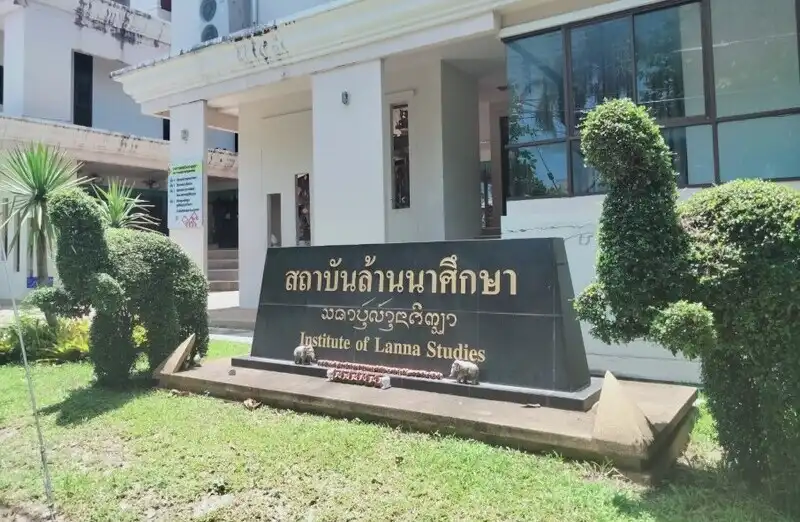
Institute of Lanna Studies (Institute of Language, Arts and Culture, Chiang Mai Rajabhat University) is located inside the Theparat Ratchasuda Building on Chang Phueak Road in Chiang Mai. It is one of the best places for anyone who wants to understand Lanna culture in a deeper way than the usual tourist impressions. The building itself is designed in a contemporary Lanna architectural style, four storeys high with around 1,950 square meters of usable floor area. Inside, it accommodates permanent exhibitions, cultural activities, and hands-on training programs related to Lanna arts and culture. As a result, this is not just another university building, but a shared cultural space that connects the academic world with the living heritage of Northern communities in a very natural way.
Upon entering the building, visitors will find exhibitions on the ways of life of Lanna ethnic groups in the eight upper-northern provinces, presented in a systematic and accessible manner. These include Tai Yuan, Tai Lue, Tai Khün, Tai Yong, Shan, and Lua communities. Each group has its own historical background, settlement patterns, language, clothing styles, beliefs, and rituals. Walking past rows of traditional costumes, household items, and photographs, accompanied by explanatory panels, gives a clear sense of just how diverse “Lanna” really is, far beyond the common habit of grouping everyone together as simply “northern people.”
The institute also features a rich display of Lanna indigenous knowledge in many fields, including language and literature, Lanna script and palm-leaf manuscripts, traditional crafts such as weaving, silverwork, lacquerware, and woodwork, as well as music and dance. The sounds of traditional instruments like salo, so, and sueng, together with the sight of textiles and local handicrafts, make it easy to understand that the world of Lanna is not limited to temples and pagodas. It is a whole universe of language, sound, patterns, and everyday practices woven together over generations.
Another particularly engaging exhibition focuses on traditional Lanna medicine, locally known as mho mueang or “local doctors.” Here, visitors can learn about traditional healing knowledge, medicinal herbs, diagnostic methods, and the tools used by village healers in the past. The displays show that Lanna healing practices are deeply connected with nature, spiritual beliefs, and the accumulated experience of local practitioners. Herbal decoctions, steaming, massage, and treatments that address both body and mind all reflect a holistic way of understanding health and illness in Lanna society.
The institute also presents knowledge related to Buddhism and Lanna forms of worship, including reconstructed household altars, offerings for the main Buddha image, ritual banners, tung cloth flags, embroidered textiles, and other ritual objects. These exhibits reveal the close ties between Lanna communities and Buddhist practice. The careful arrangement of each object, together with informative captions, invites visitors to see the symbolic meanings and devotion embodied in shapes, colors, and motifs that they might previously have passed by without noticing.
In addition to cultural exhibitions, the building houses a Hall of Honor, which presents the biographies and contributions of important figures associated with Lanna, and a room dedicated to King Naresuan the Great, highlighting his role and historical connections to the region. Through objects, replicas, documents, and multimedia, these rooms enrich visitors’ understanding of northern history and key personalities whose stories are often not told in detail in general museums.
What makes the Institute of Lanna Studies truly distinctive is that it does not stop at being an “indoor museum.” It also serves as a venue for activities and short training courses in various aspects of Lanna arts and culture. These include workshops in traditional crafts, Lanna language and script classes, lessons in traditional music and dance, as well as guided cultural visits to important temples in Chiang Mai. There are even classes on cooking local Lanna dishes, allowing participants to connect with culture through taste as well as sight and sound. Joining these programs gives visitors the chance to experience Lanna culture through their own senses and hands, not just through reading and viewing displays.
Getting There is relatively straightforward, as the institute is located within Chiang Mai Rajabhat University at the Theparat Ratchasuda Building, address 202 Chang Phueak Road, Chang Phueak Subdistrict, Mueang Chiang Mai District. If you are driving from the old city area, you can use Chang Phueak Gate as a reference point, then head north along Chang Phueak Road for a short distance until you see Chiang Mai Rajabhat University on the left-hand side. There is parking available inside the university. Those travelling by red songthaew can board from key points such as the old city moat, Tha Phae Gate, or Nimmanhaemin Road, and ask the driver to drop you at Chiang Mai Rajabhat University. From there, it is a short walk to the Theparat Ratchasuda Building and the Institute of Lanna Studies, following campus signs for the Institute of Language, Arts and Culture.
As for opening hours, the Institute of Lanna Studies is currently open to visitors from Monday to Saturday, 10:00–15:30, and closed on Sundays and public holidays. In general, there is no admission fee, and the exhibitions are open free of charge to the general public, students, and tourists. However, when special programs, short training courses, or specific cultural activities are organized, there may be associated fees depending on the event. Opening times may also vary according to internal schedules or space usage. Visitors are therefore advised to check the latest information from the Institute of Language, Arts and Culture or Chiang Mai Rajabhat University before planning a visit. For inquiries or group bookings, the institute can be contacted at +66 53 885 860, which is the current official telephone number.
After spending time exploring the exhibitions and activities at the Institute of Lanna Studies — from looking at old textiles and listening to traditional music to reading stories of different ethnic groups — many visitors leave with a deeper sense that Lanna is not just about picturesque temples or charming old towns. It is a living world of people, language, belief systems, and local wisdom. For anyone visiting Chiang Mai who wants a trip that emphasizes learning and genuine cultural roots, this institute is a highly worthwhile stop and a meaningful starting point for understanding what “Lanna” truly means.
| Name | Institute of Lanna Studies (Institute of Language, Arts and Culture, Chiang Mai Rajabhat University) |
| Location | Theparat Ratchasuda Building, Institute of Language, Arts and Culture, Chiang Mai Rajabhat University, 202 Chang Phueak Road, Chang Phueak Subdistrict, Mueang Chiang Mai District, Chiang Mai 50300. Located north of the old city near Chang Phueak Gate. |
| Main Features | A central hub for learning about Lanna culture, combining museum-style exhibitions with academic and community-based activities. The institute presents exhibitions on Lanna ethnic groups, indigenous knowledge, traditional Lanna medicine, Buddhism and ritual objects, as well as a Hall of Honor and a room dedicated to King Naresuan the Great, all housed in a four-storey contemporary Lanna-style building. |
| Period / Era | Established in the modern era as a center for Lanna studies within Chiang Mai Rajabhat University. It reflects late 20th to early 21st century efforts to revive and preserve Lanna culture by linking academic research with local communities and public education. |
| Key Evidence | Traditional costumes and cultural objects of Tai Yuan, Tai Lue, Tai Khün, Tai Yong, Shan, and Lua groups; Lanna language and literature materials; Lanna and Tham scripts; local handicrafts; ritual objects and Lanna Buddhist offerings; tools and knowledge related to traditional Lanna medicine; and documents and media on Lanna history and notable figures. |
| Name Origin | The title “Institute of Lanna Studies” reflects its role as a central academic and cultural unit dedicated to research, teaching, and public dissemination of knowledge about Lanna, operating under the Institute of Language, Arts and Culture, Chiang Mai Rajabhat University. It emphasizes both scholarly work and outreach through exhibitions and cultural programs. |
| Travel | From the old city area, use Chang Phueak Gate as a landmark and head north along Chang Phueak Road for about 1–2 km. Chiang Mai Rajabhat University will appear on the left-hand side. Once inside the campus, follow internal signs or ask for directions to the Theparat Ratchasuda Building, where the Institute of Lanna Studies is located. Visitors travelling by red songthaew or taxi can simply state “Chiang Mai Rajabhat University, Theparat Ratchasuda Building” as their destination. |
| Current Status | Open as an academic and cultural institution under the Institute of Language, Arts and Culture, Chiang Mai Rajabhat University, serving as a learning center for students, researchers, tourists, and the general public. The institute regularly organizes exhibitions, training courses, and projects related to Lanna arts and culture. |
| Opening Days & Hours | Open Monday–Saturday from 10:00–15:30. Closed on Sundays and public holidays. Opening hours may vary according to internal schedules and activities, so visitors are advised to check the latest information from the institute before visiting. |
| Admission Fee | Generally free of charge. Entry to the exhibitions is open to the public, students, and tourists without a fixed admission fee. Certain special programs or short training courses may have participation fees depending on the specific project, so details should be checked in advance. |
| Facilities | Parking within Chiang Mai Rajabhat University, air-conditioned exhibition rooms, restrooms for visitors, stairways and internal circulation between floors, spaces for workshops and training activities, and staff available to provide information on exhibitions and Lanna cultural programs. |
| Nearby Attractions | Chang Phueak Gate and the old city moat area (about 1–2 km), Wat Lok Moli (around 2 km), Wat Chiang Yuen (about 2 km), Wat Jed Yod and Chiang Mai National Museum (approximately 3–4 km), and Nimmanhaemin Road (approximately 3–4 km). |
| Popular Restaurants Nearby | Along Chang Phueak Road and around Chang Phueak Gate there are several local eateries and khao soi restaurants, as well as coffee shops and small Thai food places within about 1–2 km of the institute. The old city and Nimmanhaemin areas (around 3–4 km away) also offer a wide range of Northern Thai restaurants and cafes, making it easy to combine a visit with a meal before or after. |
| Popular Accommodations Nearby | Guesthouses and hostels can be found along Chang Phueak Road and around the old city within about 1–3 km of the institute. The Nimmanhaemin area and surroundings offer many boutique hotels and mid-range options, suitable for visitors who wish to stay in Chiang Mai city and make an easy trip to the institute by red songthaew or taxi. |
| Contact Number | Tel. +66 53 885 860 (Institute of Language, Arts and Culture, Chiang Mai Rajabhat University, responsible for the Institute of Lanna Studies) |
Frequently Asked Questions (FAQ)
Q: On which days is the Institute of Lanna Studies open?
A: The Institute of Lanna Studies is currently open from Monday to Saturday, 10:00–15:30, and closed on Sundays and public holidays. As opening times may occasionally change due to internal activities or events, visitors are encouraged to check the latest information from the Institute of Language, Arts and Culture or Chiang Mai Rajabhat University before visiting.
Q: Is there an admission fee to visit the Institute of Lanna Studies?
A: In general, there is no admission fee. The exhibitions are open free of charge to the public, students, and tourists. However, certain short courses or special cultural programs may have participation fees, depending on the nature of the activity.
Q: What kinds of exhibitions are presented at the Institute of Lanna Studies?
A: The main exhibitions cover Lanna ethnic groups in the eight upper-northern provinces, indigenous knowledge related to language, literature, crafts, music, and dance, traditional Lanna medicine, Buddhism and ritual objects, as well as a Hall of Honor and a King Naresuan room. Together, they offer a multi-dimensional picture of Lanna culture and history.
Q: Who is the Institute of Lanna Studies suitable for?
A: The institute is suitable for students, researchers, academics, and anyone interested in Lanna culture, as well as visitors to Chiang Mai who want to add a learning dimension to their trip. Visitors can gain knowledge from the exhibitions and also benefit from hands-on cultural activities and workshops.
Q: How can I get to the Institute of Lanna Studies without a private car?
A: You can take a red songthaew from the old city, Tha Phae Gate, or Nimmanhaemin Road and ask the driver to drop you at Chiang Mai Rajabhat University. Once inside the campus, you can follow directions to the Theparat Ratchasuda Building or ask staff for the Institute of Language, Arts and Culture and the Institute of Lanna Studies. Taxis and ride-hailing services are also convenient options.
Q: Does the Institute of Lanna Studies offer cultural training or workshops?
A: Yes. The Institute of Lanna Studies and the Institute of Language, Arts and Culture regularly organize short training courses and cultural workshops, such as traditional craft workshops, Lanna language and script classes, music and dance lessons, and guided visits to important temples in Chiang Mai. Interested visitors should follow the institute’s announcements or call in advance for details.
Q: Are visitors allowed to take photos inside the Institute of Lanna Studies?
A: In general, visitors may take photographs of the exhibitions and overall atmosphere. However, they should follow any posted signs and staff instructions in areas where photography may be restricted for conservation or other reasons, in order to help preserve the collections and maintain a good learning environment for everyone.
 Website: www.lanna.cmru.ac.th
 Tel: 053885889
 Institute of Lanna Studies Map
 Category:
  Group:
  Last Update: 7 HourAgo
Comment
 Nearby Attractions
| Keyword (Advance) |
 Region
|
 Muang Chiang Mai(