

 Home
Home Chiang Mai(










Rating: 4.3/5 (11 votes)
 |
|  Map
Map 
 Have Map
  No Map
Chiang Mai attractions
Attractions in Thailand
Open Days: Tuesday–Sunday (closed on Monday and public holidays)
Opening Hours: 08:30–16:30
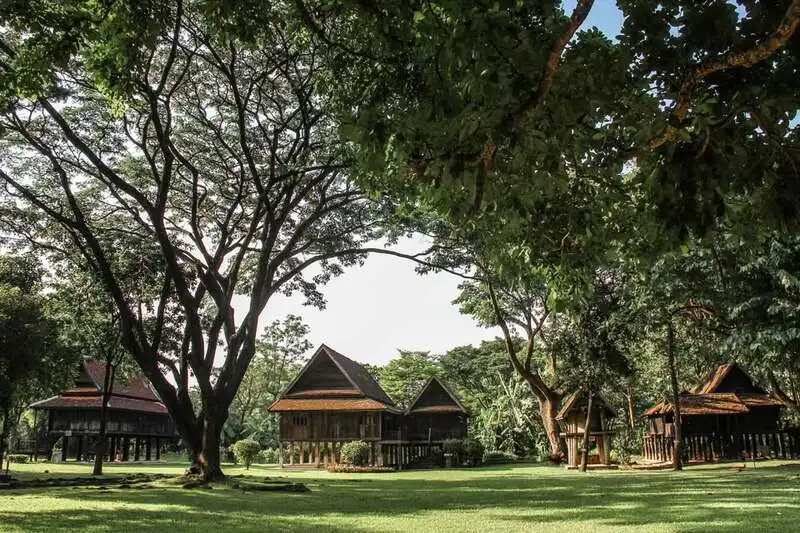
Lanna Traditional House Museum in Chiang Mai Province is one of those places that invites visitors to slow their pace, letting the breeze, the smell of aged wood, and the sight of traditional houses resting under tall trees quietly open a conversation between past and present. The museum is located on Huay Kaew Road, near Ton Payom Market Intersection, and next to the irrigation canal road, a route that stretches along the Chiang Mai University sports complex and green areas where city residents often come to breathe away from the hustle and bustle. The museum is under the Office of Art, Culture and Creative Lanna, Chiang Mai University, a unit that plays a key role in safeguarding Lanna culture so it remains visible and alive amid a constantly developing Chiang Mai. This museum is not merely a place where old wooden houses are displayed; it serves as a space that gathers the “breath of Lanna houses” which have been carefully preserved and given a new life in the present context, allowing us to truly see the meaning of dwelling and the wisdom of people in the past up close.
When you enter the museum grounds, the first impression is not of any single house but of the overall stillness and calm that surrounds you. This atmosphere comes from the way the houses are laid out in relation to their original architectural forms, as if the intention were not just for visitors to “look” but to “walk through” a dialogue between houses that once stood in different places, in different eras, and with different stories, yet now coexist harmoniously in one space. The museum was founded on the idea of collecting old houses that were at risk of disappearing under the changes sweeping through Lanna communities, whether due to migration, land sales, or lifestyle shifts that left traditional wooden houses no longer suitable for newer generations. Chiang Mai University’s Office of Art, Culture and Creative Lanna stepped in to receive donated houses or purchase them from owners, then carefully dismantled each one to reassemble it on the museum grounds. Relocating the houses is not just a physical process; it is a deliberate effort to preserve the shared memory of Lanna so that architecture, craftsmanship, and ways of life embraced by each house can continue to be studied and appreciated.
The traditional houses on display at the museum include many buildings, each with its own “voice” telling the story of the past in a unique way. One of them is the Tai Lue house of Hmon Tut, built around 1917. It originally stood in Ban Mueang Luang Nuea, Doi Saket District. This Tai Lue house reflects the identity of an ethnic group with its own distinctive culture. The entire structure is made of wood and raised on stilts high enough to catch the breeze. Its simple yet solid structure and spatial layout speak of a lifestyle closely tied to the community and local handicrafts. Standing on the veranda among wooden boards holding the marks of time, you feel as though the house is recounting the stories of the Tai Lue family who once lived there — weaving cloth, performing rituals, and spending their lives within this very space.
Another house that clearly stands apart from the traditional wooden buildings is Luang Kiu’s house, a colonial-style building constructed around 1922 and now used as the office of the cultural promotion unit. Its form reflects Western architectural influence blended with local building techniques in Chiang Mai at the time. The house is large and airy, with windows and balconies that help with ventilation. Its overall structure is markedly different from typical Lanna houses. The architect was Hmong Tan, and the original owner was Mr. Arthur Lionel Keripel. This house stands as evidence of a period when Chiang Mai was beginning to open itself to external cultures, both in architecture and in the lifestyle of its residents.
One of the houses that often draws a gentle smile from visitors is the kalae house of Ui Phat. The kalae house is a clear symbol of Lanna architecture, expressed in the carved wooden finials that decorate the gable end. However, Ui Phat’s house is a small kalae house, only three bays long, with each bay shorter than those of typical kalae houses. A particularly striking feature is the “ham yon” (protective phallic amulet) mounted above the bedroom door, which serves as a talisman according to traditional Lanna beliefs. It is thought to ward off danger and negative energies from entering the private living space. This kalae house was built around 1917 and originally located in Chom Thong District, Chiang Mai Province. Seeing the ham yon in its original position, along with the house structure preserved in traditional form, brings this building to life far beyond being just an object in a museum.
The traditional Lanna house of Ui Kaeo is another building that vividly illustrates the evolution of Lanna houses in the post–World War II era. It originally stood in Ban San Tok To, now known as the Santitham area, which has since evolved into a lively urban neighborhood. The house belonged to Ui In and Ui Kaeo Tharapanya. Its overall form still follows the classic rural house pattern, with a functional underfloor space, living area, and kitchen, but it also incorporates more modern walls and windowed doors. This shows the transitional period when rural lifestyles began to merge with urban development and modern technology, yet without breaking away from their traditional Lanna roots.
The kalae house of Phaya Wong is a medium-sized, high-stilted wooden house that looks both elegant and powerful. It originally stood in Pa Sang District, Lamphun Province, and was built around 1897. The house was passed down for about three generations before being relocated to Wat Suwan Chedi in Lamphun and eventually moved again to this museum. With its gabled roof, high stilts, and use of hardwood, the house appears solid and dignified, reflecting the status and social role of its owner in the past. It does not narrate only the story of a single family, but also the relationship between house, temple, and community in late Lanna society.
The Chiang Mai Wiang house of Phaya Pong Langka is a medium-sized wooden house that originally stood inside the old city walls of Chiang Mai, built around 1896. The building consists of two joined structures sharing a single floor. There are two overlapping gabled roofs connected by a wooden gutter known as “hong lin” between the eaves. The western side serves as an open sleeping area, while the eastern side is used as the kitchen. This kind of layout creates clear functional zoning within the home, separating living quarters from cooking areas while still uniting them under one roof. The high stilted underfloor area is used as a multipurpose space for work, storage, and daytime relaxation. The house reflects the lifestyle of Chiang Mai’s urban residents who balanced city living with the simplicity of rural traditions.
The Anusarn Sunthorn hipped-roof house is one of the most elegant and meticulously crafted buildings in the museum. It is a two-storey wooden structure with beautifully layered hipped roofs combined with a gabled projection at the front. The roof is covered with terracotta tiles, locally known as “din kho.” On the upper floor, a long balcony runs from the front hall to the back of the house, creating a semi-outdoor space that catches the breeze. Inside the main hall, a wooden staircase gently descends to the lower floor. This house was built by Luang Anusarn Sunthorn and Mrs. Khamthiang Chutima as a gift for their son, Dr. Yong Chutima, around 1924. It originally stood near Anusarn Market in downtown Chiang Mai. Seeing the house in the context of the museum is like looking back to the era when Chiang Mai was growing into a trading and tourist city as we know it today.
Another essential element that no Lanna house can be complete without is the rice barn or “hong khao,” which serves as the heart of every farming family. The rice barn on display at the museum once belonged to Phaya Wong’s house. It is a high-stilted wooden structure with a surrounding balcony and a low-sloping roof that covers the entire building to protect it from rain and moisture. Inside, it is used to store paddy rice as food reserves for the whole year. Seeing a real rice barn with its posts, beams, and ventilation system allows visitors to immediately grasp that rice is not just an economic crop but the central pillar of Lanna family and community life.
Looking at all the houses together, we see the development of Lanna architecture through different periods — the Tai Lue house expressing ethnic identity, the kalae house representing regional craftsmanship, the Chiang Mai Wiang house reflecting urban lifestyles, and the hipped-roof house showing social advancement and the influence of foreign architecture. The beauty of these houses does not lie in flawless perfection but in their cracks, tool marks, nail holes, and time-worn surfaces. All of these are “traces of life” carried by the houses before they were reassembled at the museum. Visitors do not feel like they are viewing replicas; instead, it feels like standing inside homes that once truly sheltered people.
The experience of walking through the Lanna Traditional House Museum naturally encourages visitors to slow down. Passing under the raised floors, one might picture the original residents weaving, cooking, or organizing household items on a rainy day. Walking through the sleeping areas, you can imagine lamplight shining through small gaps in the wooden walls, carrying cool air gently through the space. The fragrance of old wood, seasoned by decades of sun and wind, gives the sense that time has been folded into each layer of the grain. Every time you touch the floorboards or wooden pillars, it feels as though you are reaching back to the memories of countless people who once shared this environment.
Beyond displaying houses, the museum also serves as an important learning center for Chiang Mai University students, cultural researchers, architecture students, and those interested in wooden house conservation. Many come to study traditional joinery techniques, timber craftsmanship, house layout, and beliefs about living spaces — such as choosing the orientation of the house to catch cool breezes, arranging the kitchen in relation to water sources and washing areas, and conducting rituals for building a new home. The museum frequently hosts hands-on activities, such as craft demonstrations, lectures on Lanna wisdom, and in-depth guided tours, ensuring that visitors gain both visual impressions and substantial knowledge.
Getting There is straightforward, as the museum is located within Chiang Mai University grounds along Huay Kaew Road. If you are driving, follow Huay Kaew Road from the old city toward the university, pass the Phucome Intersection, then continue toward Ton Payom Market. Watch for signs for the Office of Art, Culture and Creative Lanna and turn in at the entrance leading to the museum area, where parking is available. Those travelling by red songthaew can ask to be dropped off at Chiang Mai University or Ton Payom Market and then walk a short distance to the cultural promotion office. The museum is relatively close to the old city moat and Nimmanhaemin Road, making it easy to combine a visit here with stops at nearby temples or cafes in the same area.
As for opening hours, the Lanna Traditional House Museum is currently open to visitors from Tuesday to Sunday, 08:30–16:30, and closed every Monday and on public holidays. There is an admission fee of 100 baht per person for the general public. Students, senior citizens aged 60 and above, educational staff, monks, novices, nuns, clergy of other religions, persons with disabilities, and alumni of Chiang Mai University are exempt from the fee. Visitors should bring their ID card or student card to present to staff when requesting an exemption. For further information or group visit arrangements, you can contact the museum at 0 5394 3626, which is the officially announced number currently in use.
Amid the lively pace of modern Chiang Mai, the Lanna Traditional House Museum serves as a “quiet zone” where visitors can gently reconnect with the roots of the people of this land through architecture that still stands strong after more than a century. Visiting these old wooden houses is not just about admiring beautiful structures; it is about understanding how the lives of people in the past were shaped by systems of thought, relationships with nature, and the artistry embedded in every house they built. A house is not just a place to live, but a reflection of its owner’s identity and a chapter of Lanna history that deserves to be experienced firsthand. As you leave the museum and look back at the houses standing calmly and gracefully, you may feel that the memories of past generations still drift on the breeze and have not disappeared. They are simply passed on to new visitors through seeing, walking among, and recognizing the deeper value of “home” beyond the idea of a mere building.
| Name | Lanna Traditional House Museum (พิพิธภัณฑ์เรือนโบราณล้านนา), CMU |
| Location | Within the Office of Art, Culture and Creative Lanna, Chiang Mai University, 239 Huay Kaew Road, Suthep Subdistrict, Mueang Chiang Mai District, Chiang Mai 50200, near Ton Payom Market Intersection and the irrigation canal road. |
| Main Features | An open-air museum displaying many traditional Lanna houses and rice barns that have been dismantled and relocated from various areas across Northern Thailand. The site showcases Tai Lue houses, kalae houses, Chiang Mai Wiang townhouses, rural Lanna houses, and hipped-roof mansions of local elites, all set in a shady landscape with large trees. It is ideal for studying architecture, ways of life, and traditional wisdom of Lanna communities. |
| Period / Era | The houses on display were built from the late early Rattanakosin period through the post–World War II era, roughly from the late 19th century to the mid-20th century (approximately 1896–post 1945). They reflect the development of Lanna houses from traditional agrarian society to an era that began to absorb Western architectural influences. |
| Key Evidence | The Tai Lue house (Hmon Tut) from Ban Mueang Luang Nuea, Doi Saket District; the kalae house (Ui Phat) from Chom Thong District; the traditional Lanna house of Ui Kaeo from Ban San Tok To; the kalae house (Phaya Wong) from Pa Sang District, Lamphun; the Chiang Mai Wiang house (Phaya Pong Langka) from within the old city walls; the hipped-roof house (Anusarn Sunthorn) from the Anusarn Market area; and rice barns relocated from traditional communities in Northern Thailand. |
| Name Origin | The name “Lanna Traditional House Museum” reflects its core mission to collect, preserve, and exhibit traditional Lanna houses from different areas so that the general public and scholars can learn about house types, building materials, craftsmanship, and the ways of life of people in Lanna culture. |
| Travel | From downtown Chiang Mai or the old city moat, follow Huay Kaew Road toward Chiang Mai University, pass the Phucome Intersection, and continue toward Ton Payom Market. Look for signs for the Office of Art, Culture and Creative Lanna, then turn into the compound where parking is available for visitors. Alternatively, take a red songthaew from the city and get off at Chiang Mai University or Ton Payom Market, then walk a short distance to the museum area. The museum is about 3–4 km from Nimmanhaemin Road and the old city, making it easy to combine with other nearby attractions. |
| Current Status | Open to visitors as an open-air museum under the Office of Art, Culture and Creative Lanna, Chiang Mai University. It serves as a learning center for Lanna ways of life, traditional wooden architecture, and local wisdom, and hosts cultural and educational activities throughout the year. |
| Opening Days & Hours | Open Tuesday–Sunday from 08:30–16:30. Closed every Monday and on public holidays. Visitors are advised to check for any temporary closure announcements in advance, especially on festival days or during special events. |
| Admission Fee | General admission is 100 baht per person (according to the fee adjustment effective from 9 January 2023). Students, visitors aged 60 and over, educational staff, monks, novices, nuns, clergy of other religions, persons with disabilities, and Chiang Mai University alumni are exempt from the fee upon presenting appropriate identification to staff. |
| Facilities | On-site parking, visitor restrooms, shaded walkways under large trees, informative signs for each house, and the Office of Art, Culture and Creative Lanna providing additional information on activities and group visits. |
| Nearby Attractions | Chiang Mai Zoo and Chiang Mai Zoo Aquarium (about 3–4 km away), Huay Kaew Waterfall (about 4 km), Wat Suan Dok (about 2–3 km), Wat Jed Yod and the Chiang Mai National Museum (about 3–4 km), and the Nimmanhaemin Road area and Baan Kang Wat community (about 1–3 km). |
| Popular Restaurants Nearby | The Ton Payom Market and Nimmanhaemin areas are full of restaurants and cafes, including khao soi shops, Northern Thai eateries, and stylish coffee shops. Many are located within 1–3 km of the museum, making them convenient stops before or after visiting the traditional houses. (Visitors should check individual opening hours and details in advance.) |
| Popular Accommodations Nearby | The area around Chiang Mai University and Nimmanhaemin Road offers a wide range of accommodations, from guesthouses to boutique hotels, located roughly 1–3 km from the museum. Staying in the Nimmanhaemin area makes it easy to visit the museum by red songthaew or private car. |
| Contact Number | Tel. 0 5394 3626 (Lanna Traditional House Museum, Office of Art, Culture and Creative Lanna, Chiang Mai University) |
Frequently Asked Questions (FAQ)
Q: What days is the Lanna Traditional House Museum open?
A: The museum is currently open from Tuesday to Sunday, 08:30–16:30, and closed every Monday and on public holidays. Before visiting, it is a good idea to check official announcements for any temporary closures, especially during festivals or special events.
Q: How much is the admission fee for the Lanna Traditional House Museum?
A: General admission is 100 baht per person, as per the fee schedule effective from 9 January 2023. Students, visitors aged 60 and over, educational staff, monks, novices, nuns, clergy of other religions, persons with disabilities, and Chiang Mai University alumni are exempt from the fee when they present valid identification to staff.
Q: How many houses are on display inside the Lanna Traditional House Museum?
A: The museum exhibits many traditional Lanna houses and rice barns relocated from different parts of Northern Thailand, including Tai Lue houses, kalae houses, Chiang Mai Wiang townhouses, rural Lanna houses, and hipped-roof mansions of local elites. Visitors can clearly see the diversity of house types and Lanna lifestyles across different eras.
Q: Can visitors take photos inside the Lanna Traditional House Museum?
A: In general, visitors are allowed to take photographs of the overall atmosphere and the exterior of the traditional houses. However, they should follow posted guidelines and staff instructions, as some areas or specific exhibits may have restrictions in order to protect the condition of the houses and objects on display.
Q: How much time should I allow to see the entire museum?
A: If you wish to walk around comfortably, read the information boards, and take photos, you should allow about 1–2 hours. Those with a deeper interest in Lanna architecture or who wish to study the details more thoroughly may spend more time, depending on their level of interest.
Q: Is it possible to visit the museum without a private car?
A: Yes. It is easy to reach the museum by red songthaew from the old city moat or key points in downtown Chiang Mai. Simply ask the driver to drop you off at Chiang Mai University or Ton Payom Market, then walk a short distance to the Office of Art, Culture and Creative Lanna to reach the museum grounds.
Q: Is the Lanna Traditional House Museum suitable for children?
A: Definitely. It is an excellent place for families who want children to learn about traditional wooden houses and Lanna ways of life. The museum grounds feature lawns and shady gardens, making it pleasant and safe for children to walk around and absorb the atmosphere. However, adults should supervise them and make sure they do not climb or run in areas where the old wooden structures could be damaged.
 Website: www.art-culture.cmu.ac.th
 Tel: 053943625
 Fax: 053222680
 Lanna Traditional House Museum Map
 Category:
  Group:
  Last Update: 9 HourAgo
Comment

Photo Gellery(12) 
 Thank you photo(12) from: Arts and Culture