

 Home
Home Chiang Mai(










Rating: 3.8/5 (5 votes)
 |
|  Map
Map 
 Have Map
  No Map
Chiang Mai attractions
Attractions in Thailand
Open Days: Open daily (hours may vary depending on local authorities).
Opening Hours: Approximately 08:00–16:00.
Inthakhin Kiln Site Museum, also known as the Ancient Kiln Site of Mueang Kaen, is located in Ban San Pa Tong, Village 11, Inthakhin Subdistrict, Mae Taeng District, Chiang Mai Province. This archaeological site preserves ancient kilns and a large number of ceramic fragments found within the same area. The discovery is considered one of the most significant archaeological and historical findings in the Lanna region, confirming that the legendary “Thung Phan Aek Phan Fuea of Mueang Kaen,” mentioned during the era of King Mangrai, truly existed and was not merely folklore.
Archaeological studies suggest that Ban San Pa Tong was once a major ceramic production center of the Lanna Kingdom. The kilns are estimated to be about 500–600 years old, believed to have been constructed and used between 1950–2000 BE, which corresponds to the height of high-fired stoneware production in Northern Thailand. Most of the recovered ceramic fragments are high-fired stoneware coated in light green celadon glaze or greenish-brown glaze, both iconic of ancient Lanna ceramic craftsmanship.
The clay used to make ceramic ware at this site is a fine white clay comparable in quality to the famous Sangkhalok ware of Si Satchanalai and ceramics from the Paang kilns in Chiang Rai. This indicates the advanced knowledge of raw materials and firing techniques possessed by ancient Lanna artisans. An exceptionally rare discovery at this site is the presence of pre-fired ceramic vessels made from unburnt white clay—something never before found at any ancient kiln site in Thailand—revealing details about the complete production process from raw clay to finished ware.
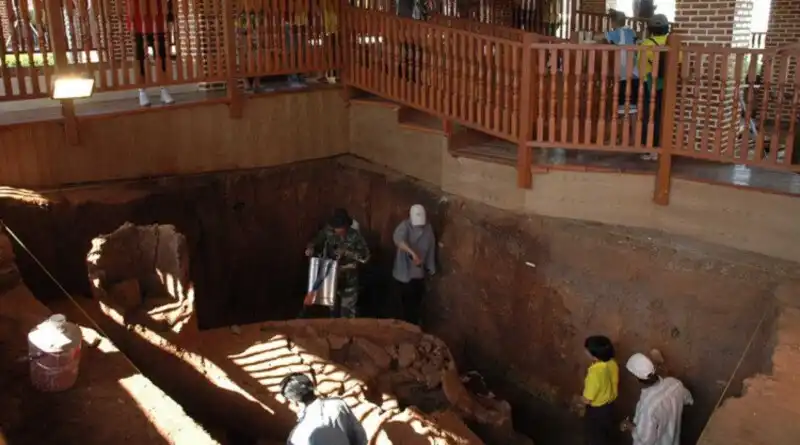
The museum has been developed as an archaeological site museum, allowing visitors to view the original kiln excavation pits, preserved kiln structures, ceramic fragments, and an interpretive exhibition explaining the origin, production techniques, and historical significance of the site. Exhibits include photographs, diagrams, and research materials that help illustrate the connection between ancient Mueang Kaen and other Lanna cities.
The surrounding landscape remains rural and peaceful, with rice fields, orchards, and low hills. Visitors can appreciate the ancient past and present-day lifestyle of the community simultaneously. Walking through the site offers a sense of what Mueang Kaen might have looked like when it thrived as a ceramic production center and a strategic frontier town under the Mangrai Dynasty.
For enthusiasts of archaeology and ceramic art, the Inthakhin Kiln Site Museum provides a rare opportunity to observe ancient kilns in their original setting along with countless pottery fragments that reveal clues about shaping, glazing, firing, and quality control practiced by craftsmen centuries ago.
Today, the museum serves as an educational site managed collaboratively by local authorities and the community. Schools often bring students for field trips, allowing them to learn about Lanna history and ceramic traditions through hands-on experience, making the site both a cultural heritage space and an outdoor classroom.
After visiting the museum, travelers can continue their journey to the nearby Mae Ngat Somboon Chon Dam, a scenic reservoir offering lakeside restaurants, floating accommodations, boat rides, and peaceful natural surroundings. The dam is a popular spot for relaxing after exploring the archaeological site.
Getting There Travel from Chiang Mai City along Highway 107 (Chiang Mai–Fang Road) toward Mae Taeng. Then follow the signs into Inthakhin Subdistrict and Ban San Pa Tong. Most roads are paved, making the area accessible by private car, rental vehicle, or local songthaew. Local residents can easily provide directions to the kiln site.
| Name | Inthakhin Kiln Site Museum (Ancient Kiln Site of Mueang Kaen), Ban San Pa Tong, Inthakhin Subdistrict, Mae Taeng District, Chiang Mai Province |
| Location | Village 11, Ban San Pa Tong, Inthakhin Subdistrict, Mae Taeng District, Chiang Mai Province, Northern Thailand |
| Characteristics | An archaeological kiln site featuring well-preserved ancient kilns, high-fired stoneware fragments, celadon ceramics, and pre-fired clay vessels. Developed into an open-air archaeological museum. |
| Period | Believed to have been built and used between 1950–2000 BE (approximately 500–600 years ago), during the post-Mangrai Lanna Kingdom era. |
| Key Evidence | Ancient kilns, celadon-glazed stoneware, greenish-brown glazed stoneware, high-quality white clay, pre-fired ceramic vessels, and archaeological documentation illustrating Lanna-era ceramic production. |
| Name Origin | Named after Inthakhin Subdistrict, historically part of Mueang Kaen, an important Lanna frontier town. The museum’s name reflects both its archaeological significance and local heritage. |
| Travel | From Chiang Mai, take Highway 107 to Mae Taeng, then follow signs into Inthakhin Subdistrict and Ban San Pa Tong. Accessible by private car, rental vehicle, or local songthaew. Locals can assist with directions. |
| Nearby Tourist Attractions with Distance | - Mae Ngat Somboon Chon Dam, 15–20 km - Scenic viewpoints around the Mae Ngat reservoir, 15–20 km - Homestays and nature resorts in Mae Taeng (Cholae and Ban Pao areas), 15–30 km |
| Popular Restaurants Nearby (Distance / Phone) | - Srilanna Cafe' & Cuisine, near Mae Ngat Dam, 15–20 km, Tel. 089 958 8014 - Eakachai Houseboat Restaurant, floating restaurant at Mae Ngat Dam, 15–20 km, Tel. 083 480 5679, 081 950 9420 - Additional lakeside restaurants and cafés around Mae Ngat and Mae Taeng, 15–30 km |
| Popular Accommodations Nearby (Distance / Phone) | - Velaloy Floating Resort, Mae Ngat Dam, 15–20 km, Tel. 062 294 9000 - Eakachai Houseboat Chiang Mai, Mae Ngat Dam, 15–20 km, Tel. 083 480 5679, 081 950 9420 - Phusanfah Resort, Mae Taeng, 20–30 km, Tel. 087 702 9888, 085 449 2888 |
| Facilities | Parking areas near the site, walking paths around the excavation area, interpretive signage, a small exhibition building, restrooms nearby, and access to restaurants and accommodations in Mae Taeng and Mae Ngat. |
| Fees | No official entrance fee is charged. Visitors may donate voluntarily. It is recommended to confirm updated information with local authorities before visiting. |
| Current Status | Open to the public as an archaeological site and museum under the management of local government and the community. Serves as a cultural tourism attraction and educational resource for Lanna ceramic history. |
| Contact Number | Tel. 053 857 360 (Local administrative office responsible for the site). Recommended to call in advance to confirm visiting conditions. |
Frequently Asked Questions
Q: What are the opening days and hours?
A: The museum is generally open daily from 08:00–16:00. Hours may change depending on local management, so checking ahead is advised.
Q: Is there an entrance fee?
A: There is usually no official entrance fee. Visitors may donate voluntarily to support conservation efforts. Groups should contact local authorities in advance.
Q: What is the highlight of the Inthakhin Kiln Site Museum?
A: Its well-preserved ancient kilns, celadon stoneware, high-quality white clay, and rare pre-fired ceramic vessels provide a comprehensive understanding of ancient Lanna ceramic production.
Q: Is the museum suitable for students and children?
A: Yes, it is an excellent outdoor learning site for history, archaeology, and art. Students can explore real excavation pits and ancient ceramics firsthand.
Q: How can I get there without a private car?
A: Take a bus or songthaew on the Chiang Mai–Mae Taeng route via Highway 107, then transfer to a local songthaew or motorbike taxi to Inthakhin Subdistrict and Ban San Pa Tong.
Q: Can this visit be combined with a trip to Mae Ngat Somboon Chon Dam?
A: Yes. Many visitors tour the kiln site in the morning and continue to the dam for lakeside dining, boat rides, or an overnight stay in floating accommodations.
 Tel: 05387360 ต่อ 17
 Inthakhin Kiln Site Museum Map
 Category:
  Group:
  Last Update: 3 HourAgo
Comment
 Nearby Attractions
| Keyword (Advance) |
 Region
|
 Muang Chiang Mai(