

 Home
Home Chiang Mai(










Rating: 3.1/5 (7 votes)
 |
|  Map
Map 
 Have Map
  No Map
Chiang Mai attractions
Attractions in Thailand
Open Days: Daily
Opening Hours: 08.00–16.30
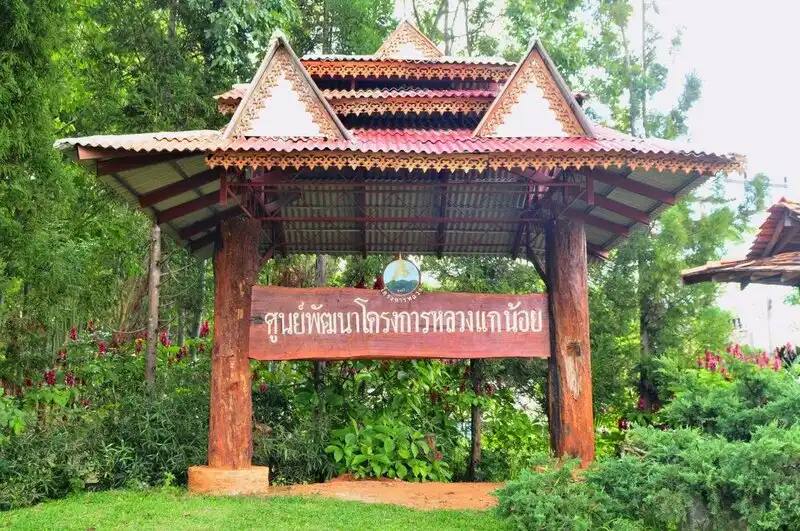
Ka Noi Royal Project Development Center is a quiet mountain retreat in Chiang Mai for travelers who want cool highland air, real silence, and the kind of stories you only get from places where development work is happening for real. The center is located in Muang Na Subdistrict, Chiang Dao District, in a borderland area that once faced geographic and economic constraints that limited opportunity. Over time, the Royal Project’s approach to land use, water systems, and livelihoods gradually shifted the area from uncertainty toward more stable, long-term ways of living.
The beginning of the center is closely connected to a key moment on February 27, 1980, when His Majesty King Bhumibol Adulyadej and Her Majesty Queen Sirikit visited the Musoe (Lahu) villagers of Ban Ka Noi. During the visit, they learned of the community’s major problems at that time: household income that depended largely on opium cultivation, rice farming that could be done only once a year, and declining yields caused by planting the same crops repeatedly for many years without restoring soil fertility. These conditions contributed to soil degradation and erosion, making livelihoods even more fragile.
What made Ka Noi a place where development could be planned and sustained was the nature of the terrain and the presence of water sources that could be improved for both household use and agriculture. The area is sloping but not excessively steep, and the water potential made it possible to promote crops that suit local conditions and can generate stable income. His Majesty graciously provided personal funds to support the work. As a result, the goal did not stop at simply finding “replacement crops” for opium. The direction moved toward permanent agriculture, long-term livelihood security, and improvements in basic factors that shape quality of life in highland communities.
In terms of responsibility, Ka Noi Royal Project Development Center oversees an area of approximately 91.53 square kilometers (57,210 rai), covering 13 villages. The population includes Red Lahu (Musoe), Yunnan Chinese, and Tai Yai (Shan) communities, with residents practicing both Buddhism and Christianity. Because Ka Noi sits near the Thai–Myanmar border, it was once seen as a kind of “closed area” in terms of access. The Royal Project helped open pathways for knowledge, livelihoods, and development to reach the community in a more systematic and sustainable way.
Agricultural tourism is one of the main reasons people come here. It turns a mountain visit into something more than sightseeing because you can see how highland farming works in practice. Visitors can walk through demonstration and promotion plots such as sweet red cherry tomatoes, and also see fruit orchards including macadamia and plums, along with seasonal flower plots that add color to the landscape. These visits make it clear that highland agriculture depends on careful soil and water management, and on choosing crops that fit the local climate rather than forcing the land to behave like lowlands.
Culturally, Ka Noi is compelling because it is not a single story. You can observe Musoe (Lahu) ways of life and textile weaving, and also learn about Yunnan Chinese communities, including the preservation of traditional earthen houses. Another dimension is the lifestyle of the Lahu, known for weaving and detailed embroidery. If you visit during the Musoe New Year period in February, you may witness the “Ja Khu” circle dance performed to rhythmic music, reflecting both celebration and the strength of community identity in a living tradition.
For nature-focused travelers, the center and surrounding area offer places that connect caves, waterfalls, and forest views without needing a rushed schedule. Nearby highlights mentioned for the area include Chaiya Cave, Tham Lod Cave with water flowing through it year-round, and Huai Chan Waterfall, described as a multi-tier cascade. Some travelers also continue onward toward Ban Piang in Luang Wiang Haeng District to experience a Tai Yai border community and enjoy scenic mountain views along the route.
Souvenirs here feel meaningful because they come from real work and real hands: seasonal Royal Project produce and local handicrafts such as woven shoulder bags and textiles. Buying these items is not only about taking something home, but also about supporting community income in a direct way.
Accommodation inside the center is simple, with basic guesthouses available for visitors. There are also camping areas and tent rental with sleeping bags. For groups, meals can be arranged in advance, but it is important to know that there is no walk-in restaurant service inside the center, so planning ahead matters—especially if you intend to stay overnight.
Getting There from Chiang Mai typically follows Highway 107 (Chiang Mai–Fang) through Chiang Dao. Today, a bypass route is available. At the Muang Ngai junction, turn left onto Highway 1173 (Muang Ngai–Muang Na), pass through Muang Na, and then continue along the mountain road into the basin where Ban Ka Noi is located. The route includes paved sections with short gravel stretches in some parts. It is generally passable year-round, but drivers should be cautious because the climbs and descents can be steep and sustained.
Because Ka Noi is a living border community, the visit is most rewarding when done respectfully. Ask permission before photographing people’s homes or community activities, keep noise low, do not leave trash, and avoid turning daily life into staged tourism. If you travel with courtesy and attention, you can understand the Royal Project’s impact in a way that signage alone can never fully convey.
| Place Name | Ka Noi Royal Project Development Center |
| Location | Ban Ka Noi, Muang Na Subdistrict, Chiang Dao District, Chiang Mai 50170 |
| Highlights | Royal Project highland agriculture, demonstration plots (vegetables/fruit/flowers), multicultural border communities, nearby caves and waterfall viewpoints |
| Responsible Area | 91.53 sq.km. (57,210 rai), covering 13 villages |
| Key Purpose | Livelihood development to replace opium dependency, promotion of permanent agriculture, soil and erosion problem-solving, water development for community and farming |
| Open Days | Daily |
| Opening Hours | 08.00–16.30 |
| Contact | +66 53 318 310 |
| kn7011rpf@gmail.com | |
| Facilities | Simple guesthouse accommodation, camping area, tent and sleeping bag rental (availability and conditions vary) |
| Fees | No entrance fee (accommodation and group meal arrangements should be confirmed in advance) |
| Nearby Tourist Attractions with Distance | Chaiya Cave – 5 km Huai Chan Waterfall – 4.5 km |
Frequently Asked Questions (FAQ)
Q: Where is Ka Noi Royal Project Development Center located?
A: It is located in Ban Ka Noi, Muang Na Subdistrict, Chiang Dao District, Chiang Mai.
Q: Is the center open every day and what time does it close?
A: It is open daily, with visiting hours commonly listed as 08.00–16.30.
Q: What can visitors do at the center?
A: Visitors typically come to see Royal Project agricultural plots, learn about highland farming, and experience a quiet highland setting connected to local border communities.
Q: Are food services available inside the center?
A: There is no walk-in restaurant service inside the center, but meals can be arranged in advance for group visits.
Q: Can visitors stay overnight?
A: Yes. The center provides simple accommodation and camping options, but availability and conditions should be confirmed in advance.
Q: What is the best way to travel there from Chiang Mai?
A: Use Highway 107 toward Chiang Dao, then continue via Highway 1173 toward Muang Na and onward to Ban Ka Noi. Drive carefully on long mountain ascents and descents.
 Tel: 053318310
 Mobile: 0818833449, 0819509136
 Ka Noi Royal Project Development Center Map
 Category:
  Group:
  Last Update: 16 HourAgo
Comment
 Nearby Attractions
| Keyword (Advance) |
 Region
|
 Muang Chiang Mai(