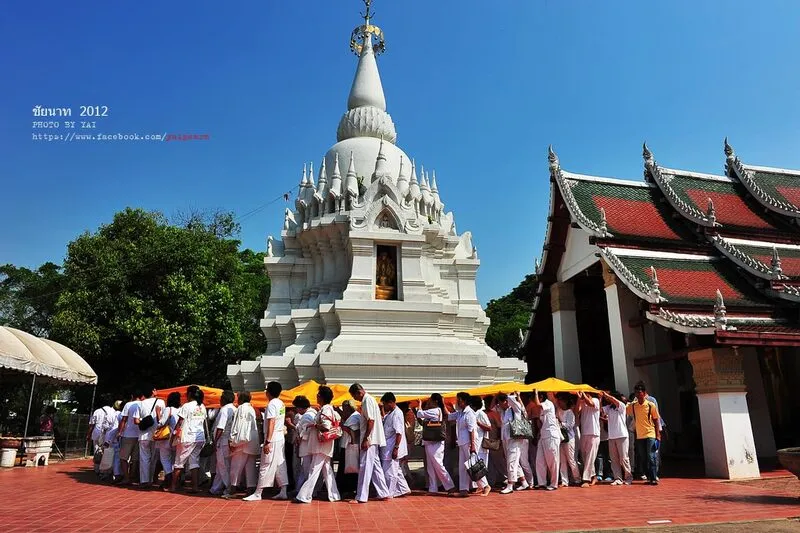

The Robe Offering Ceremony for the Sacred Relic
Rating: 4/5 (4 votes)
Search By |
Map Map Map Have Map Have Map No Map No Map

Chai Nat attractions

Attractions in Thailand

Open Days: Open daily
Opening Hours: 06:00 – 18:00
 
The Robe Offering Ceremony for the Sacred Relic at Wat Huayang is located in Tha Chanuan Subdistrict, Manorom District, Chainat Province. The temple is an important spiritual center for the local community and has served as a place of faith and devotion for residents for many generations. Inside the temple is enshrined a sacred Buddha relic, which is highly revered by Buddhists. Because of this, the temple has become the location of an important local tradition known as the “Robe Offering Ceremony for the Sacred Relic and the Flower Alms Offering Festival in Honor of the Buddha Relic.” This event is held to allow Buddhist devotees to express their faith while preserving religious traditions that have been passed down through generations.
 
The tradition of offering cloth to wrap the sacred relic is a Buddhist ritual rooted in the belief of worshipping stupas and relics, which are structures that enshrine the Buddha’s relics or objects associated with the Buddha. According to Buddhist belief, offering cloth to cover a relic stupa or decorating a sacred stupa is considered a highly meritorious act. It is believed that those who perform this act of devotion will receive great merit and blessings both in this life and in future lives.
 
This belief originates from a Buddhist legend that took place during the time of the Buddha. About three years after the Buddha attained enlightenment, the city of Vesali experienced severe disasters. The people suffered greatly from epidemics, natural calamities, and violent disturbances caused by criminals who harmed innocent people. Even monks and brahmins who practiced virtue were not spared. Many people died, and the entire city of Vesali was overwhelmed with fear and suffering.
 
When the Buddha traveled to the city of Vesali, the chaos and disasters gradually disappeared in a remarkable way. Peace returned to the city, and the people regained their sense of security. The citizens became deeply devoted to the Buddha. However, the Buddha explained that the event was not a miracle but rather the result of the merit he had accumulated in previous lives. One of those meritorious deeds was offering cloth to decorate and worship a stupa. This teaching later inspired the belief that offering cloth to sacred relics or stupas is an act of great merit.
 
In addition to the robe offering ceremony, the annual relic worship festival at Wat Huayang also features the tradition of flower alms offering, another significant ritual among Buddhists. This belief originates from a Buddhist story involving King Bimbisara of Rajagriha, who greatly admired jasmine flowers. Every day he ordered a royal gardener to collect jasmine flowers and present them to him, usually eight handfuls each day.
 
One day, while the gardener was collecting jasmine flowers, he encountered the Buddha who was walking on his alms round accompanied by monks. The gardener saw the radiant aura shining from the Buddha’s body and was filled with deep faith and admiration. He then decided to offer the jasmine flowers, which were originally meant for the king, to the Buddha instead.
 
While presenting the flowers, the gardener made a vow in his heart. He believed that the gifts given by King Bimbisara could only sustain him in this life, but offering flowers in worship to the Buddha would bring merit that extends to both this life and future lives. Even if he were punished or executed for not delivering the flowers to the king, he was willing to accept the consequences.
 
When King Bimbisara later learned about the incident, he was deeply pleased with the gardener’s sincere devotion. Instead of punishing him, the king rewarded him generously. From that moment on, the gardener lived a happy and prosperous life. This story eventually became the origin of the tradition of offering flowers and the practice of flower alms giving in Buddhism.
 
Wat Huayang is not only a place for religious ceremonies but also a spiritual center for the people of Tha Chanuan community for many generations. The temple houses a sacred relic stupa that enshrines the Buddha’s relics, making it an important destination for Buddhist devotees from nearby provinces who come to pay respect, especially during the annual relic worship festival.
 
The atmosphere of the festival is filled with faith and devotion. People from various regions travel to participate in the robe offering ceremony and flower alms ritual. Devotees prepare flowers, incense, candles, and sacred offerings to worship the relic. Many also participate in traditional Buddhist merit-making activities such as offering food to monks, listening to Dharma teachings, and walking in candlelight processions around the relic stupa.
 
Getting There Wat Huayang can be reached from the city center of Chainat by traveling along the Manorom Road toward Tha Chanuan Subdistrict, approximately 20 kilometers away. If traveling from Bangkok, visitors can take the Asian Highway (Highway No. 32) toward Chainat Province, then continue to Manorom District and follow signs leading to Tha Chanuan Subdistrict. The total travel time from Bangkok is approximately two and a half hours.
 
Place Name Wat Huayang
Location Tha Chanuan Subdistrict, Manorom District, Chainat Province, Thailand
Place Summary An important local temple where the robe offering ceremony and flower alms ritual are held in honor of the sacred Buddha relic.
Highlights Traditional robe offering ceremony and flower alms ritual celebrating the sacred relic.
Nearby Attractions 1. Chao Phraya Dam (18 km)
2. Chainat Bird Park (25 km)
3. Wat Thammamun Worawihan (22 km)
4. Chainat City Pillar Shrine (24 km)
5. Wat Pak Khlong Makham Thao (20 km)
Nearby Restaurants 1. Krua Chao Phraya (20 km) Tel. 056-411-234
2. Suan Nok Restaurant (25 km) Tel. 056-421-345
3. Krua Chainat (23 km) Tel. 056-417-888
4. Chao Phraya Raft Restaurant (22 km) Tel. 056-419-456
5. Rim Nam Manorom Restaurant (19 km) Tel. 056-421-987
Nearby Accommodations 1. Chainat Resort (23 km) Tel. 056-417-777
2. Chao Phraya Resort (22 km) Tel. 056-412-567
3. 111 Resort Chainat (24 km) Tel. 056-411-888
4. Green Residence (25 km) Tel. 056-421-678
5. Baan Ton Nam Resort (21 km) Tel. 056-413-456
 
Frequently Asked Questions (FAQ)
Q: What is the robe offering ceremony for a sacred relic?
A: It is a Buddhist ritual in which devotees offer cloth to wrap around a sacred relic stupa as an act of worship and merit-making.
 
Q: What is the meaning of the flower alms offering tradition?
A: It originates from a Buddhist legend about a royal gardener who offered jasmine flowers to the Buddha, symbolizing faith and devotion in Buddhism.
 
Q: Where is Wat Huayang located?
A: Wat Huayang is located in Tha Chanuan Subdistrict, Manorom District, Chainat Province, Thailand.
 
Q: When is the sacred relic worship festival held?
A: The festival is usually organized annually according to the temple’s traditional schedule so that devotees can gather to make merit.
 
Q: Can visitors participate in the robe offering ceremony?
A: Yes. Visitors and devotees can participate by bringing cloth and flowers to offer as part of the religious ceremony.
 The Robe Offering Ceremony for the Sacred Relic Map
Last UpdateLast Update: 21 MinuteAgo


Comment

Comment


Keyword (Advance)
   
Email :
Password :
  Register | Forgot password
 

Facebook Fanpage Facebook Fanpage


Region Regionhttps://www.lovethailand.org/

Art, Culture and Heritage Art, Culture and Heritage

Historical Sites and Monuments Historical Sites and Monuments(1)

Landmarks and Memorials Landmarks and Memorials(1)

Art, Craft Centres, Tradition Art, Craft Centres, Tradition(2)

Museums Museums(2)

Educational Places Educational Places

Museum for Study Museum for Study(1)

Places of Worship Places of Worship

Temple Temple(21/76)

Other religious and spiritural sites Other religious and spiritural sites(4)

Nature and Wildlife Nature and Wildlife

Mountain (Doi) Mountain (Doi)(2)

Dam, Reservoir, Lake Dam, Reservoir, Lake(1)

River, Canal River, Canal(1)

Other natural attractions Other natural attractions(1)

Entertainment and Agricultural Entertainment and Agricultural

Zoos and Aquariums Zoos and Aquariums(1)

Animal camps and shows Animal camps and shows(3)

Waterpark Waterpark(1)