

 Home
Home Chiang Mai(












Rating: 4/5 (5 votes)
 |
|  Map
Map 
 Have Map
  No Map
Bangkok attractions
Attractions in Thailand
Open Days: Currently closed for conservation and renovation (please check the latest announcement before visiting)
Opening Hours: If reopened to the public, typically 09:00 – 16:00
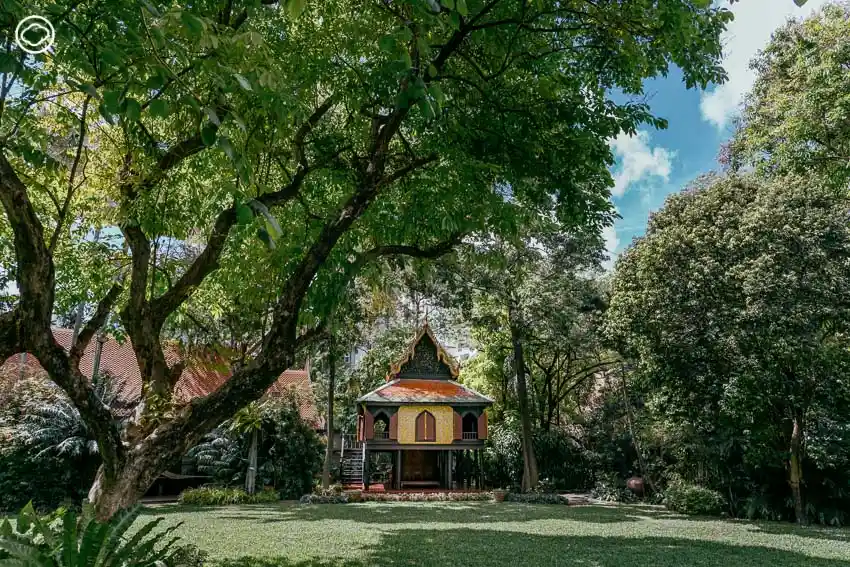
Suan Pakkad Palace Museum is a Bangkok museum-style destination that feels like you’ve stepped out of the city’s fast rhythm and into a quieter world of traditional Thai houses and genuine antiques. Even though it sits on Si Ayutthaya Road and is conveniently close to BTS Phaya Thai, what makes it different from modern, boxy museums is the atmosphere of its charming cluster of century-old Thai houses and a collection drawn from the private treasures and personal belongings of the Paribatra family. Walking through here doesn’t feel like simply “looking at objects” – it feels like reading history through real traces that have been carefully preserved.
At its heart, Suan Pakkad Palace was the residence of Prince Narisara Nuwattiwong (Krom Muen Nakhon Sawan Sakphinit) and M.R.W. Ying Panthip Paribatra. The name “Suan Pakkad” is easy to remember because it reflects what the land used to be – a mustard greens (pakkad) garden cultivated by local gardeners before it evolved into a palace area and later a museum showcasing a wide range of antiquities. Once you understand this origin, the place becomes clearer: it wasn’t created to be a grand, monumental palace, but rather a lived-in space that grew into a “home – palace – museum” where residence, collecting, and preservation blend naturally.
Inside, the standout feature is a group of 8 traditional Thai houses, each more than a hundred years old. Exploring the grounds feels like turning pages of a book, because each house has a distinct theme that lets visitors follow their own interests – from Thai music and standout antiquities to master-level artworks, a Khon museum, and the story of Ban Chiang, one of Thailand’s most significant archaeological heritage landmarks.
If you begin with House No. 1, the ground floor features the Princess Paribatra Music Museum. Prince Paribatra was widely acclaimed as the “Father of Thai Music,” and this section is ideal as a starting point because it gives you context before you move deeper into the collection. Thai music here isn’t just about sound – it reveals artistic taste among elite circles in a certain era and the refinement of performance culture that has long been intertwined with the royal court and Thai society. Seeing this first makes the next houses feel more meaningful, because you begin to sense that many pieces were not collected only for their beauty, but because they carry the imprint of their time and the identity of the people who kept them.
House No. 4 is another spot where lovers of antiquities often linger, as it displays important items such as a Sukhothai-style bronze Buddha image and carved ivory. These are pieces best appreciated up close, where you can notice the craftsmanship – the proportions, the fine details, and the way materials like bronze or ivory are shaped to “tell a story” through form. If you don’t rush, the experience becomes richer, because you’re not only seeing age – you’re seeing the ideas and skills of artisans from different periods.
House No. 7 is the Khon Museum, which many visitors enjoy even without being arts specialists, because Khon masks and Hun Lakhon Lek (small puppet theatre figures) have a strong sense of character and presence. The precision of Khon masks shows how Thai performing arts do not live only on stage – they are embedded in the creation of each role: colors, patterns, ornaments, and facial expressions. Once you start to “read” these details, it becomes clear why Khon is regarded as a high art form requiring both master craftsmanship and deep knowledge of classical literature.
House No. 8 and the Ban Chiang-related exhibits take you much farther back in time than the palace itself, featuring artifacts around 4,000 years old, such as pottery vessels, stone bracelets, and glass beads found in Thailand’s northeastern region. There is also a Ban Chiang section on the 2nd floor of the Chumbhot-Panthip Arts Building. This area suits visitors who want to understand how deep the region’s cultural roots go – and why small objects like beads or bracelets can be crucial evidence for interpreting human history.
Another highlight that makes Suan Pakkad Palace Museum feel unlike a typical museum is the “Lacquer Pavilion” (Hor Khian), built during the reign of King Narai the Great. Inside are exquisite gold-on-black lacquer panels depicting the life of the Buddha, episodes from the Ramakien, and significant historical events such as the diplomatic mission sent by King Louis XIV of France during King Narai’s reign. Lacquer art can look like pure ornament at first glance, but if you pause and look carefully, you’ll notice deliberate storytelling hidden in scenes and compositions – making it feel like you’re reading a narrative panel by panel.
Getting There The most convenient option for your route is to take the BTS to Phaya Thai Station and exit at Exit 4, then walk toward Si Ayutthaya Road. The walking distance is manageable and easy to plan for. Another good option for airport connections or cross-city travel is the Airport Rail Link to Phaya Thai Station, then a short walk or a quick taxi ride. Driving or using ride-hailing is also possible, but it’s best to allow extra time for traffic, especially near Victory Monument and during rush hours.
That said, you should check the latest status before heading out. There has been an announcement that the site is currently closed for conservation and renovation of the Thai house complex, so it’s recommended to call or review official updates in advance to avoid a wasted trip. If you’re planning a “one-day museum itinerary,” the Phaya Thai – Siam area has plenty of nearby alternatives, so your plan can still flow smoothly even if you need to adjust on the day.
| Place Name | Suan Pakkad Palace Museum |
| Location | Si Ayutthaya Road, Thanon Phaya Thai Subdistrict, Ratchathewi District, Bangkok |
| Key Characteristics | A complex of 8 century-old traditional Thai houses showcasing antiquities and the Paribatra family collection, featuring a Thai music museum, a Khon museum, Ban Chiang exhibits, and the Lacquer Pavilion with gold-on-black lacquer art |
| Period | A palace-museum in Bangkok (collection spans multiple eras) and the Lacquer Pavilion dates to the reign of King Narai the Great |
| Key Evidence | Paribatra family artworks and antiquities; Ban Chiang section (artifacts around 4,000 years old); the Lacquer Pavilion depicting the Buddha’s life, the Ramakien, and the French diplomatic mission in the reign of King Louis XIV during King Narai’s era |
| Name Origin | Named after the area’s original use as a mustard greens (pakkad) garden cultivated by local gardeners |
| Travel | BTS Phaya Thai Station (Exit 4) + walk; Airport Rail Link Phaya Thai + short walk/short ride; taxi/ride-hailing (allow extra time for Phaya Thai – Victory Monument traffic) |
| Fees | Thai citizens 50 THB, foreign visitors 100 THB (please check the latest announcement before visiting) |
| Current Status | Currently closed for conservation and renovation of the Thai house complex (recommended to check before visiting) |
| Contact Number | 02-245-4934 |
| Nearby Attractions (Approx. Distance) | King Power Rangnam 1.5 km; Victory Monument 1.3 km; Pratunam Market 2.0 km; Santiphap Park 2.1 km; Bangkok Art and Culture Centre (BACC) 2.9 km; Jim Thompson House 2.9 km |
| Popular Restaurants Nearby (Approx. Distance) | Saxophone Pub & Restaurant 1.4 km Tel. 02-246-5472; Pee Aor Tom Yum Goong Noodle 2.3 km Tel. 02-612-9013; Go-Ang Pratunam Chicken Rice 2.2 km Tel. 061-656-9659; Jim Thompson, A Thai Restaurant 3.0 km Tel. 061-421-8951; Somboon Seafood (Samyan) 4.0 km Tel. 02-160-5100 |
| Popular Accommodations Nearby (Approx. Distance) | Pullman Bangkok King Power 1.5 km Tel. 02-680-9999; The Sukosol Hotel 0.8 km Tel. 02-247-0123; VIE Hotel Bangkok – MGallery 2.7 km Tel. 02-309-3939; (additional listings can be added to match the site’s accommodation selection style) |
Frequently Asked Questions (FAQ)
Q: Where is Suan Pakkad Palace Museum located in Bangkok?
A: It is on Si Ayutthaya Road in the Phaya Thai – Ratchathewi area, and it is conveniently close to BTS Phaya Thai.
Q: How do I get to Suan Pakkad Palace Museum by BTS?
A: Get off at BTS Phaya Thai Station, take Exit 4, then walk toward Si Ayutthaya Road.
Q: Is Suan Pakkad Palace Museum currently open to visitors?
A: There has been an announcement that it is currently closed for conservation and renovation, so you should check the latest update before visiting.
Q: What are the key highlights inside?
A: The 8 traditional Thai houses, the Thai music museum, the Khon museum, the Ban Chiang exhibits, and the Lacquer Pavilion with gold-on-black lacquer panels depicting major narratives.
Q: How much time should I plan for a visit?
A: If it is open and you want to explore without rushing, plan around 1.5–3 hours to appreciate the details.
Q: Where can I check the latest information?
A: Call 02-245-4934 or check official announcements before you go.
 Website: www.suanpakkad.com
 Tel: 022461775-6, 022454934
 Suan Pakkad Palace Museum Map
 Category:
  Group:
  Last Update: 3 HourAgo
Comment
 Nearby Attractions
| Keyword (Advance) |
 Facebook Fanpage
 Region
 Historical Sites and Monuments(
 Landmarks and Memorials(
 Art, Craft Centres, Tradition(
 Museums(
 Historical Houses and The Ancient City(
 Art Gallery(
 Educational Places
 Museum for Study(
 Library(
 University
 Places of Worship
 Temple(
 Church(
 Mosque(
 Other religious and spiritural sites(
 Research and Development
 Royal Project(
 Suburban Living
 Village, Community(
 Local Market(
 Floating Market(
 Nature and Wildlife
 River, Canal(
 Bays and Beaches(
 Other natural attractions(
 Entertainment and Agricultural
 Zoos and Aquariums(
 Animal camps and shows(
 Stadium(
 Farm, Parks, Gardens and Ecotourism(
 Amusement Park(
 Waterpark(
 Theater(
 Cinema(
 Shopping
 Shopping and Night Market(
 Department Store(
 Spas and Wellness
 Spas and Wellness(
 Restaurant
 Michelin Star(
 Accommodation
 Hotel(
 Call Customer Service in Tourism
 Call Customer Service in Tourism(
 Travel Articles, Recipes
 Travel Review, Food Review(
 Royal Thai Desserts, Traditional Dessert, Thai Dessert Recipes(