

 Home
Home Chiang Mai(




Rating: 3.6/5 (7 votes)
 |
|  Map
Map 
 Have Map
  No Map
Phranakhon Si Ayutthaya attractions
Attractions in Thailand
Open Days: Open Daily
Opening Hours: 06.00 – 18.00
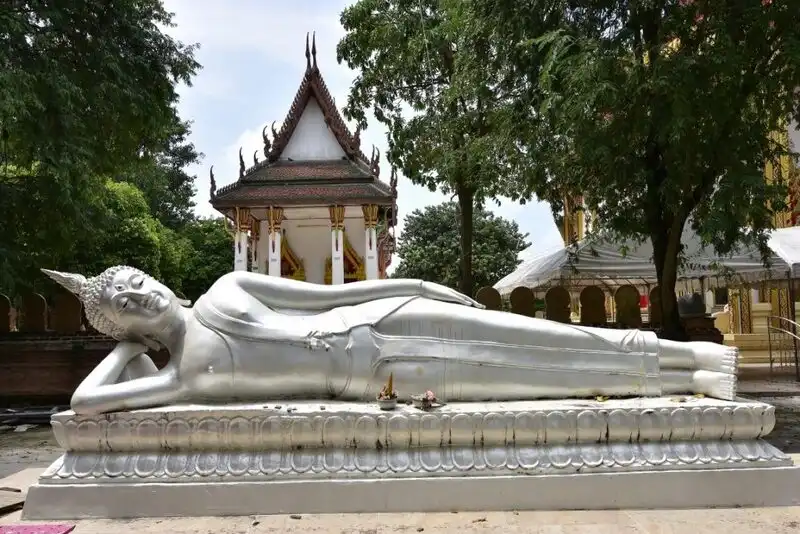
Wat Phra Nok is an old temple in Phra Nakhon Si Ayutthaya Province that has long been respected and worshipped by local people. It is also remembered as a place connected to historical narratives from the late Ayutthaya period. What makes this temple compelling is not that it is a crowded tourist landmark, but that it remains a living community temple. Locals still come here regularly to make merit, join seasonal religious events, and support community charity activities. The calm rhythm of the place brings the act of paying respects back to “intention” rather than rushing through a checklist of photo stops. For visitors, Wat Phra Nok is well suited to those who want to see another side of Ayutthaya—one that feels close to community life and close to meaning, rather than the classic image of densely visited historic ruins throughout the day.
The area around the temple sits within a central Thai community landscape shaped by canals and traditional livelihoods. In communities like this, temples naturally become the village core, because they are easy to access, provide spiritual support, and serve as gathering places for merit-making and collective activities. This community character gives Wat Phra Nok an approachable atmosphere where everyday local life is visible: elders stopping by to rest in the shade, children and young people growing up through temple activities, and devotees coming to make merit according to their faith. That simplicity is a key charm. It allows visitors to experience Ayutthaya as a place where people still truly live, not as a staged tourist setting, and it helps the temple visit feel meaningful without needing any forced embellishment.
Historically, Wat Phra Nok is publicly described as having been established around 2300 BE during the late Ayutthaya era, a pivotal period for the kingdom. Local memory often recounts this area alongside military events and troop movements around the time of the second fall of Ayutthaya, especially stories linked to Phraya Wachiraprakarn, who later became King Taksin the Great. Narratives of marching routes, temporary encampments, and strategic decisions have been passed down through local remembrance and intergenerational storytelling. As a result, Wat Phra Nok is not only a place for making merit, but also a site many people see as a point of remembrance for courage, resilience, and hope during a time of historic transition.
The temple’s name adds another layer to the relationship between history and community identity. A widely told local story speaks of a man in the area who worked as a bird hunter, and who played a role in provisioning or assisting troops during significant events. The term “Phra Nok” therefore became a remembered label tied to a person and a wartime context. Over time, it came to identify the area and eventually the temple itself. In that sense, Wat Phra Nok illustrates how place names in central Thai communities often originate not from a desire for elegance, but from collective memory—images of events and people that the community feels are meaningful to its roots.
Once inside the temple grounds, many visitors focus on paying respects to the sacred objects enshrined here. Wat Phra Nok is publicly described as having a principal Buddha image in the ordination hall made of brass, giving a sense of solidity and dignified presence in a style meant to endure. The temple is also associated with an Ayutthaya-period laterite Buddha image known as “Luang Pho Daeng,” in the Mara-Vijaya posture. This posture is commonly understood as symbolizing victory over inner turbulence and steady resolve. In that way, worship here is not only about asking for blessings, but also about reminding oneself to practice mindfulness, patience, and determination in a respectful and grounded way of life.
Worship at a community temple like Wat Phra Nok generally does not require complicated rituals. The essential points are composure and appropriateness. Visitors should dress modestly, keep their voices low, avoid disturbing monks or devotees who are making merit, and refrain from actions that disrupt the sacred atmosphere, such as climbing, touching sacred items unnecessarily, or taking photos in ways that inconvenience others. In a temple that still has real community life, respect for the space is the core principle, because it ensures the visit remains positive for both travelers and the local community who use the temple as part of everyday life.
Another distinctive feature of Wat Phra Nok is that it is home to a royal monument of King Taksin the Great and the Phra Nok Memorial. These elements reflect an ongoing act of remembrance for events and historical figures associated with the area. In a local context, the meaning of memorial spaces often lies less in monumental form and more in the shared feeling that “this place truly carries the story of the nation.” Many visitors come with the intention to pay respects and express gratitude, standing quietly, making a sincere wish, and taking time to learn about the site’s narratives in a respectful manner. This aligns with cultural travel that prioritizes meaning over spectacle.
In terms of pacing, Wat Phra Nok offers an experience noticeably different from the main tourist temples on Ayutthaya Island. Visitors do not need to hurry or compete with large crowds. Morning visits are generally pleasant because the air is cooler and the atmosphere is quieter, while late afternoon often brings softer light that suits a calm walk around the grounds. As a community temple, however, it is best approached with a sense of moderation: come to make merit and learn, avoid turning the space into a staged backdrop, and do not expect commercial tourist-style services. The heart of the temple lies in faith and the community’s simple, continuous care.
When viewed through its social role, Wat Phra Nok reflects a broader pattern of community temples in central Thailand. Such temples often become places where people return to one another in times of need—whether to support charity work, join collective merit-making, or cooperate on activities that benefit the wider community. This meaning makes a temple more than a ceremonial venue; it becomes a shared anchor. In ordinary times it is a place to rest the mind, and in difficult times it is a place where people help one another endure. That sense of collective support is part of why Wat Phra Nok continues to be respected, even though it is not driven by mass tourism trends.
Getting There Wat Phra Nok can be reached conveniently by car or motorbike. It is recommended to set your destination in an online map as “Wat Phra Nok, Phosao Han Subdistrict, Uthai District, Phra Nakhon Si Ayutthaya Province” to avoid confusion. When entering community roads, drive at an appropriate speed as local motorbikes and pedestrians pass through throughout the day, and park neatly within the area arranged by the temple without blocking residents’ access routes or main community roads. If you plan to extend your trip, you can visit in the morning to make merit at Wat Phra Nok, then stop for a meal in the Uthai area or Ayutthaya town zone, before continuing to major historic sites on Ayutthaya Island in the afternoon without rushing.
Ultimately, Wat Phra Nok is a destination that reveals a deeper dimension of Ayutthaya: not only the grandeur of historic ruins, but also the living Ayutthaya of everyday communities. Making merit, paying respects to Luang Pho Daeng, experiencing the calm atmosphere of a community temple, and reflecting on the historical narratives linked with King Taksin the Great can make a single visit feel more “meaningful” than simply arriving at a place. With polite conduct and genuine respect for the space, Wat Phra Nok can become a quiet sanctuary that restores energy, and a reminder that history, culture, and faith can still coexist naturally within daily life.
| Summary | An old temple in Phra Nakhon Si Ayutthaya with late-Ayutthaya historical narratives, a calm community atmosphere, and memorial elements linked to local remembrance. |
| Address | 166 Moo 2, Phosao Han Subdistrict, Uthai District, Phra Nakhon Si Ayutthaya |
| Highlights | Established around 2300 BE, Luang Pho Daeng (Ayutthaya-period laterite Buddha in Mara-Vijaya posture), a brass principal Buddha image in the ordination hall, a monument of King Taksin the Great and the Phra Nok Memorial, and a quiet community-temple atmosphere. |
| Period | Late Ayutthaya (publicly described as established around 2300 BE) |
| Key Evidence | Publicly available descriptions of the temple’s history and location, along with local narrative traditions regarding the name origin and late-Ayutthaya events associated with the area. |
| Name Origin | Local narratives link the name “Phra Nok” to a remembered figure and wartime context in the area during the late Ayutthaya period. |
| Abbot (Latest) | Phra Khru Phisit Bunnyakorn (Luang Pho Sapthawi Thammatecho) |
| Temple Phone | 087-991-6649, 089-996-5247 |
| Travel | Set your map destination to “Wat Phra Nok, Phosao Han, Uthai”; drive carefully on community roads and park neatly within the temple area. |
| Current Status | Open for worship and merit-making; functions as a community temple with historical remembrance elements. |
| Facilities | Parking area (subject to space), temple halls for activities, restrooms (typical community-temple facilities). |
| Fees | No admission fee found (donations are welcome). |
| Nearby Tourist Attractions | 1) Wat Yai Chai Mongkhon ~20 km 2) Wat Phanan Choeng Worawihan ~19 km 3) Japanese Village Ayutthaya ~20 km 4) Wat Mahathat ~23 km 5) Wat Phra Si Sanphet ~23 km |
| Popular Restaurants Nearby | 1) Suan Lung Daeng (Uthai) ~7 km Tel. 063-662-9222 2) Baan Ta Khorai Restaurant (Ayutthaya Town Area) ~23 km Tel. 035-242-173 3) Krua Mae Liew (Ayutthaya) ~22 km Tel. 035-245-682 4) Phae Krung Kao (Ayutthaya) ~23 km Tel. 035-251-158 5) Go Hub Boat Noodles (Ayutthaya) ~22 km Tel. 035-245-170 |
| Popular Accommodations Nearby | 1) Thipwiman Resort (Uthai) ~10 km Tel. 035-356-808 2) Krungsri River Hotel (Ayutthaya City) ~21 km Tel. 035-244-333 3) Sala Ayutthaya (sala ayutthaya) ~24 km Tel. 035-242-588 4) Classic Kameo Ayutthaya (classic kameo) ~22 km Tel. 035-212-535 5) Ayutthaya Retreat (ayutthaya retreat) ~23 km Tel. 035-795-885 |
Frequently Asked Questions (FAQ)
Q: Where is Wat Phra Nok located?
A: Wat Phra Nok is in Phosao Han Subdistrict, Uthai District, Phra Nakhon Si Ayutthaya Province. It is a community temple associated with local historical narratives and continued local worship.
Q: Is Wat Phra Nok open every day, and what are the opening hours?
A: It is generally open daily from 06.00 – 18.00. For special ceremonies or festival events, it is advisable to contact the temple before traveling.
Q: What is Luang Pho Daeng, and what do people commonly pray for?
A: Luang Pho Daeng is an Ayutthaya-period laterite Buddha image in the Mara-Vijaya posture, respected by worshippers who often pray for peace of mind, stability, and strength to move forward in life.
Q: How is Wat Phra Nok connected to King Taksin the Great?
A: The temple is associated with local historical narratives linked to troop movements and important late-Ayutthaya events, and it features a monument of King Taksin the Great for remembrance and worship.
Q: What is the most convenient way to get to Wat Phra Nok?
A: Driving is recommended. Set your map destination to “Wat Phra Nok, Phosao Han, Uthai”, drive carefully on community roads, and park neatly within the temple area.
Q: What kind of visit is Wat Phra Nok best suited for?
A: It is best for travelers seeking a calm, respectful merit-making visit, those interested in community temples, and cultural travelers who value meaning and atmosphere more than crowded mainstream attractions.
 Wat Phra Nok Map
 Category:
  Group:
  Last Update: 1 HourAgo
Comment
 Nearby Attractions
| Keyword (Advance) |
 Region
|
 Phranakhon Si Ayutthaya(