

 Home
Home Chiang Mai(










Rating: 4/5 (7 votes)
 |
|  Map
Map 
 Have Map
  No Map
Kanchanaburi attractions
Attractions in Thailand
Open Days: Year-round (access to certain periods/routes may require permission and depends on weather and water levels)
Opening Hours: Not fixed (depends on boat schedules, guiding hours, and area access conditions)
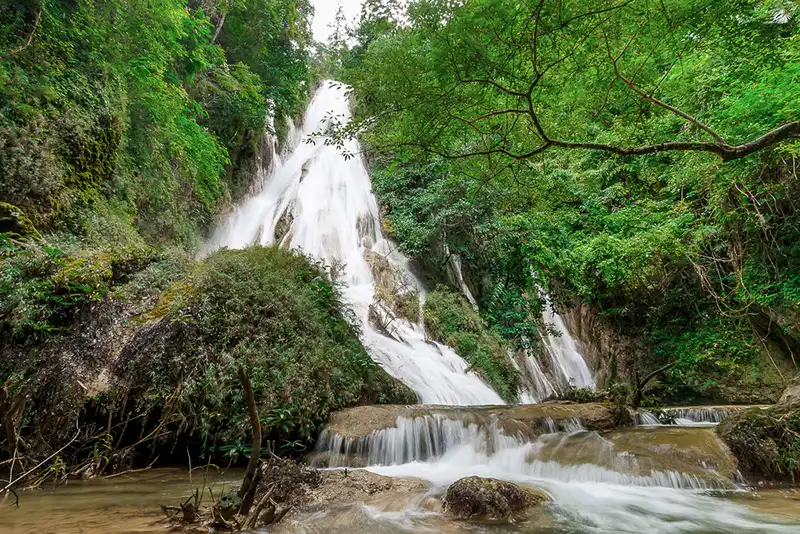
Kletty Waterfall is one of Kanchanaburi’s well-known adventure waterfalls, admired for its distinctive “limestone waterfall” character—clear, cool water and scenic cascades. Reaching it comes in two clearly different styles: “Lower Kletty” (Kletty Lower), typically accessed by a boat ride from a pier on the reservoir, and “Upper Kletty” (Kletty Upper), a long trekking route that usually takes about 2 days and requires a local guide and porters. This contrast is exactly what gives Kletty its unique appeal for travelers who want both nature and a real journey.
If you are searching for “Where is Kletty Waterfall, how do I get there, and where should I start?” the simplest explanation is that Kletty Waterfall is in Thong Pha Phum District, Kanchanaburi, and is connected to the Kletty watershed/stream system flowing through Karen communities in the area. Travel information commonly shared describes “Kletty” as a Karen word meaning “a solitary tiger” (or “a lone tiger”), and often mentions headwaters near Thailand’s western forest belt and a vast conservation zone. That is why this trip is not just about visiting a waterfall—it is also about entering a landscape that still feels wild, quiet, and deeply natural along much of the route.
Kletty Waterfall is best known as a limestone waterfall with clear, cool water, featuring a long sequence of cascades and, in some sections, large natural pools. The highest tier that is frequently mentioned is around 20 meters, and the overall waterfall line is often described as about 800 meters long, with flowing water throughout the year in many seasons. Visiting “Lower Kletty” commonly involves traveling by boat from Tha Kradan Pier or Mong Kratae Pier for roughly 2–3 hours. Some sources also note that if you want to approach by road, a 4x4 vehicle is recommended. “Upper Kletty” requires about 2 days of trekking from the village and should be done with a local guide and porters, making it suitable for hikers who prepare seriously.
The charm of Kletty lies in its “limestone geology.” When water runs over limestone layers, it often appears clearer, and the temperature feels refreshingly cool—especially from late rainy season into winter, when Thong Pha Phum becomes noticeably cooler. Along the stream, the air tends to be pleasantly shaded and humid, ideal for slowing down and photographing nature. At the same time, “clear water” does not always mean “safe water.” Waterfalls with pools and winding channels can develop undertows or swirling currents in certain sections, particularly during high flow or after heavy rain. The key to enjoying Kletty is to assess conditions on-site and keep safety as the top priority.
To avoid confusion, it helps to clearly understand the difference between “Lower Kletty” and “Upper Kletty” before planning, because many online articles mix the two, making it easy for readers to get lost. Lower Kletty is more accessible for most visitors. The most commonly cited approach is a boat trip from Tha Kradan Pier or Mong Kratae Pier, taking about 2–3 hours depending on weather and the type of boat. Along the way, you’ll see broad water vistas and layered mountain ridgelines from an angle you simply don’t get on the road. Upper Kletty, on the other hand, is a trekking route with multiple hiking segments. It usually takes around 2 days and should be done with a guide and porters for safety and proper supply management.
Getting There If you are starting from Kanchanaburi town, the safest planning approach is to decide clearly whether your entry point is a “boat pier” or a “trekking trailhead,” then align accommodation and travel time with the season. Lower Kletty is typically linked to Tha Kradan Pier and Mong Kratae Pier, a detail repeated across many travel sources, with an approximate boat ride time of 2–3 hours. If you plan to approach by road, a 4x4 vehicle is recommended because natural routes can change quickly with rain and water levels. For Upper Kletty, if your goal is to reach deeper tiers as serious adventure travelers often do, treat it as a full trekking expedition requiring a team, proper equipment, and an experienced local guide.
Choosing the “right season” strongly shapes your Kletty experience, because waterfalls in Thailand’s western forest region look and feel different across the year. During the rainy season, the water is usually abundant and powerful, creating a dramatic view, but risks also rise—strong currents, slippery rocks, and unpredictable rain that can force last-minute changes to boat or trekking plans. From late rainy season into winter, the water often looks clearer, the air is cooler, the boat ride is more comfortable, and photos tend to show richer greens and softer blue tones. In the dry season or hot season, lower water can reveal more limestone texture and make some streamside walking easier, but you should manage heat and hydration carefully—especially on the Upper Kletty route, where you may hike for many hours per day.
Another important dimension of the name “Kletty” is the environmental context of Huai Kletty (Kletty Creek), which has long been discussed nationally due to lead contamination linked to mining activity in the past. This affected local communities and led to rehabilitation efforts and multiple legal processes. Publicly available information notes that around 2013, Thailand’s Supreme Administrative Court ordered relevant agencies to develop a rehabilitation plan, including discussions of compensation for affected people under the ruling. Separately, in a civil case, the Environmental Division of the Supreme Court issued a judgment requiring the private company to compensate damages and take responsibility as part of restoration. This is one reason why the keyword “Kletty” is not only about travel—it also connects to Thailand’s environmental lessons and community rights.
For travelers, knowing this context is not meant to make the trip feel heavy, but to help you travel responsibly and respect the community appropriately. In places with a history of conflict or environmental impacts, words, photography, and behavior carry more weight than usual. If you pass through villages or use local services, showing respect, asking permission before photographing people, and avoiding disruptive activities helps ensure tourism benefits everyone rather than becoming a burden for residents.
From a pure “scenic” perspective, Kletty often wins people over with three elements appearing together: the water’s color, the stepped limestone formations, and the scale of natural pools that can span dozens of meters in some sections. The result is not just a single drop from a cliff, but a long waterfall line where you can walk along the stream, explore different angles, and feel the cool water at multiple points. Still, if you plan to swim, prioritize safety over the perfect photo. Undertows below cascades or deep pools can be dangerous even for confident swimmers, especially if you are unfamiliar with natural currents. If you are traveling with children or older adults, assess swimming spots even more strictly.
To plan a smooth Lower Kletty trip, work backward from boat time. Many travel references cite about 2–3 hours from the main piers, which means a round trip can take more than half a day even before you add time for swimming or photos. If you want a relaxed pace, build in extra time. In the rainy season, allow even more buffer because wind and waves on the reservoir can slow travel or require waiting until conditions are suitable. For visitors seeking a good-value 2-day, 1-night itinerary, staying around Tha Kradan or shifting to Thong Pha Phum/Tha Khanun often makes it easier to connect to other attractions—nearby waterfalls, dams, viewpoints, or community cafés.
As for Upper Kletty, viewed professionally, this is a true trekking trip requiring more energy and risk management than a typical waterfall visit. Expect ascents and descents, forest sections, creek crossings, and a reliance on local knowledge to read the terrain, manage water supplies, and choose appropriate rest points. Commonly cited travel information notes around 2 days of hiking from the village and the need for guides and porters, which matches real safety logic: Thailand’s western forest routes can be complex, and weather changes quickly. If you want this kind of experience, preparation will determine whether your trip feels rewarding or unnecessarily difficult.
In terms of preparation for both routes, a frequent mistake is misjudging “shoe choice and pack weight.” For Lower Kletty, even though the boat ride is the main segment, you may still walk and wade along stream edges. Shoes with good grip and quick-drying materials improve stability far more than fashion footwear, and a waterproof pouch for your phone and valuables helps protect against splashes. For Upper Kletty, treat it like a serious trek: bring a basic first-aid kit, a flashlight, a power bank, and a thoughtful water plan. In remote areas, the ability to handle issues on the spot matters more than comfort.
Another way Kletty feels “different” is the boat journey to Lower Kletty, which many people consider half the value of the trip. The broad water surface and deep mountain layers create a Kanchanaburi view that you rarely see if you only travel in the city zone or the Sai Yok area. If you go in the morning, the light is softer and adds depth to photos; in the afternoon, the light can be harsher and glare off the water may increase. Nature photographers often prefer early or late light, but boat timing and safety should always come first.
When you arrive, it is wise to “scout the area” before swimming. Limestone may look stunning, but some sections are slippery and can be coated with algae, making it easier to slip than on other rock types. If you travel as a group, define a safe swimming zone where everyone can see one another, and avoid the crest of the falls or sections with strong push. On rainy days or when water levels are high, the risks of undertow and slipping into cascades increase significantly. Responsible travel means “everyone gets home safely”—then you can always come back for another trip.
Finally, if you choose Kletty as a main highlight of your Kanchanaburi trip, it helps to make the journey more meaningful than a simple “check-in.” Think of it as entering the western forest landscape and understanding the name “Kletty” as both a community place and an environmental place. With a bit more time, linking your route to other spots around Thong Pha Phum or Si Sawat can round out the experience with more nature, dam viewpoints, and distinctive local food that Kanchanaburi is known for.
| Place Name | Kletty Waterfall (Lower Kletty / Upper Kletty) |
| Address | Chalae Subdistrict, Thong Pha Phum District, Kanchanaburi (access points vary by route: boat / trekking / 4x4 road) |
| Place Summary | A distinctive limestone waterfall in a natural setting, known for clear, cool water and a long cascade line. Suitable for both a boat-access trip (Lower Kletty) and a long-distance trekking route (Upper Kletty). |
| Highlights | Limestone waterfall with clear, cool water; large natural pools in some sections; long cascade line; two distinct access styles (boat / trekking) |
| Best Time To Visit | Late rainy season to winter (clearer water, pleasant weather) / rainy season is scenic but stronger currents require extra caution |
| Key Notes / Evidence | Commonly cited travel info notes a 2–3-hour boat ride and an Upper Kletty trek of ~2 days requiring a guide/porters; Huai Kletty has a documented lead-contamination restoration context supported by public records and reports |
| Name Origin | “Kletty” is commonly explained as a Karen word meaning “a solitary tiger” / “a lone tiger” (as mentioned in multiple travel sources) |
| Getting There (Summary) | Lower Kletty: boat from Tha Kradan Pier / Mong Kratae Pier ~2–3 hours, or approach by road recommended with 4x4 / Upper Kletty: ~2-day trek, requires guide and porters |
| Current Status | Open with controlled access conditions (check weather, water levels, permissions, and boat schedules before traveling) |
| Verified Contact Numbers | Lam Khlong Ngu National Park (booking/inquiries): 081-1089780 / Tha Kradan Pier: 081-943-7196 / Mong Kratae Pier: 081-880-1582 |
| Nearby Attractions (Approx. Distance) | 1) Lam Khlong Ngu National Park (main visitor zone) — approx. 40 km 2) Thong Pha Phum (district town / Tha Khanun area) — approx. 65 km 3) Ban I-Tong – Pilok — approx. 150 km 4) Si Sawat – Tha Kradan — approx. 35 km 5) Vajiralongkorn Dam (Khao Laem) — approx. 75 km |
| Nearby Restaurants (Approx. Distance + Phone) | 1) Sabai Nang Garden Restaurant & Café (Tha Kradan) — approx. 35 km — 081-206-9312 2) Pla Khuen Restaurant (Thong Pha Phum) — approx. 65 km — 098-925-5909 3) Ban Noen Hin Dad Pizza Café (Thong Pha Phum) — approx. 80 km — 064-931-8082 4) Thong Pha Phum restaurant zone (source-based listing) — approx. 65 km — 084-091-2488 |
| Nearby Accommodations (Approx. Distance + Phone) | 1) Mafai Koo Resort (Thong Pha Phum) — approx. 65 km — 080-022-0122 2) Pilok Homestay (Ban I-Tong) — approx. 150 km — 086-798-5863 |
| Facilities | Depends on the starting point (pier / office / community). At the waterfall itself, prepare essentials and follow Leave No Trace practices. |
| Fees / Costs | Varies by trip format (boat cost / guide / porter / area conditions) — check with the responsible agency or service providers before traveling |
Frequently Asked Questions (FAQ)
Q: What is the difference between Lower Kletty and Upper Kletty?
A: Lower Kletty is typically reached by boat from the main piers, taking about 2–3 hours. Upper Kletty is a long-distance trekking route, usually about 2 days, and should be done with a local guide and porters.
Q: How long is the boat ride to Lower Kletty?
A: Many sources cite an approximate boat travel time of about 2–3 hours from Tha Kradan Pier or Mong Kratae Pier, depending on weather and boat type.
Q: Do I need a guide and porters for Upper Kletty?
A: Yes, it is recommended. The route involves multiple trekking segments over about 2 days and can be complex. A guide helps reduce risks such as getting lost or injuries, and porters help manage supplies safely.
Q: When is the best time to visit Kletty Waterfall?
A: Late rainy season through winter often offers scenic flow with clearer water and more comfortable weather, but you should check rainfall and water levels before every trip.
Q: Is it safe to swim at Kletty Waterfall?
A: Swim only in clearly safe areas and assess on-site conditions. Avoid the crest of the falls, undertow-prone sections, and days with heavy rain or high water. If you are unsure, do not enter the water.
Q: How does the lead issue in Huai Kletty relate to tourism?
A: Huai Kletty has a documented history of lead contamination linked to past mining activity, followed by legal processes and rehabilitation efforts. Visitors should understand this context to travel responsibly, respect local communities, and follow updates from official sources when planning.
Q: Who should I call for booking or inquiries?
A: You can contact Lam Khlong Ngu National Park via the published booking/inquiry number. If traveling by boat, contact the relevant pier used for departure.
 Kletty Waterfall Map
 Category:
  Group:
  Last Update: 3 HourAgo
Comment
 Nearby Attractions
| Keyword (Advance) |
 Region
|
 Muang Kanchanaburi(