

 Home
Home Chiang Mai(










Rating: 3.1/5 (13 votes)
 |
|  Map
Map 
 Have Map
  No Map
Chiang Mai attractions
Attractions in Thailand
Open Days: Daily
Opening Hours: 06.00–18.00
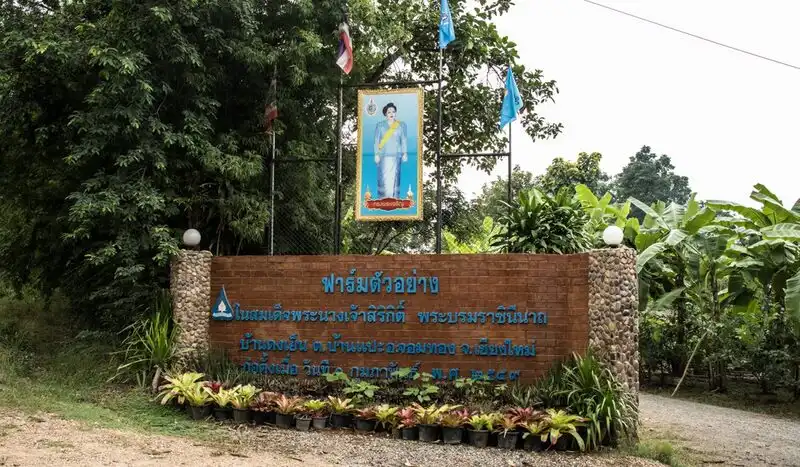
Ban Dong Yen Royal Initiative Demonstration Farm Development Center is a destination well suited for travelers who want to experience Chiang Mai beyond conventional sightseeing, offering both a rural atmosphere and insight drawn from real, working examples. Rather than being a place designed purely for photography, the site functions as a hands-on center for vocational and agricultural demonstration at the community level. What visitors encounter here is a living workspace that quietly explains how royal initiative development concepts can be translated into sustainable livelihoods within the real conditions of Chom Thong District.
The project is located in Ban Dong Yen, Village No. 15, Ban Pae Subdistrict, Chom Thong District, Chiang Mai Province. The surrounding landscape is dominated by dry dipterocarp forest, with some mixed deciduous forest appearing in valley areas and along both sides of local streams. This forest context clearly illustrates the necessity of maintaining balance between forest land and agricultural land. When communities rely too heavily on forest resources, watershed areas deteriorate rapidly; when stable livelihoods are established, pressure on natural resources is reduced accordingly.
From a community perspective, most villages within the project area are situated on relatively flat terrain, serving as both residential zones and agricultural land. These include Ban Dong Yen, Ban Tha Ko Muang, Ban Sop Chaem (left bank), and Ban Buak Ha. One village, Ban Huai Sa Paet, lies adjacent to forest boundaries and maintains farmland extending from lowland areas toward the forest edge. This spatial variation highlights differing livelihood conditions among households and explains why vocational demonstration here emphasizes multiple options rather than a single formula applicable to all.
The majority of cultivated land consists of flat areas with some gentle slopes. These lands have been occupied and farmed by local residents for a long time, and government agencies have conducted land-use surveys and formal allocation. This context is crucial, as sustainable agriculture depends not only on what crops are grown, but also on land management, water use, soil care, and choosing activities compatible with local geography. By positioning itself as a demonstration center, the project effectively serves as a “community classroom,” allowing people to learn through direct observation rather than theory alone.
The core activities of the demonstration farm emphasize integrated livelihoods to reduce risk and enhance household food security. Key activities include livestock raising, fisheries, mushroom cultivation, and pesticide-free vegetable production. These activities can support both subsistence needs and supplementary income. Importantly, the demonstrations make it easier for visitors to understand where to begin, how to manage each activity, and which practical details determine whether such livelihoods are truly viable in everyday life.
The surrounding dry dipterocarp and mixed deciduous forests also enhance the natural atmosphere of the site. For visitors who come with a learning mindset, the relationship between community livelihoods and forest boundaries becomes evident, as does the meaning of “moderate use” that avoids placing long-term burdens on watershed forests. This is what gives the visit quiet value: witnessing development grounded in real conditions rather than staged aesthetics.
For a meaningful visit, it is best to regard the site as an active working area of the community. Visitors should walk respectfully, take photos without disturbing demonstration zones or livestock, observe posted guidelines, and ask questions politely when staff or community members are present. The appeal of the demonstration farm lies not in a single attraction but in the integrated system of activities designed to support community self-reliance.
Getting There From Chiang Mai city, take the Chiang Mai–Hot Road toward Chom Thong District. At kilometer marker 86 (Ban Tha Kham area), turn left and pass Ban Tha Ko Muang, Ban Sop Chaem (left bank), and Ban Buak Ha, heading toward Ban Huai Sa Paet. Before reaching Ban Huai Sa Paet, turn right into the project area. Approximate distances are 98 km from Chiang Mai city, 38 km from Chom Thong town, and 12 km from the KM 86 junction. The final stretch follows local roads; allow extra travel time and drive cautiously, especially during the rainy season when roads may be slippery and access more difficult.
If you are planning a trip focused on royal initiative development in Northern Thailand, Ban Dong Yen Demonstration Farm can serve as a calm and meaningful stop. The atmosphere is unhurried and reflective, offering a clear view of development work carried out with simplicity and seriousness. From here, travelers can continue to explore Chom Thong town or connect onward to the Inthanon route depending on time and weather conditions.
| Place Name | Ban Dong Yen Royal Initiative Demonstration Farm Development Center |
| Location | Ban Dong Yen, Village No. 15, Ban Pae Subdistrict, Chom Thong District, Chiang Mai (confirmation of entry point or map location is recommended before travel) |
| Key Characteristics | Royal initiative-based vocational and integrated agriculture demonstration center focused on food security and livelihoods in the Ban Pae–Chom Thong area |
| Main Zones / Activities | Livestock demonstration: community-appropriate animal husbandry Fisheries: water management and food production examples Mushroom cultivation: short- to medium-term income models Pesticide-free vegetable plots: safe food and income extension |
| Period / Background | Royal initiative project (official establishment year should be referenced from responsible agencies if required) |
| Key Evidence / Highlights | Integrated livelihood demonstration (livestock, fisheries, mushrooms, safe vegetables) combined with forest-edge community context |
| Name Origin | Named after Ban Dong Yen village and its role as a royal initiative demonstration farm |
| Access | Chiang Mai → Chiang Mai–Hot Road → KM 86 (Ban Tha Kham) → Ban Tha Ko Muang / Ban Sop Chaem (left bank) / Ban Buak Ha → toward Ban Huai Sa Paet → turn right into project area (Chiang Mai ~98 km; Chom Thong ~38 km; KM 86 junction ~12 km) |
| Current Status | Visits recommended with respect for active working areas; checking reception conditions in advance is advised during field operation periods |
| Contact | No verified contact information available in this dataset; local authorities or community leaders are recommended points of inquiry |
Frequently Asked Questions (FAQ)
Q: Who is Ban Dong Yen Royal Initiative Demonstration Farm suitable for?
A: It is suitable for visitors interested in learning-based travel, community livelihood development, and integrated agriculture, especially those who prefer real working examples over photo-oriented attractions.
Q: What are the main things to see?
A: The main focus is on demonstration zones for livestock, fisheries, mushroom cultivation, and pesticide-free vegetables, along with the surrounding forest-edge community environment.
Q: How should visitors prepare before visiting?
A: Dress modestly, bring drinking water and suitable footwear, and check visitor conditions in advance, as this is an active working site.
Q: Is the driving route difficult, especially during the rainy season?
A: The final section follows local roads that may be winding and slippery during rain; allow extra time, check vehicle condition, and drive carefully.
Q: How can a one-day trip be planned efficiently?
A: Visit the demonstration farm in the morning or late morning, then have lunch or coffee in Chom Thong town, followed by Wat Phra That Si Chom Thong Worawihan or a continuation toward the Inthanon route depending on time and weather.
Q: What is the best season to visit?
A: The site is accessible year-round, but late rainy season to early winter is generally more comfortable for walking and driving; during the rainy season, greenery is abundant but roads may be slippery and travel time longer.
 Ban Dong Yen Royal Initiative Demonstration Farm Development Center Map
 Category:
  Group:
  Last Update: 16 HourAgo
Comment
 Nearby Attractions
| Keyword (Advance) |
 Region
|
 Muang Chiang Mai(