

 Home
Home Chiang Mai(










Rating: 4.5/5 (4 votes)
 |
|  Map
Map 
 Have Map
  No Map
Chiang Mai attractions
Attractions in Thailand
Open Days: Generally daily (the site may be “temporarily” closed during heavy rain/flash-flood risk for safety; please check the latest park announcement before you go)
Opening Hours: Generally 08:00 – 16:30 (hours may change by season and site management)
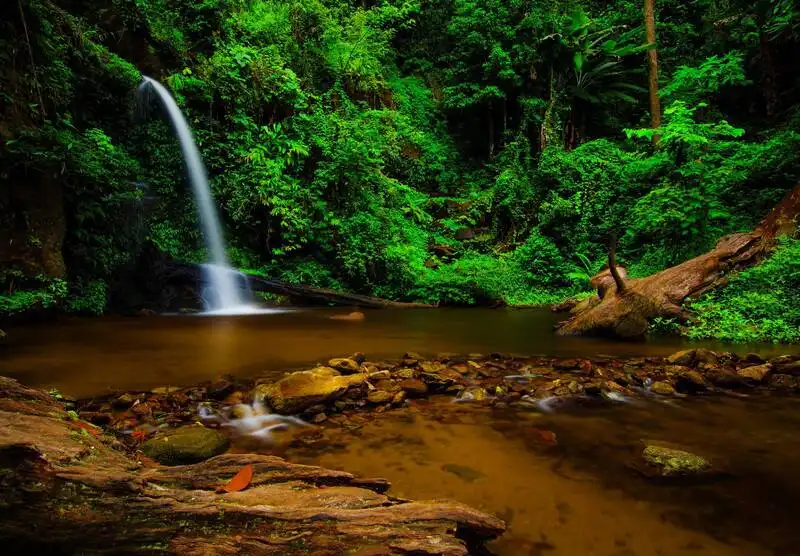
Monthathan Waterfall If you like Chiang Mai in “real forest, but not far from the city” mode, Monthathan Waterfall is a nicely balanced choice. It sits inside Doi Suthep–Pui National Park, Suthep Subdistrict, Mueang Chiang Mai District. From the Huay Kaew–Doi Suthep area, it doesn’t take long to get here—and suddenly city noise swaps out for rushing water and that damp, earthy forest scent that makes your head feel lighter almost instantly.
The charm here isn’t the kind of grand, roaring waterfall that demands a deep jungle trek. It’s the “system” of water on Doi Suthep—a watershed that has long sustained the city. This waterfall sits at about 730 meters above sea level and is often described as a multi-tier waterfall (commonly said to have 9 tiers). The highest tier is known as “Sai Yoi Waterfall,” where water flows from Huai Khok Ma before joining into a continuous stream that runs through the Pha Ngoep–Wang Bua Ban–Huay Kaew Waterfall area, then passes through Chiang Mai’s moat before eventually reaching the Ping River.
Once you understand this water route, visiting becomes more interesting: you’re not just seeing a “photo spot,” you’re looking at a “window” into an active headwater ecosystem. Every drop that falls over rock slabs, into pools, and through the shade of big trees carries moisture and coolness down to the city—quietly. And that’s why Doi Suthep–Pui remains essential to Chiang Mai, whether you view it through a tourism lens or an environmental one.
The name “Monthathan” also has a simple but memorable origin. It’s said to come from the “Montha tree,” a tall tree with white flowers and large, deep-green leaves, commonly seen along the roadside in this area. The name feels like a mood sign: vivid green forest, big trees, cool air, and lingering humidity—especially refreshing from late rainy season into early winter, when the water often looks its best.
The waterfall’s character is distinctive in that parts of the flow appear to split into 2 small streams, dropping into a pool before sliding down over rock slabs to lower tiers. So instead of a massive curtain of water, you get water that “plays with rock” and “plays with light.” It’s calming to watch—perfect for anyone who wants to walk slowly, listen to the sound of water, let the body reset its rhythm, and give the mind a break without trying too hard.
If you want the visit to feel right, it helps to give the place time rather than rushing for a quick check-in. Start at the lower tier, which is easy to access. Stand in the mist, notice small details like moss that signals the forest’s moisture, rock patterns shaped by erosion, and how the sound of water changes depending on where you stand. Then decide whether you want to continue upward or if this is already enough—because the slope and trail conditions depend heavily on the season, especially in the rainy months when wet rock can be very slippery.
One thing people often overlook—but that can make your trip much better—is understanding “waterfall safety.” In national parks, certain sections may be temporarily closed after heavy rain to prevent accidents from flash floods or small rockfalls. That’s normal in headwater forests. If you plan to visit during the rainy season, check the latest announcements before you leave. On-site, avoid climbing high rocks or approaching areas with strong flow—no matter how photogenic it looks, it’s not worth the risk.
Another advantage of Monthathan Waterfall is its proximity to Doi Suthep’s main sightseeing route, making it easy to connect into a single, efficient day trip. You can start your morning at the Kruba Srivichai Monument, stop by Monthathan Waterfall, then head up to Wat Phra That Doi Suthep—or continue to other viewpoints and attractions on Doi Suthep—and still return to the city without feeling wiped out.
And if you’re into photography, this place is great for capturing “urban-adjacent forest” with a bit of depth. Sunlight filtering through the canopy gives your images dimension. Try going in the morning or late afternoon for softer light, fewer crowds, and a clearer sense of the forest’s soundscape. If you plan to wade near the rocks or move around wet slabs, grippy footwear isn’t just a nice suggestion—it’s essential.
Getting There From Chiang Mai city, head to Huay Kaew Road, passing Chiang Mai University and Chiang Mai Zoo. Then drive up Doi Suthep Road toward the Kruba Srivichai Monument. Continue a short distance further and you’ll see the turnoff/sign for Monthathan Waterfall on the right (this area includes a fee/checkpoint under park regulations). From there, drive about 3 kilometers to reach the waterfall area. You can come by private car, motorbike, or take a ride from the city to the entrance and then walk/continue onward as appropriate.
Look beyond the beauty and you’ll see Monthathan Waterfall as part of the “Doi Suthep headwater forest system” that truly functions ecologically. The area contains several resilient base rock types that resist erosion, creating natural stepped formations and pools. Water flowing over rock slabs doesn’t just look good—it helps regulate local temperature and humidity, supporting the diversity of plants and small wildlife that depend on this microclimate.
Another key role of Monthathan Waterfall is how directly it connects to Chiang Mai’s water network. Water from Huai Khok Ma and the upper tiers gradually flows through Pha Ngoep, Wang Bua Ban, and Huay Kaew Waterfall, then enters the moat system before joining the Ping River. In other words, this waterfall isn’t only a tourist site—it’s a “natural mechanism” that has helped sustain the city from the past to the present.
The walking route at Monthathan Waterfall is generally short to moderate, suitable for most visitors in normal health. The lower section is quite clear and easy to walk. As you go higher, the trail becomes narrower and steeper, especially in the rainy season when wet rock and algae increase slipperiness. Extra caution is important, and it’s not recommended to push on if the weather or conditions don’t feel safe.
If you want the atmosphere without a long walk, staying at the lower tier already gives you the essentials: the sound of water, the cool air, and the feeling of a forest wrapping around the city. But if you enjoy light hiking and conditions are safe, walking upward reveals how the waterfall’s structure changes with elevation—one of the distinctive charms of a multi-tier waterfall like this.
There are some spots where you can dip your feet or play in the water lightly, especially at the lower pools where the current is gentler. However, avoid entering the water during heavy rain or right after rain, because water levels can rise quickly and rocks become even more slippery. Keep water play within areas that are considered suitable by on-site guidance and signage.
Remember: waterfalls in national parks are natural areas that can change at any time. Beauty shouldn’t be traded for risk. If you see warning signs or temporary closures, follow them strictly for your safety and to avoid adding unnecessary burden to rescue staff.
Photo Spots Worth Noticing Monthathan Waterfall is ideal for nature photography that leans into atmosphere rather than spectacle. The highlight is light filtering through the canopy onto the water, creating calm mood and depth. For softer images and richer greens, morning or late afternoon is usually best because the light is less harsh.
For photographers, using a slightly slower shutter speed can make the water look silky, but be mindful of slippery footing and choose a stable standing spot. The results tend to reflect the identity of a “forest near the city” that’s still alive—not just a backdrop for check-ins.
Sample 1-Day Plan (Doi Suthep–Pui) In the morning, start at the Kruba Srivichai Monument to pay respects and take in the atmosphere. Then stop at Monthathan Waterfall and spend about 1–2 hours walking, resting, and enjoying the water. Late morning to midday, continue up to Wat Phra That Doi Suthep. If you still have time, you can add Phu Ping Palace or the Hmong Village at Doi Pui before returning to the city in the afternoon.
This kind of route helps you see “the full picture of Doi Suthep”—from headwater forest to belief and culture, and on to mountain community life—without rushing and without an overly long journey.
In the bigger picture, Monthathan Waterfall isn’t just one attraction—it’s part of a natural and cultural network that has shaped Chiang Mai for a long time, and still quietly does its job today.
| Name | Monthathan Waterfall |
| Also Known As | San Pa Yang Waterfall |
| Location | Doi Suthep–Pui National Park, Suthep Subdistrict, Mueang Chiang Mai District, Chiang Mai |
| Approx. Elevation | About 730 m above sea level |
| Highlights | Multi-tier waterfall (commonly said to be 9 tiers), lush headwater forest atmosphere, close to the city, easy to link with the Doi Suthep route |
| Headwaters / Water Route | Water flows from Huai Khok Ma (uppermost tier often called “Sai Yoi Waterfall”), continues through Pha Ngoep–Wang Bua Ban–Huay Kaew Waterfall, then through the moat system to the Ping River |
| Name Origin | Said to come from the “Montha tree,” a tall tree with white flowers and large deep-green leaves commonly seen along the roadside in the area |
| Travel | Drive up Huay Kaew Road toward Doi Suthep, pass the Kruba Srivichai Monument, then turn into the Monthathan Waterfall entrance (park fee/checkpoint). Continue about 3 km to the waterfall area |
| Fees | Fees apply under national park regulations/onsite services; please check the latest rates at the checkpoint or official channels before visiting |
| Facilities | Walking path to the waterfall, resting spots along the way (actual conditions depend on season and maintenance). Bring drinking water and wear grippy footwear, especially in the rainy season |
| Contact Number | Doi Suthep–Pui National Park: 053-210244 |
| Nearby Tourist Attractions (Approx. Distance) | Huay Kaew Waterfall (≈ 3 km) Kruba Srivichai Monument (≈ 6 km) Wat Phra That Doi Suthep (≈ 7 km) Phu Ping Palace (≈ 10 km) Hmong Village (Doi Pui) (≈ 14 km) Wat Umong (≈ 12 km) Chiang Mai Zoo (≈ 9 km) |
| Popular Restaurants Nearby (Approx. Distance) | Huen Phen (Nimman Branch) (≈ 13 km) Tel. 099-242-2299 Tong Tem Toh (≈ 13 km) Tel. 053-894-701 Ginger Farm Kitchen (One Nimman) (≈ 13 km) Tel. 052-080927 Khao Soi Nimman (≈ 13 km) Tel. 053-894-881 The Salad Concept (Nimman) (≈ 13 km) Tel. 053-894455 |
| Popular Accommodations Nearby (Approx. Distance) | Novotel Chiang Mai Nimman Journeyhub (≈ 12 km) Tel. 052-012777 Eastin Tan Hotel Chiang Mai (≈ 12 km) Tel. 052-001999 Furama Chiang Mai (≈ 12 km) Tel. 053-415222 Holiday Garden Hotel & Resort (≈ 12 km) Tel. 053-211333 U Nimman Chiang Mai (≈ 13 km) Tel. 052-005111 |
Frequently Asked Questions (FAQ)
Q: When is the best time to visit Monthathan Waterfall?
A: You can visit year-round, but late rainy season through early winter is often the most refreshing and photogenic. In the rainy season, check announcements because some sections may be temporarily closed for safety.
Q: How many tiers does Monthathan Waterfall have?
A: Common local descriptions refer to it as a 9-tier waterfall, with the uppermost tier called “Sai Yoi Waterfall.” Access to higher tiers depends on season and trail conditions.
Q: How far is Monthathan Waterfall from Huay Kaew Waterfall?
A: Generally about 3 kilometers, and they are connected as part of the same Doi Suthep stream system.
Q: Why is it called “Monthathan” Waterfall?
A: It’s said to be named after the “Montha tree,” commonly found along the roadside in the area, which contributes to the lush, green feel of this headwater forest.
Q: If I don’t have a private vehicle, what’s the easiest way to get there?
A: You can hire a ride from the city to the entrance and then continue on foot/onsite access as appropriate, or bundle it into a Doi Suthep route day trip (Kruba Srivichai Monument – Wat Phra That Doi Suthep) to make transportation more worthwhile.
Q: What should I be extra careful about when visiting?
A: Watch out for slippery rocks, especially after rain. Avoid climbing high boulders, and help keep the area clean by taking your trash out with you—high visitor traffic near the city makes nature slower to recover.
 Tel: 053210244
 Monthathan Waterfall Map
 Category:
  Group:
  Last Update: 6 HourAgo
Comment
 Nearby Attractions
| Keyword (Advance) |
 Facebook Fanpage
 Region
 Art, Culture and Heritage
 Historical Sites and Monuments(
 Landmarks and Memorials(
 Royal Palace(
 Art, Craft Centres, Tradition(
 Museums(
 Educational Places
 Museum for Study(
 Educational Gardens, Farm(
 Training Center(
 University
 Places of Worship
 Temple(
 Mosque(
 Other religious and spiritural sites(
 Research and Development
 Royal Project(
 Suburban Living
 Village, Community(
 Local Market(
 National Parks and Marine Reserves(
 Mountain (Doi)(
 Dam, Reservoir, Lake(
 Hot Springs(
 Caves(
 River, Canal(
 Other natural attractions(
 Entertainment and Agricultural
 Zoos and Aquariums(
 Animal camps and shows(
 Stadium(
 Farm, Parks, Gardens and Ecotourism(
 Waterpark(
 Theater(
 Outdoor and Adventure Activities(
 Shopping
 Shopping and Night Market(
 Restaurant
 Michelin Star(
 Michelin Guide(
 Call Customer Service in Tourism
 Call Customer Service in Tourism(
 Travel Articles, Recipes
 Travel Review, Food Review(
 Food Menu, North Recipes(
 Thai Desserts, North Recipes(