
 Home
Home North(
 Chiang Mai(


Rating: 3.8/5 (5 votes)
 |
|  Map
Map 
 Have Map
  No Map
Nakhon Nayok attractions
Attractions in Thailand
Open Days: Wednesday - Sunday (please contact in advance before visiting)
Opening Hours: 10.00 - 16.00
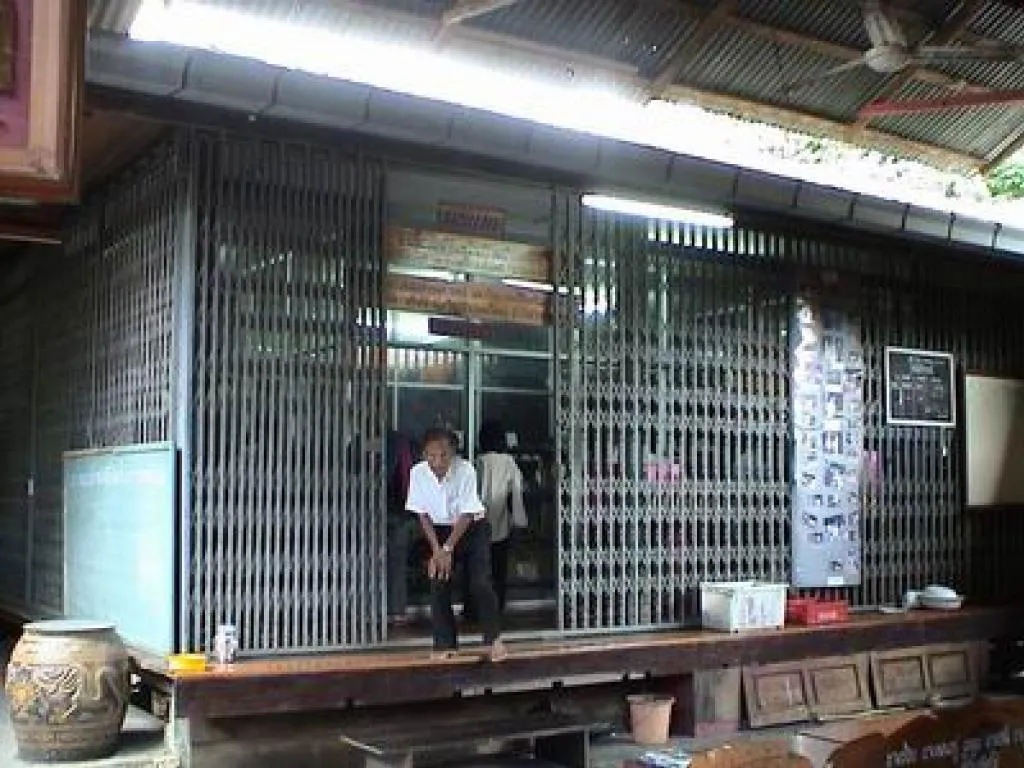
Ban Pak Phli Local Museum is an important archaeological learning center in Nakhon Nayok Province. It is located inside Wat Pho Pak Phli in Pak Phli Subdistrict, Pak Phli District, and serves as a place that gathers a large number of artifacts excavated from the Pak Phli area itself. The main highlight of this museum is that it allows visitors to see real evidence of an ancient community dating back around 2,700 - 3,000 years, including pottery, bronze vessels, bronze bangles, glass beads, and many other objects that help complete the historical picture of the area.
What makes Ban Pak Phli Local Museum especially interesting is that it is not a large state museum separated from the surrounding community. Instead, it is a museum that grew out of a shared awareness among local residents and scholars who recognized the value of the archaeological evidence scattered throughout Pak Phli. A visit here is therefore not simply a walk past old objects in display cases, but an opportunity to step into the “real foundations of the land” that remain connected to the everyday life of the community around Wat Pho Pak Phli to this day.
The museum itself is located within Wat Pho Pak Phli, an old temple of Pak Phli District, which gives this place a dimension quite different from that of a typical museum. Visitors experience the atmosphere of a temple, a community, and archaeological history all in one place. Those who enjoy cultural tourism often find that this place has a simple yet profound charm. For anyone interested in local history or Thailand’s prehistoric period, this museum is a site truly worth seeing in person.
The artifacts displayed inside the museum are mostly objects excavated in Pak Phli Subdistrict and nearby areas. Many of these finds show that this land was not merely an agricultural community in later periods, but had been inhabited by people for thousands of years. The discovery of pottery, bronze utensils, bronze ornaments, and glass beads points to the complexity of ancient society in terms of technology, craftsmanship, daily life, and possibly exchange with other communities as well.
From an archaeological perspective, the age of the artifacts found in Pak Phli, around 2,700 - 3,000 years, is highly significant because it belongs to the late prehistoric period of Thailand, a time when people had become more familiar with metal, especially bronze. The discovery of bronze vessels and bronze bangles here is therefore not simply a matter of rare old objects, but evidence showing that communities in the Pak Phli area had already achieved a considerable level of technological development and a more advanced way of life at that time.
The pottery found here is one of the categories of objects that most clearly reveals aspects of everyday life, because ceramic vessels were directly connected with food storage, cooking, container use, and sometimes ritual activities. The shapes, patterns, clay texture, and traces of use on these vessels provide important information for interpreting how people in the past lived, and whether communities in Pak Phli were similar to or different from other archaeological sites in the region.
Bronze vessels and bronze bangles reflect a further stage in prehistoric human development, because bronze production was not a simple matter. It required knowledge of smelting, casting, and controlling the form of the finished object. These factors make bronze objects more than ordinary utensils; they also indicate the technical skills of ancient communities and their ability to produce items with social and cultural value.
Glass beads are another especially striking category of finds, because beads are often associated with adornment, taste, and networks of exchange between communities. The discovery of glass beads at an archaeological site does not only show that local people valued ornaments, but also raises further questions about whether the Pak Phli community had contact with other areas and how it may have been connected to a wider cultural network than we might initially expect.
Another dimension that makes this museum especially interesting is the connection between the displayed material and the actual context of discovery. Information about the museum indicates that it was established through cooperation between local residents, scholars, and archaeological excavation in the area, especially around places where many artifacts had previously been found in Pak Phli. This makes Ban Pak Phli Local Museum more than a storage place for old objects; it is a place that helps interpret the meaning of the land people stand on and makes that history easier to understand.
In terms of the museum’s own history, it emerged in the late 1980s and was seriously advanced in 1997, with Assistant Professor Ajarn Nom Ngamnisai playing an important role together with related parties in collecting, displaying, and creating this learning space. Its identity as a local museum is therefore not just a label, but something formed through a genuine effort to preserve the stories of the local homeland.
Wat Pho Pak Phli itself plays an important role in giving life to this museum. The temple does not function only as the physical location, but also as the center of community relationships. When the museum is inside the temple, people can access it more easily, and religion, history, and community are naturally linked together. Visiting here therefore feels different from going to a museum in a city, because the place still carries the atmosphere of the locality and the simplicity of community life very strongly.
For those interested in Thai history, Ban Pak Phli Local Museum is extremely valuable because it helps deepen understanding of prehistoric communities in Central Thailand. When people talk about Thai archaeology, they often think first of major national sites. In reality, however, local sites such as Pak Phli are just as important, because they show that prehistoric settlement was not limited only to the best-known places, but spread across many areas, each of which helps complete the larger picture of the past.
In terms of atmosphere, visiting this museum feels calm and unhurried. It suits people who enjoy traveling slowly, reading carefully, observing closely, and gradually building understanding. It is not a place that emphasizes spectacle or modern technology, but it has the charm of a local learning center that remains sincere and closely connected to its original setting. Visitors can sense that each displayed object is not being told as something distant, but remains closely tied to the surrounding community.
This museum is especially suitable for school students, university students, teachers, academics, people working in culture-related fields, and even general travelers who want to shift from nature tourism alone to learning-based travel. In addition to seeing real objects that are thousands of years old, visitors also gain a deeper understanding of the development of the Pak Phli community beyond simply seeing it as one district of Nakhon Nayok.
Another interesting point is that a visit to Ban Pak Phli Local Museum can be combined with community-based and temple-based travel in the same trip. Visitors can pay respect inside Wat Pho Pak Phli, tour the museum, and then continue to other attractions in Pak Phli District or elsewhere in Nakhon Nayok Province. This makes the place ideal for those who want to plan a half-day or full-day trip focused on substance and learning rather than simply stopping for photographs and moving on.
As for visitor information, the museum is open free of charge and visitors are advised to contact the site in advance before traveling. One source states that it is open from Wednesday to Sunday, 10.00 - 16.00, while another source advises contacting the site directly in advance for certainty. Therefore, to ensure a smooth visit, it is best to call ahead, especially when traveling as a group or planning to go on a weekday.
As for Wat Pho Pak Phli, which houses the museum, the abbot is Phra Maha Suthisak Apattharo. This is another important present-day entity associated with the site and reflects that the museum remains embedded in the living context of an active temple, rather than being a display space separated from community life.
Getting There If starting from downtown Nakhon Nayok, you can take the road into Pak Phli District and continue toward Wat Pho Pak Phli in Pak Phli Subdistrict by private car, which is the most convenient way to travel because it also makes it easier to continue to other attractions in the district. The temple is located within the community and is not difficult to reach. Once you arrive, it is best to ask the temple or the caretaker for the exact museum display area for convenience.
One thing visitors should keep in mind is that the museum is located inside a temple. Visitors should therefore dress politely, speak and behave appropriately for the setting, avoid touching or moving any artifacts without permission, and seek permission in advance if they wish to study the displays in detail or take documentary photographs. Showing respect for the place in this way helps make the visit more appropriate and smooth.
Overall, Ban Pak Phli Local Museum is much more than a place for storing old objects. It is a space where the story of the past remains alive in the present through objects, the temple, the local people, and the learning experience of visitors. For anyone who wants a meaningful trip and wishes to see another side of Nakhon Nayok that goes deeper than its better-known natural attractions, this is a destination of real value and one that is truly worth visiting in person.
| Summary | A local museum that houses artifacts dating back approximately 2,700–3,000 years inside Wat Pho Pak Phli in Nakhon Nayok Province. |
| Highlights | Displays authentic local artifacts such as pottery, bronze vessels, bronze bangles, and glass beads, reflecting prehistoric ways of life. |
| History / Period | Late prehistoric period, approximately 2,700–3,000 years old. |
| Address | Wat Pho Pak Phli, Moo 2, Pak Phli Subdistrict, Pak Phli District, Nakhon Nayok Province |
| Getting There | From downtown Nakhon Nayok, take the main road toward Pak Phli District and continue into Wat Pho Pak Phli. Traveling by private car is the most convenient option. |
| Nearby Tourist Attractions | 1. Khun Dan Prakarn Chon Dam (approx. 18 km.) 2. Sarika Waterfall (approx. 15 km.) 3. Sai Thong Reservoir (approx. 12 km.) 4. Wat Luang Pho Pak Daeng (approx. 20 km.) 5. Nakhon Nayok City Pillar Shrine (approx. 14 km.) |
| Nearby Restaurants | 1. Khrua Rim Khuean (approx. 17 km.) Tel: 037-384-166 2. Khrua Lung Kang (approx. 16 km.) Tel: 089-747-5533 3. Daeng Kaeng Pa Restaurant (approx. 15 km.) Tel: 037-385-198 4. Khrua Sarika (approx. 14 km.) Tel: 081-949-4481 5. Baan Suan Restaurant (approx. 13 km.) Tel: 086-324-2892 |
| Nearby Accommodations | 1. Thanthara Resort (approx. 16 km.) Tel: 037-385-271 2. Phu Sak Than Resort (approx. 17 km.) Tel: 081-761-4999 3. The Forest Home Resort (approx. 18 km.) Tel: 037-385-086 4. Royal Hills Golf Resort (approx. 20 km.) Tel: 037-392-042 5. Sida Resort (approx. 15 km.) Tel: 037-384-165 |
Frequently Asked Questions (FAQ)
Q: What is interesting about Ban Pak Phli Local Museum?
A: The main highlight is its display of artifacts dating back around 2,700 - 3,000 years, excavated in Pak Phli Subdistrict, such as pottery, bronze vessels, bronze bangles, and glass beads.
Q: Where is Ban Pak Phli Local Museum located?
A: The museum is located inside Wat Pho Pak Phli, Moo 2, Pak Phli Subdistrict, Pak Phli District, Nakhon Nayok Province.
Q: Is there an entrance fee?
A: No entrance fee is charged, but visitors should contact the site in advance for convenience.
Q: On which days and at what time is the museum open?
A: Verified sources state that it is open Wednesday - Sunday from 10.00 - 16.00, and visitors should contact the site again before traveling.
Q: Who is this museum suitable for?
A: It is suitable for students, teachers, academics, people interested in history and archaeology, and travelers who enjoy cultural learning destinations.
Q: How should I prepare before visiting?
A: Visitors should dress politely because the museum is inside a temple, keep the contact number ready in advance, and follow the site’s rules appropriately.
 Tel: 037399075
 Ban Pak Phli Local Museum Map
 Category:
  Group:
  Last Update: 3 DayAgo
Comment
 Nearby Attractions
| Keyword (Advance) |
 Facebook Fanpage
 Region
 Historical Sites and Monuments(
 Landmarks and Memorials(
 Art, Craft Centres, Tradition(
 Educational Places
 Educational Gardens, Farm(
 University
 Places of Worship
 Temple(
 Church(
 Mosque(
 Other religious and spiritural sites(
 Suburban Living
 Village, Community(
 Local Market(
 Nature and Wildlife
 Dam, Reservoir, Lake(
 Waterfalls(
 Other natural attractions(
 Entertainment and Agricultural
 Farm, Parks, Gardens and Ecotourism(
 Outdoor and Adventure Activities(