

 Home
Home Chiang Mai(















Darul Muhsineen Mosque (Baan Don)
Rating: 4/5 (4 votes)
 Search By
  Map
Map 
 Have Map
  No Map
Bangkok attractions
Attractions in Thailand
Open Days: Daily
Opening Hours: Generally open throughout the day for religious use (it’s recommended to contact the mosque in advance if you wish to visit)
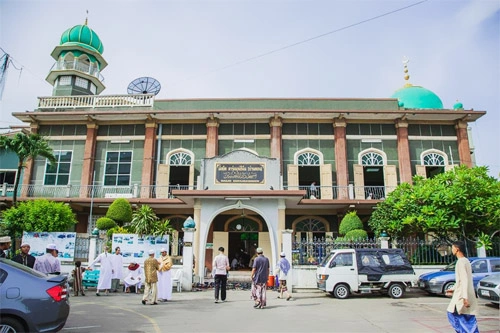
Darul Muhsineen Mosque (Baan Don) is one of Bangkok’s long-established mosques, closely tied to the story of migration and settlement by a Muslim community along Khlong Saen Saep in the Sukhumvit 49/14 area of Watthana. At first glance, it may look like a quiet neighborhood place of worship, but if you trace its history carefully, you’ll see a different Bangkok—one shaped by a group of people who traveled far from Pattani, built homes and kinship networks, and gradually created a lasting “anchor” through faith and mutual support across the community.
The story reaches back roughly 170–200 years. A group of Muslims from southern Thailand—especially Pattani—settled in a small village around Sukhumvit Soi 47. At the time, the area was higher, drier ground, so people called the new settlement “Baan Don” (“don” meaning raised land). It was a simple, direct name that reflected the landscape they lived with every day. In those early years, the community still had no dedicated mosque for formal religious activities, and everything was part of starting a new life in a capital city that was far less convenient than today.
As the community grew, hardship became more visible—especially shortages of water and difficulties in transportation. Living on raised ground made access to drinking and household water difficult, and travel in that era was not easy. People therefore decided together to relocate to an area known as Baan Ton Sai beside Khlong Saen Saep, named after a large banyan tree that served as a local landmark. Although outsiders called the place “Baan Ton Sai,” most residents had moved from Baan Don, so the name “Baan Don” continued to be used for the community and has remained part of the area’s identity to the present day.
Once settled along Khlong Saen Saep, daily life became steadily more manageable. Water for drinking and household use was easier to obtain, transportation by canal improved, and livelihoods became more viable. As stability increased, a shared conviction emerged: if the community intended to put down roots here for good, it needed a mosque as a center for worship and communal life. This was the point where a “mosque” shifted from being purely a religious necessity to becoming the heart of the community in a broader sense.
In its earliest phase, the mosque was a small, single-story wooden building on privately owned land, with the owner allowing it to be used for religious purposes. Community religious leaders and service roles supported the regular rhythm of worship. Later, when the land where the mosque stood was purchased and formally dedicated as waqf, the foundation of long-term stability was secured. Waqf is not merely a donation of property; it is a commitment that the land is permanently set aside for the collective benefit of faith and community.
Over time, the roles of the imam, khatib, bilal, and the mosque committee became increasingly clear as a community stewardship system. They not only supported religious practice, but also maintained order, developed the premises, and coordinated key utilities. In one period, the Baan Don community still faced basic limitations, such as insufficient access to electricity and tap water, until the committee pursued formal installation and succeeded. It is a reminder that community progress did not happen by itself—it was built through cooperation, step by step, until quality of life improved in tangible ways.
Another major milestone was the construction of a new mosque building in 1939 (B.E. 2482) to replace an older structure that had deteriorated. The new building was a single-story teakwood mosque measuring 8 meters wide and 14 meters long, with a front porch. After construction, a practical issue required immediate attention: erosion along the canal bank, as Khlong Saen Saep gradually ate into the land boundary. A retaining embankment was therefore built along the mosque’s perimeter. It may sound like a small detail, but it highlights the relationship between a riverside religious site and the realities of canal life—where convenience and challenges come together in the same landscape.
By 1961 (B.E. 2504), the community expanded again, and the existing mosque space could no longer accommodate the growing number of worshippers. The mosque committee held serious discussions and unanimously agreed to build a larger, permanent structure. At that time, the Department of Religious Affairs had approved a reserve fund of 10,000 baht originally intended for repairs to the existing building, which was used as initial capital. With strong faith and widespread donations, the community was able to launch the construction of a two-story reinforced concrete mosque and a functioning minaret as planned.
One especially meaningful aspect of this construction era was how the community made real access to the mosque possible. Because the mosque sits along the canal, road transportation was once limited. The committee initiated a project to create a road connection from Soi Prasoet Sit (branching from Sukhumvit 49). Community members contributed land and fill material until the road was completed. This shows, in a very concrete way, that the mosque was not built by money alone—it was built through shared effort, sacrifice of space, and collective agreement so that the community’s center could truly be reached in everyday life.
Today, the charm of Darul Muhsineen Mosque lies in its character as an urban canal-side mosque that still preserves a strong sense of community. The building carries the calm, orderly atmosphere many people associate with a place of worship, while the surrounding Baan Don neighborhood continues its everyday rhythm along Khlong Saen Saep. If you come with the intention to learn and absorb the atmosphere, it’s best to arrive with respect for the space. The mosque exists primarily for worship, and the privacy of those performing religious duties should always be honored—especially during prayer times or community religious activities.
Getting There If you take the BTS, you can get off at Phrom Phong or Thong Lo, then continue by taxi or ride-hailing to Sukhumvit 49/14 (Soi Prasoet Sit). Typing “Darul Muhsineen Mosque (Baan Don)” or “Baan Don Mosque” in your navigation app can help reduce the chance of getting lost. If you drive, it’s wise to allow extra time for narrow city sois and parking constraints common in residential areas, and to contact the mosque in advance if you plan to visit as a group.
Visitor etiquette matters and is a simple way to show respect. Dress modestly, avoid overly tight or short clothing, and ask permission before taking photos. Try not to photograph individuals without consent, especially during religious activities. If you arrive during prayer times or community events, keep your voice low and move calmly—for those who come to pray, this is a space of focus and peace.
Another feature that sets Baan Don apart from many ordinary residential neighborhoods is the presence of religious education and learning institutions that have helped nurture people who serve the wider Muslim society. The names of schools and educational networks have been spoken of within the community for a long time. This makes it clear that the mosque does not stand alone—it stands within a living ecosystem of faith, education, and everyday mutual care, a cycle that allows “Baan Don” to remain a true home even as the city around it changes rapidly.
If summarized as simply as possible, Darul Muhsineen Mosque (Baan Don) is a lesson in how a community from the South settled in Bangkok and adapted to the city’s geography and opportunities. From raised ground to canal banks, from a small village to a community with a clear center, and from a modest wooden mosque to a permanent structure serving generation after generation. If you have the chance to visit, come respectfully, and look beyond the idea of a “place”—because this is shared memory that still lives, in real time, through the people who call it home.
| Name | Darul Muhsineen Mosque (Baan Don) / มัสยิดดารุ๊ลมุห์ซีนีน (บ้านดอน) |
| Location | Soi Prasoet Sit, Sukhumvit 49/14, Khlong Tan Nuea, Watthana, Bangkok 10110 |
| Highlights | A long-established mosque of the Baan Don community, migration story rooted in Pattani, canal-side setting along Khlong Saen Saep, long-standing center of faith and community life |
| Period | Community formation traces back to early Rattanakosin era; key rebuilding in 1939 and expansion toward a permanent structure around 1961 |
| Key Evidence | Historical details and address appear in official mosque registry and relevant community/agency references |
| Name Origin | “Baan Don” refers to the first settlement on raised ground near Sukhumvit Soi 47; the name remained in use even after relocation to the canal area |
| Travel | BTS Phrom Phong/Thong Lo, then taxi/ride-hailing to Sukhumvit 49/14 (Soi Prasoet Sit); drivers should allow extra time for narrow sois and ask about parking if arriving as a group |
| Current Status | Active community mosque (recommended to contact in advance and avoid prayer times when visiting) |
| Mosque Caretakers | Mosque committee (contact via the mosque’s official page / designated coordinators announced by the mosque) |
| Contact Number | 089-140-3522 (Hajji Adnan) |
| Nearby Attractions (Approx. Distance) | Emporium / EmQuartier (1.8 km) Benchasiri Park (1.8 km) Jodd Fairs (Rama 9) (6.5 km) Terminal 21 Asok (4.2 km) Gateway Ekkamai (3.0 km) |
| Popular Restaurants Nearby (Approx. Distance + Phone) | Halal restaurants around Phrom Phong–Thong Lo (1.5 km) Restaurants around Ekkamai (3.0 km) Restaurants around Asok (4.2 km) |
| Popular Accommodations Nearby (Approx. Distance + Phone) | Hotels around Phrom Phong (1.8 km) Hotels around Thong Lo (2.5 km) Hotels around Ekkamai (3.0 km) |
Frequently Asked Questions (FAQ)
Q: Where is Darul Muhsineen Mosque (Baan Don) located in Bangkok?
A: It is in Soi Prasoet Sit, Sukhumvit 49/14, Khlong Tan Nuea, Watthana, near the Phrom Phong–Thong Lo area and along Khlong Saen Saep.
Q: Can I get to Darul Muhsineen Mosque (Baan Don) by BTS?
A: Yes. Get off at BTS Phrom Phong or Thong Lo, then take a taxi or ride-hailing service to Sukhumvit 49/14. This is usually the most convenient option.
Q: What should I do if I want to visit the mosque?
A: It’s recommended to contact the mosque or caretakers in advance, dress modestly, and avoid prayer times or religious activities for appropriateness.
Q: What is the main highlight of Baan Don Mosque?
A: It is a long-established mosque of the Baan Don Muslim community with a Pattani-rooted migration history, and its canal-side setting reflects Bangkok’s historic waterway way of life.
Q: Why is the community called “Baan Don” even after relocating to the canal area?
A: The first settlement was on raised ground near Sukhumvit Soi 47, so the name “Baan Don” stuck and continued to be used for the community up to the present.
 Mobile: 0816543647
 Darul Muhsineen Mosque (Baan Don) Map
 Category:
  Group:
  Tag: ●Darul Muhsineen Mosque (Baan Don)●darul muhsineen mosque ●baan don mosque ●surao baan don ●mosque near saen saep canal ●muslim community baan don ●sukhumvit 49/14 mosque ●old mosque in bangkok ●islamic attractions bangkok ●watthana district mosque ●khlong tan nuea mosque Last Update: 2 MonthAgo
Comment
 Nearby Attractions
| Keyword (Advance) |
 Facebook Fanpage
 Region
 Art, Culture and Heritage
 Historical Sites and Monuments(
 Landmarks and Memorials(
 Royal Palace(
 Art, Craft Centres, Tradition(
 Museums(
 Historical Houses and The Ancient City(
 Art Gallery(
 Educational Places
 Museum for Study(
 Library(
 University
 Temple(
 Church(
 Other religious and spiritural sites(
 Research and Development
 Royal Project(
 Suburban Living
 Village, Community(
 Local Market(
 Floating Market(
 Nature and Wildlife
 River, Canal(
 Bays and Beaches(
 Other natural attractions(
 Entertainment and Agricultural
 Zoos and Aquariums(
 Animal camps and shows(
 Stadium(
 Farm, Parks, Gardens and Ecotourism(
 Amusement Park(
 Waterpark(
 Theater(
 Cinema(
 Shopping
 Shopping and Night Market(
 Department Store(
 Spas and Wellness
 Spas and Wellness(
 Restaurant
 Michelin Star(
 Accommodation
 Hotel(
 Call Customer Service in Tourism
 Call Customer Service in Tourism(
 Travel Articles, Recipes
 Travel Review, Food Review(
 Royal Thai Desserts, Traditional Dessert, Thai Dessert Recipes(
 Copyright 2012,